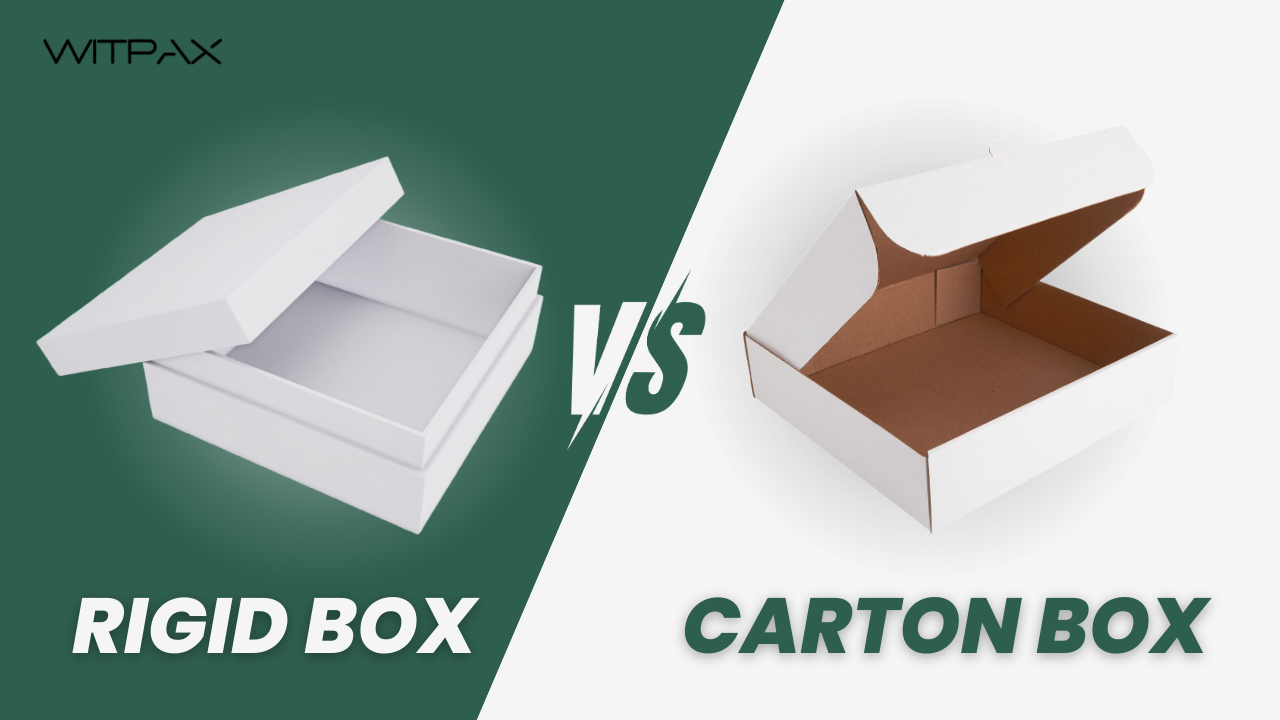
Rigid boxes and corrugated boxes are two of the most used packaging solutions.Each one has its own strengths and are used for different things, from shipping heavy items to presenting luxury gifts.. Knowing how they are different can help a business pick the best box for its products.
What Are Rigid Boxes?
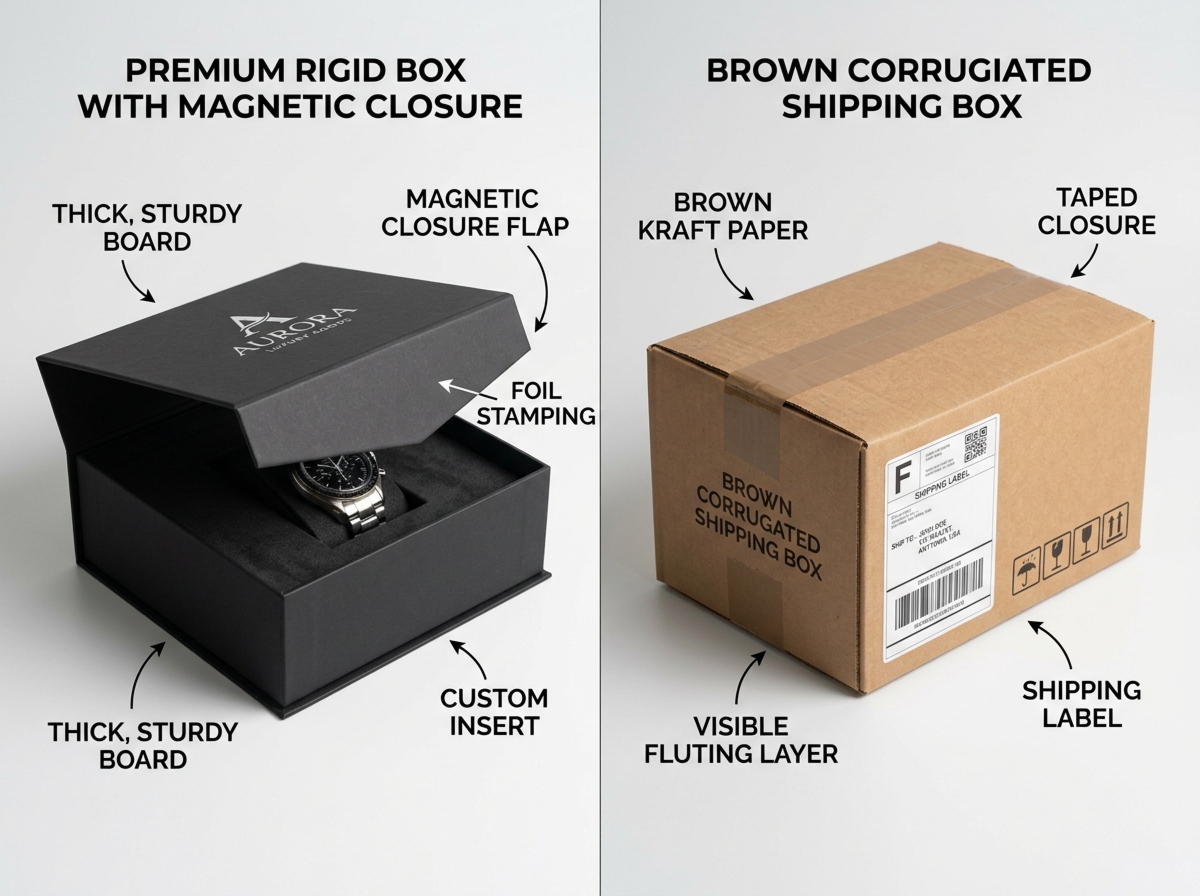
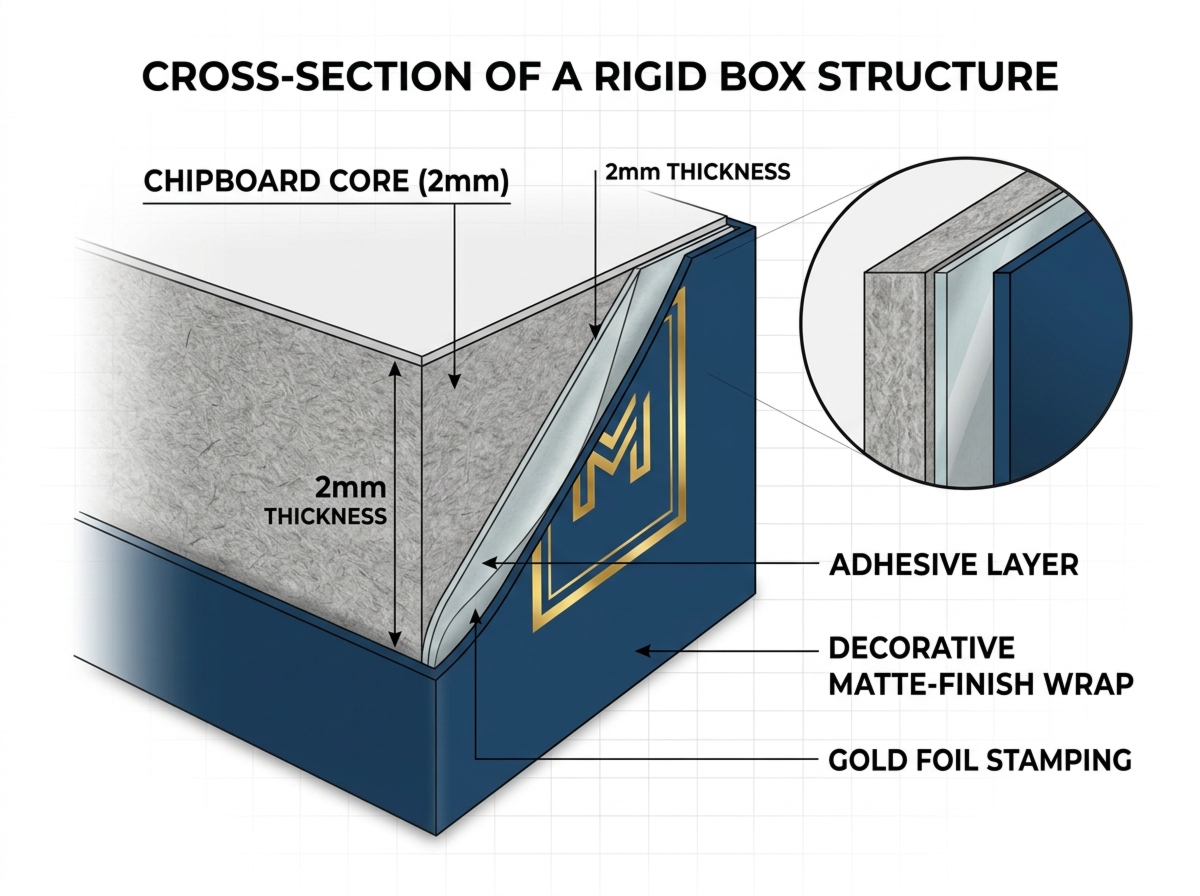
Rigid boxes are high-quality packaging solutions constructed from dense, thick paperboard. Rigid boxes are made from 2–4 millimeter thick paperboard. Unlike folding cartons or corrugated boxes, They keep their shape and do not fold.
Rigid boxes have a strong structure made from dense paperboard. They are much thicker than normal cardboard, so they stay firm and do not fold or collapse easily.
They use high-quality materials like chipboard or greyboard, often wrapped in special papers, fabrics, or leather-like finishes to make them look more attractive.
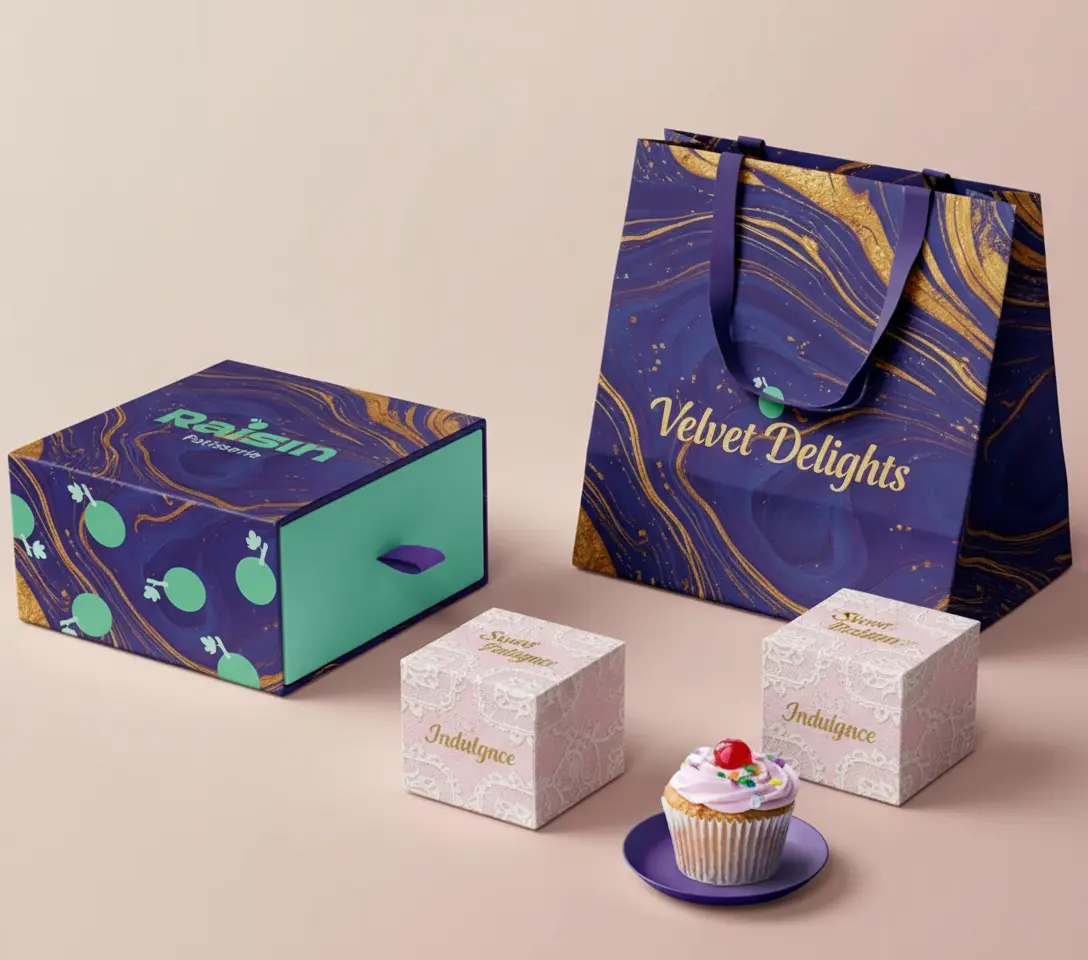
In appearance, rigid boxes feel smooth and elegant, often decorated with embossed logos, metallic foils, or magnetic closures for a more premium look.
They offer excellent durability, protecting delicate or expensive products from bending, crushing, or damage, which makes them ideal for luxury packaging.
Rigid boxes are widely used for luxury electronics, such as smartphones, headphones, or smartwatches. Their strong structure and elegant design match the premium feel of these high-value products.
They are also common in cosmetics and perfumes, where attractive packaging increases the product’s appeal. A rigid box can make makeup or fragrance look more luxurious and gift-worthy.
In the jewelry and accessory industry, rigid boxes protect delicate items like necklaces, watches, or sunglasses while giving a beautiful unboxing experience.
They are often chosen for premium chocolates, wine, and gourmet foods, especially for gifting occasions, as they give an elegant and festive presentation.
Limited-edition or designer collections also use rigid boxes for special releases, creating a memorable brand experience that adds value to the product.
What Are Corrugated Boxes?
Corrugated boxes are lightweight yet strong packaging made from layers of corrugated fiberboard. They are commonly used for shipping, storage, and everyday packaging because they are durable, cost-effective, and easy to customize.
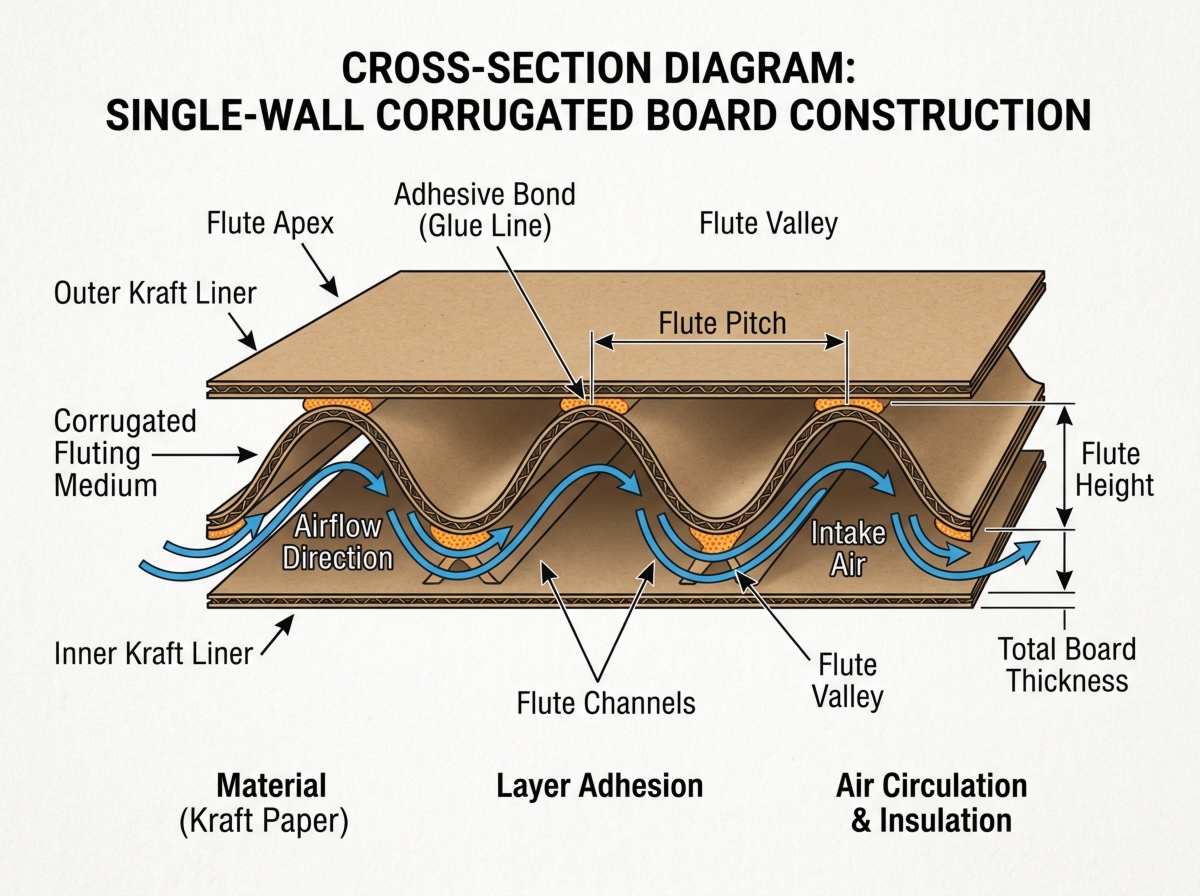
Corrugated boxes have a layered structure made of two flat sheets with a wavy middle layer (flute). This design makes them strong while keeping them light.
They are made from kraft paper or recycled paper, making them more eco-friendly and easy to dispose of or reuse.
In appearance, corrugated boxes look simple and plain but can be printed with logos, designs, or labels for branding and identification.
They provide good durability for shipping and storage, protecting products from shocks and compression, but they are less rigid than luxury packaging.
Corrugated boxes are widely used for e-commerce shipping, ensuring products like clothes, electronics, or books are safely delivered.
They are common in the food and beverage industry, carrying pizza, fresh produce, or packaged snacks while staying cost-efficient.
Many industrial and bulk goods rely on corrugated boxes because they are easy to stack, store, and transport.
They are also popular for moving and storage, helping people organize and protect items without adding extra weight.
For product displays and retail packaging, corrugated boxes can be customized with printing and die-cut designs to attract attention.
What Are The Differences Between Rigid And Corrugated Boxes?
The key differences between rigid and corrugated boxes lie in seven main areas: \
- Material & Construction Differences Between corrugated And rigid boxes
- Strength and Durability Differences Between Corrugated And rigid boxes
- Appearance Differences Between Corrugated And rigid boxes
- Applications Differences Between Corrugated And rigid boxes
- Cost Differences Between Corrugated And rigid boxes
- Assembly and Storage Differences Between Rigid And Corrugated boxes
- Eco-Friendliness Differences Between Rigid And Corrugated boxes
- Material & Construction Differences Between corrugated And rigid boxes
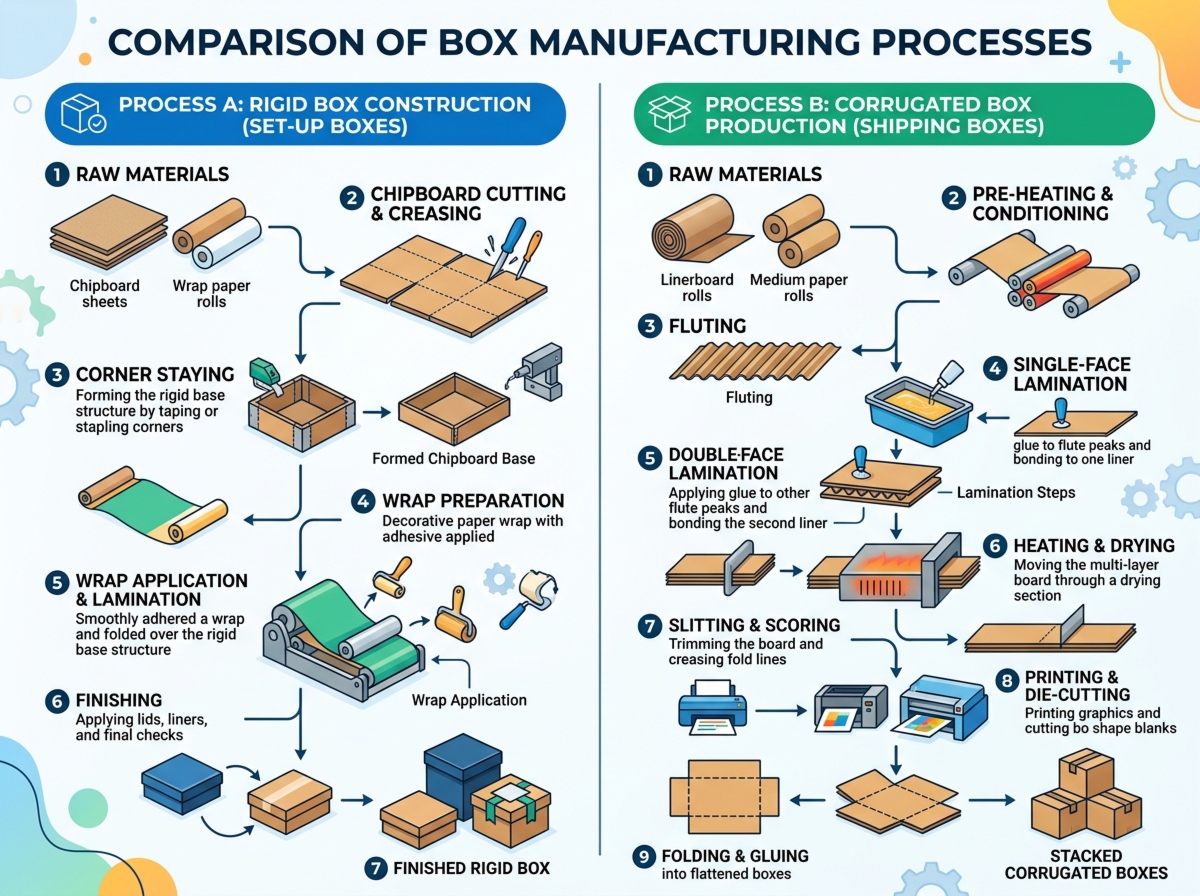
Corrugated boxes are made from a multi-layered structure. There are two flat outer sheets called linerboards and a fluted middle layer that creates a wavy cushion. This fluting makes the box shock-absorbent, flexible, and surprisingly strong for its weight. Variations in flute size (A, B, C, E, etc.) allow businesses to balance protection, weight, and cost. Some corrugated boxes even use double or triple walls, making them capable of carrying very heavy or fragile items during long-distance shipping.
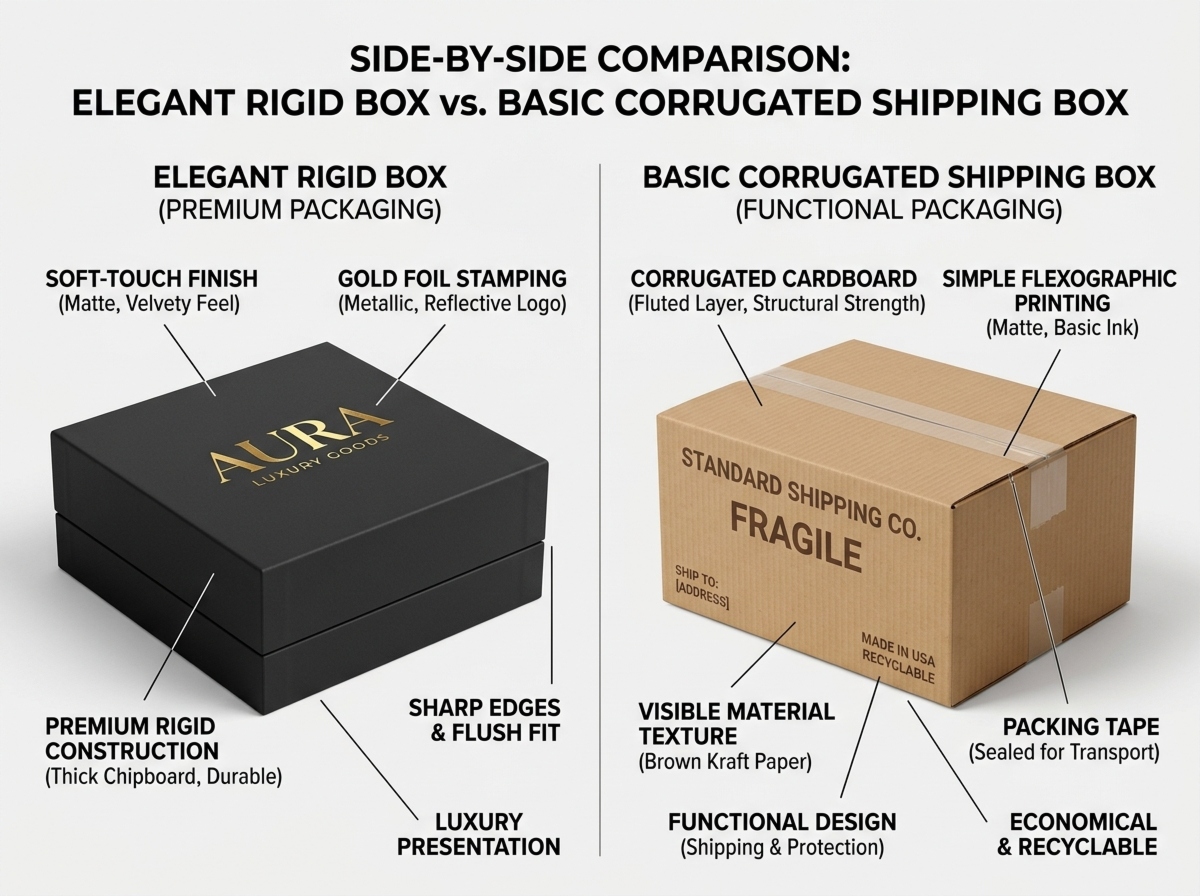
Rigid boxes, however, use compressed paperboard, also called greyboard or chipboard, which is much denser and heavier. This board is often wrapped in decorative paper, fabric, or leather-like finishes to create a smooth surface. Unlike corrugated material, rigid paperboard does not bend or fold easily, which makes the box keep its exact shape permanently. Because of this solid build, rigid boxes support advanced customization like magnetic closures, ribbon pulls, or compartment inserts that add more functionality and aesthetic appeal.
- Strength and Durability Differences Between Corrugated And Rigid Boxes
Corrugated boxes are engineered for transport protection. Their fluted core acts like a shock absorber, reducing damage from impacts, stacking, or vibrations during shipping. Many have Edge Crush Test (ECT) ratings, which tell you how much vertical pressure they can withstand in storage or transit. They can also be treated with water-resistant or grease-resistant coatings for perishable food or outdoor deliveries. However, because they are designed to fold flat and remain lightweight, they aren’t meant to retain a perfect display shape over time.
Rigid boxes, on the other hand, are designed for structural integrity and longevity rather than rough handling. They keep a clean, elegant form that won’t sag or collapse even after repeated use. While they are not shock-absorbing like corrugated boxes, their solid build gives a luxurious, high-value feel that complements expensive or delicate products. Many rigid boxes are lined with foam, fabric, or molded inserts to hold products securely in place, making them ideal for jewelry, electronics, or collectibles.
- Appearance Differences Between Corrugated And Rigid Boxes
Corrugated boxes are mainly used for shipping, bulk packaging, e-commerce deliveries, and industrial storage, while rigid boxes are used for luxury products, retail displays, premium gifts, and promotional kits.
Corrugated Boxes
Corrugated boxes are made to give strong protection at a low cost, which makes them the best choice for shipping and storage.
- They are widely used for e-commerce and deliveries because their fluted layers can absorb shocks, pressure, and bumps during long trips. Companies like Amazon rely on these boxes to keep products safe when shipping to customers.
- In the food and beverage industry, corrugated boxes hold pizzas, fresh fruits, vegetables, and packaged snacks. They are light, sturdy, and easy to carry, which helps keep food safe and fresh.
- Warehouses and factories use them to store and organize products. They stack easily, save space, and are simple to label. Many people also use corrugated boxes for moving homes because they are affordable and strong enough to carry heavy items.
- Stores sometimes use corrugated point-of-purchase (POP) displays, which are custom-printed stands made from corrugated board. These displays are great for temporary sales promotions because they are cheap and easy to replace.
Rigid Boxes
Rigid boxes have a very different purpose. They are made to create a luxury look and better customer experience, not just for transport.
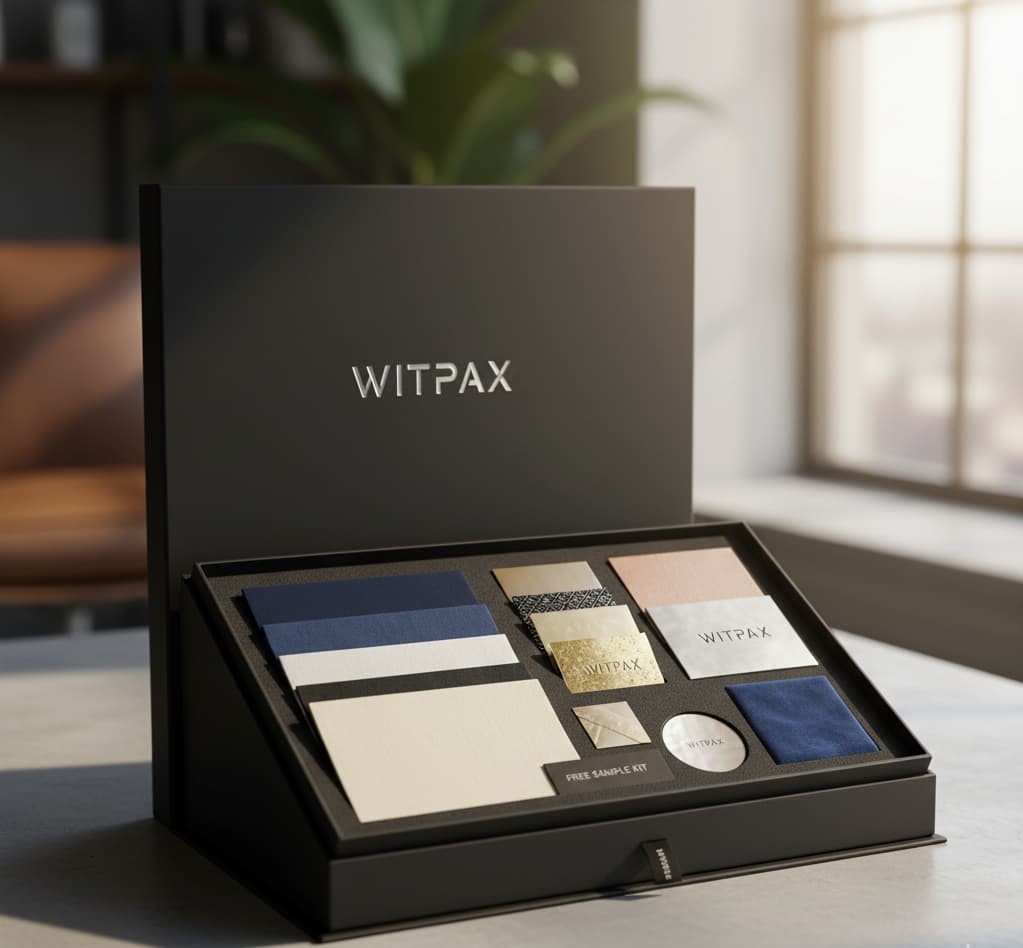
- They are popular in luxury retail, like jewelry, perfumes, cosmetics, and high-end electronics. For example, Apple uses rigid boxes for iPhones to give customers a premium unboxing experience.
- They are perfect for gifts and special edition products like holiday chocolate sets, fancy accessories, or collectible items. These boxes feel like a keepsake that people want to keep instead of throwing away.
- Boutique shops use rigid boxes for shelf displays because they make products look more elegant and valuable, attracting shoppers’ attention.
- Companies also use them for PR kits and product launches, where the packaging itself is part of the marketing. A beautiful rigid box can impress influencers, media, or customers during an important reveal.
So while corrugated boxes work best for shipping, storage, and large-scale logistics, rigid boxes are better for creating strong emotional connections and building a premium brand image.
| Application Category | Corrugated Boxes | Rigid Boxes |
| Shipping & Distribution | Excellent, industry standard | Rarely used (cost/weight) |
| Retail Shelf or Display | Good for large/bulk goods, POS displays | Excellent for luxury/small format retail |
| Gift Packaging | Basic, functional only | Preferred, high perceived value |
| Luxury Branding/Presentation | Limited | Excellent – premium branding, unboxing focus |
| Cost-Effectiveness (unit) | High (low cost per box, mass-produced) | Lower (higher unit cost, hand assembly common) |
| Custom Inserts/Compartmentalized | Strong (cardboard dividers, die-cutting) | Strong (foam, fabric, velvet-lined options) |
| Food & Confectionery | Standard for transport or bulk | Premium items/gift selections |
| Product Launches/PR | Rare | Preferred for high impact |
- Applications Differences Between Corrugated And Rigid Boxes
Corrugated Boxes
Corrugated boxes are made to give strong protection at a low cost, which makes them the best choice for shipping and storage.
- They are widely used for e-commerce and deliveries because their fluted layers can absorb shocks, pressure, and bumps during long trips. Companies like Amazon rely on these boxes to keep products safe when shipping to customers.
- In the food and beverage industry, corrugated boxes hold pizzas, fresh fruits, vegetables, and packaged snacks. They are light, sturdy, and easy to carry, which helps keep food safe and fresh.
- Warehouses and factories use them to store and organize products. They stack easily, save space, and are simple to label. Many people also use corrugated boxes for moving homes because they are affordable and strong enough to carry heavy items.
- Stores sometimes use corrugated point-of-purchase (POP) displays, which are custom-printed stands made from corrugated board. These displays are great for temporary sales promotions because they are cheap and easy to replace.
Rigid Boxes
Rigid boxes have a very different purpose. They are made to create a luxury look and better customer experience, not just for transport.
- They are popular in luxury retail, like jewelry, perfumes, cosmetics, and high-end electronics. For example, Apple uses rigid boxes for iPhones to give customers a premium unboxing experience.
- They are perfect for gifts and special edition products like holiday chocolate sets, fancy accessories, or collectible items. These boxes feel like a keepsake that people want to keep instead of throwing away.
- Boutique shops use rigid boxes for shelf displays because they make products look more elegant and valuable, attracting shoppers’ attention.
- Companies also use them for PR kits and product launches, where the packaging itself is part of the marketing. A beautiful rigid box can impress influencers, media, or customers during an important reveal.
So while corrugated boxes work best for shipping, storage, and large-scale logistics, rigid boxes are better for creating strong emotional connections and building a premium brand image.
| Application Category | Corrugated Boxes | Rigid Boxes |
| Shipping & Distribution | Excellent, industry standard | Rarely used (cost/weight) |
| Retail Shelf or Display | Good for large/bulk goods, POS displays | Excellent for luxury/small format retail |
| Gift Packaging | Basic, functional only | Preferred, high perceived value |
| Luxury Branding/Presentation | Limited | Excellent – premium branding, unboxing focus |
| Cost-Effectiveness (unit) | High (low cost per box, mass-produced) | Lower (higher unit cost, hand assembly common) |
| Custom Inserts/Compartmentalized | Strong (cardboard dividers, die-cutting) | Strong (foam, fabric, velvet-lined options) |
| Food & Confectionery | Standard for transport or bulk | Premium items/gift selections |
| Product Launches/PR | Rare | Preferred for high impact |
Cost Differences Between Corrugated And Rigid Boxes
Rigid boxes are significantly more expensive than corrugated boxes. On average, a rigid box can cost 5 to 10 times more per unit due to its dense materials, intricate construction, and often hand-assembled finishes. Corrugated boxes, by contrast, are low-cost and mass-producible, making them ideal for large-scale distribution.
| Cost Metric | Corrugated Boxes | Rigid Boxes |
| Unit Cost | Low (ideal for mass production) | High (5×–10× more expensive per box) |
| Volume Discounts | Excellent savings at high quantities | Moderate savings at scale |
| Setup & Tooling | Minimal setup costs | Higher setup, tooling, and prep time |
| Shipping & Storage | Flat-packed, low space requirements | Pre-assembled, bulky, higher shipping cost |
While rigid boxes offer a premium look and feel, their higher cost per unit, storage needs, and more complex production process can quickly add up. Corrugated boxes, on the other hand, deliver unbeatable value for high-volume shipping and allow for budget-friendly scaling without sacrificing protection.
For corrugated boxes, the best prices are usually for orders of 5,000 or more. For rigid boxes, you often need to order at least 1,000 to 3,000 because they are more complex to produce.
- Assembly and Storage Differences Between Rigid And Corrugated Boxes
Corrugated boxes are space-efficient because they arrive flat-packed. This means businesses can store thousands of boxes without taking up much room. At the point of use, they are quickly folded, taped, and packed—sometimes using automated packing systems for high-volume operations. This efficiency reduces both warehouse and labor costs.
| Feature | Corrugated Boxes | Rigid Boxes |
| Assembly | Quick folding; can be automated | Factory-assembled; ready-to-use |
| Labor Needs | Minimal at point of use | No assembly needed post-delivery |
| Storage Space | Flat-packed, space-saving | Bulky; requires more storage |
Rigid boxes are delivered pre-assembled, which saves time during fulfillment since they don’t require folding or setup. However, this convenience comes at a cost—they take up far more storage space, and transporting them requires more trucks or containers. This can be challenging for businesses with limited warehouse capacity.
- Eco-Friendliness Differences Between Rigid And Corrugated Boxes
Corrugated and rigid boxes differ greatly in their environmental effects due to their materials, manufacturing processes, and typical uses.
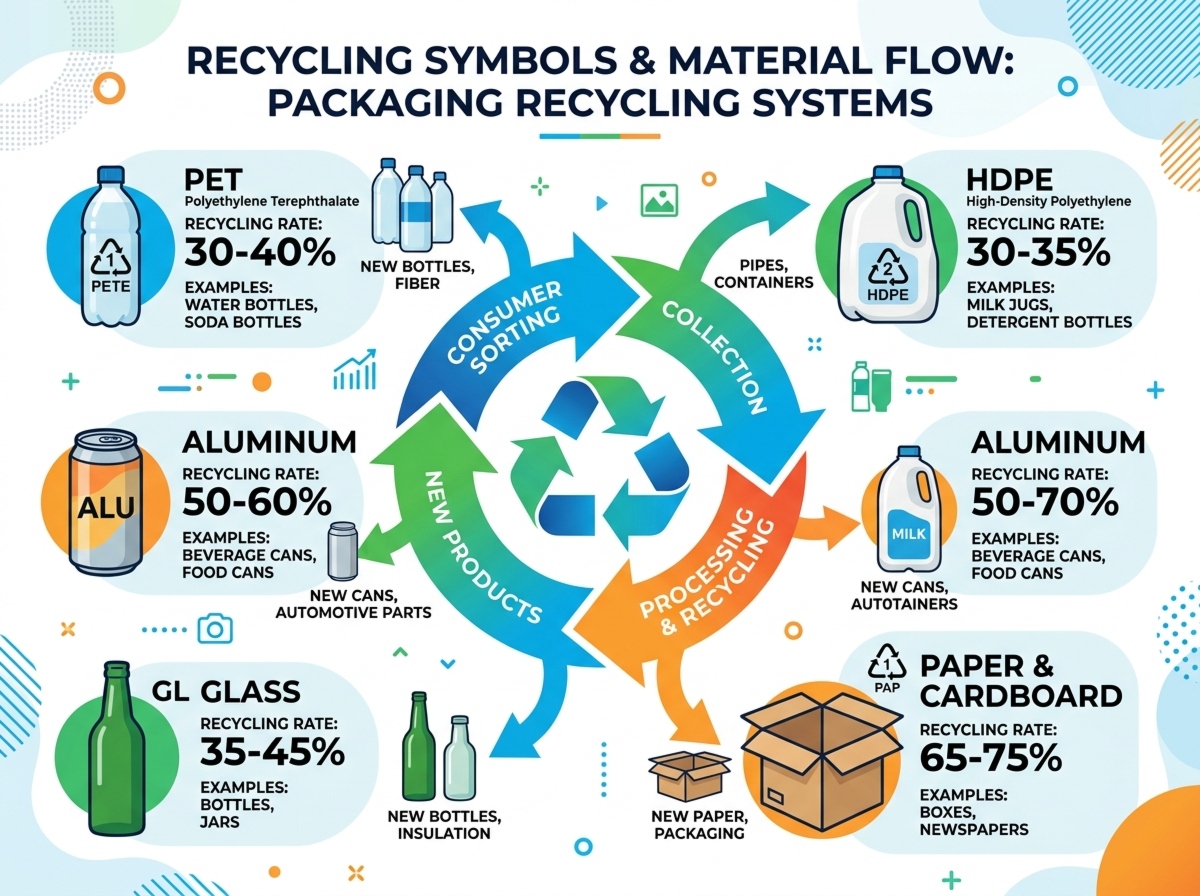
Corrugated boxes are known for being one of the most environmentally friendly packaging options. They are mostly made from recycled paper, which helps reduce the demand for new trees and preserves natural resources. Because of their simple construction—mainly paper and glue—they are 100% recyclable in nearly all communities. This ease of recycling lowers landfill waste and conserves energy since the materials can be processed and reused many times.
The manufacturing process for corrugated boxes is highly efficient, using automated machines that consume relatively little water and energy per box. Additionally, corrugated boxes can be shipped flat-packed, saving space during transport. This reduces the number of trucks needed, which cuts down on fossil fuel use and greenhouse gas emissions.
On the other hand, rigid boxes are made from dense paperboard combined with various decorative and functional materials such as laminates, magnets, ribbons, and foam inserts. These mixed materials make recycling challenging because most recycling facilities require the separation of non-paper components. As a result, rigid boxes are less likely to be accepted for recycling unless carefully disassembled.
The production of rigid boxes typically demands more energy, water, and manual labor, increasing their environmental footprint. Specialty finishes like metallic foils and soft-touch coatings further add to this impact.
Despite these challenges, rigid boxes often enjoy a longer useful life. Many consumers reuse them as storage containers, gift boxes, or decorative items, effectively reducing waste. Some brands intentionally design rigid boxes to serve a “second purpose”—for example, transforming into desk organizers or photo holders—to encourage reuse and extend the box’s lifecycle.
From a consumer’s perspective, corrugated boxes are generally seen as more eco-friendly because of their recycled look and simple materials. Rigid boxes, with their glossy and layered finishes, may appear less sustainable, even though their reuse potential offers environmental benefits over time.
In summary, corrugated boxes offer a more sustainable choice for single-use shipping and mass distribution thanks to their recyclability, low production impact, and efficient transport. Rigid boxes contribute to sustainability mainly through reuse and durability, supporting brands that prioritize premium experiences while aiming to reduce waste through thoughtful design.
Brands wanting to improve environmental impact might combine the recyclability and efficiency of corrugated boxes with design strategies that promote reuse, inspired by rigid packaging’s longer lifespan.
Summary Table
Here’s an engaging side-by-side showdown to help you navigate the right packaging options.
| Feature | Corrugated Boxes | Rigid Boxes |
| Material Structure | Fluted, layered cardboard | Solid, dense chipboard |
| Recyclability | Easy, widely accepted | Recyclable with parts removed (e.g., magnets, fabric) |
| Energy to Produce | Low | High |
| Cost per Unit | Low | High (5×–10× more) |
| Weight | Lightweight | Heavy |
| Durability (Shipping) | Excellent (shock-absorbing, stackable) | Moderate |
| Durability (Display) | Fair | Excellent (holds shape) |
| Customizability | Basic print options | High-end finishes, custom shapes |
| Presentation Value | Functional | Premium, luxury feel |
| Reuse by Consumer | Rare | Frequent (storage, gifting) |
| Storage & Shipping Efficiency | Flat-packed, space-saving | Bulky, higher shipping/storage cost |
| Best For | Shipping, eCommerce, bulk goods | Gifts, retail displays, luxury branding |
What Are The Overall Pros And Cons When Comparing Rigid And Corrugated Boxes?
Corrugated boxes are cost-effective, eco-friendly, and ideal for shipping.
Rigid boxes offer premium presentation, customization, and are more likely to be reused. Both have distinct advantages based on your product’s needs and brand goals.
What Are The Advantages Of Corrugated Boxes When Compared To Rigid Boxes?
Corrugated boxes are more affordable, lightweight, easier to recycle, and ideal for shipping and mass production. They’re perfect for businesses focused on cost efficiency, eco-friendliness, and scalability. They are as discussed below:
- Heavy-duty protection: Corrugated boxes offer heavy-duty protection due to their fluted inner layers, which act like cushions during transit. This design makes them highly resistant to crushing, stacking pressure, and impact, making them the go-to choice for shipping heavy or fragile products.
- Cost-efficiency: They are also extremely cost-efficient. Corrugated materials are inexpensive, and the manufacturing process is highly automated, keeping labor and production costs low. On average, they are 5 to 10 times cheaper than rigid boxes. In addition, their lightweight structure further reduces shipping costs.
- Space-saving design: Another key advantage is their space-saving design. Corrugated boxes are flat-packed, meaning they take up far less storage space before use — up to 85% less compared to bulky, pre-assembled rigid boxes. This makes a big difference for companies with limited warehouse space or high inventory turnover.
- Eco-friendliness: From an environmental perspective, corrugated boxes are more eco-friendly. Most are made from recycled paper, are fully recyclable, and require less energy to produce than rigid alternatives. For businesses focused on sustainability, corrugated packaging supports greener operations and better consumer perception.
- Scalability: Lastly, corrugated packaging scales well. It’s easy to mass-produce, customize with basic printing, and automate for large-scale distribution. This makes it the ideal packaging choice for eCommerce, wholesale, or any fast-moving consumer goods operation that prioritizes efficiency and cost control.
What Are The Advantages Of Rigid Boxes When Compared To Corrugated Boxes?
Rigid boxes offer clear advantages over corrugated boxes when presentation, branding, and customer experience are top priorities. Below are four key benefits that set rigid packaging apart in luxury and high-impact product categories.
- Premium presentation: These boxes are built to impress their smooth surfaces, precise edges, and solid construction to instantly communicate quality. Unlike corrugated boxes, which often look utilitarian, rigid packaging feels luxurious and carefully crafted. This makes them ideal for high-end products, gift items, and retail displays where visual appeal directly influences customer perception and purchase behavior.
- Customization : They can be tailored with advanced finishes such as foil stamping, embossing, debossing, and spot UV coatings, giving brands a powerful way to express identity and elevate design. Beyond surface finishes, rigid boxes can include magnetic closures, ribbon pulls, custom inserts, and even unusual shapes. This level of creative freedom is difficult if not impossible to achieve with basic corrugated packaging.
- Ready to use: Rigid boxes are also ready to use right out of the box literally. They arrive pre-assembled, which eliminates the need for folding, taping, or setup during fulfillment. This not only saves time but ensures consistent presentation quality across every unit. It’s especially valuable for luxury retailers, subscription services, or gifting operations, where speed and appearance are equally important.
- Enhanced brand experience: Because of their sturdy construction and refined look, customers are far more likely to keep and reuse them. That means your packaging doesn’t just protect the product — it continues promoting your brand long after the sale. Whether used as a storage box, gift box, or display piece, a well-designed rigid box reinforces your brand’s value and creates a lasting emotional connection with the customer.