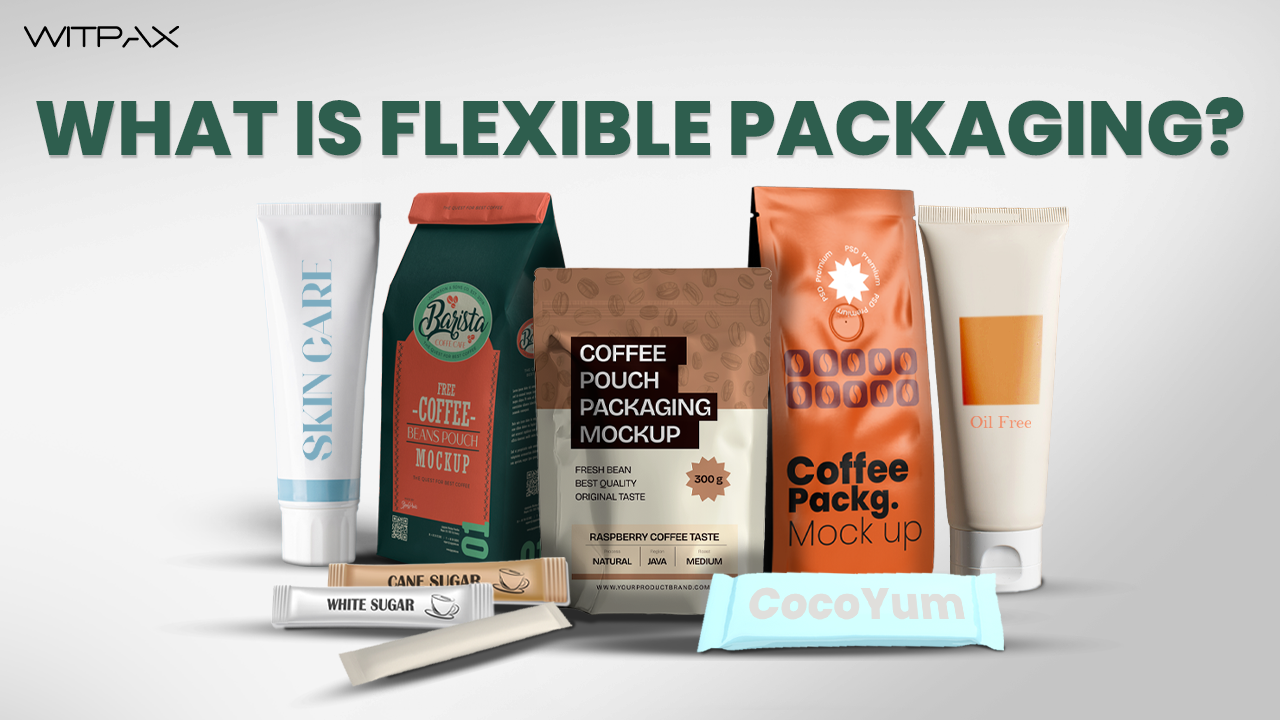
Flexible packaging (flexpack) is a non-rigid product covering that is easy to shape and bend. It is constructed from moldable materials, such as plastic, films, paper, and foil.
Using flexible packaging lowers production and transportation costs. It also enhances product appeal and prolongs its shelf life.
Another benefit is its reduced environmental impact. Flexible packaging uses less materials and generates less waste than rigid packaging. Its lighter weight also lessens CO₂ emissions during transport.
Flexible packaging has four main types. These are flexible pouches, bags, films, and wraps. They offer high customizability in materials and printing methods. Manufacturers tailor these to meet distinct product needs.
This article explores what flexible packaging is, its types, benefits, and applications. We will also delve into how customization enhances its value and its role in promoting sustainability in the global market.
Benefits of Flexible Packaging
Flexible packaging is popular for its efficiency, product protection and preservation, consumer appeal, and sustainability.
Below are five of its benefits:
- Saving materials and costs
- Extending product shelf life
- Enhancing convenience
- Boosting customer appeal
- Improving recyclability
Saving Materials and Costs
This type of packaging saves money by reducing manufacturing costs since it uses fewer materials.
Additionally, flexible packaging is lightweight and can be compressed. This makes it efficient to store, lowering storage and shipping costs.
Extending Product Shelf Life
Flexible packaging is protective against moisture, air, and light. Its layered materials work as barriers that ensure longer product freshness.
Enhancing Convenience
Flexible packaging offers convenience to customers. Thanks to useful features like tear notches, resealable zippers, and spouts, it is easier to open and reclose. It also portable due to its light weight and compact size.
Boosting Customer Appeal
Flexible packaging enhances the general customer experience. It features eye-catching designs, like colors, graphics, and typography, that attract consumers.
Businesses customize it for branding and customer-focused solutions. This thoughtful customization improves brand perception and loyalty.
Improving Recyclability
Flexible packaging uses recyclable or compostable materials. These include polyethylene terephthalate (PET), FSC-certified paper, and starch-based plastics. This type of packaging supports greener, eco-conscious business practices.
Types of Flexible Packaging
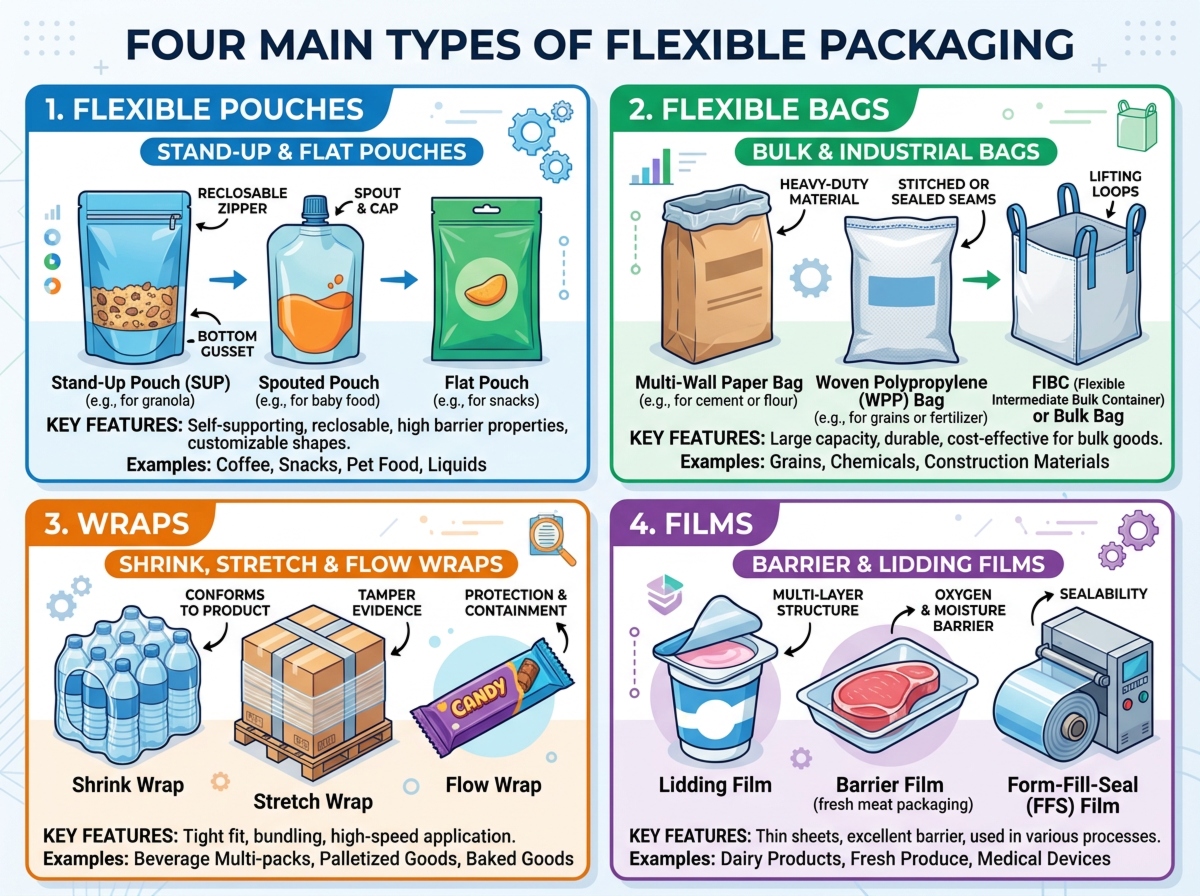
Flexible packaging comes in different forms: flexible pouches, bags, wraps, and films.
Companies pick a specific format based on the requirements of the product and industry.
1. Pouches
This type is a preformed packaging made from plastic, foil, and/or paper. Food & beverage and personal care & cosmetics are its two major end-user industries.
Flexible pouches have five types. Sachets (small, flat packets) are for single-use samples. Stand-up pouches (gusseted base, often with windows) are seen in snacks. Pouch bags are larger packs that hold dry goods. Pouch pops (tube-shaped) are made for frozen treats, while spout pouches (resealable nozzle) are ideal for liquids.
2. Bags
A flexible bag is a packaging frequently used for bulk items. It is made from soft plastic or laminated composites and has high-volume capacity.
Gusseted bags (expandable sides) are used for cement. Pillow bags (sealed back) are for chip packaging. Tetrahedral bags (triangular) are common in tea. Diaper bags (multi-layered) are for sanitary products. Brick bags (block-shaped) are for flour or rice.
Quattro seal bags (four corners with or without a back seal) are for pet food. Flat-bottom bags (box-like base) are for cereals. Ponytail bags (twist top) and clip bags (clip closure) are typically for bread.
3. Wraps
Wraps are thin sheets of plastic, foil, or paper. They conform to the shape of the product they cover or wrap.
Shrink wrap tightly seals bottled drinks using heat. Stretch wrap is elastic, good for bundling items. Wax paper is usually used in oily food and sandwiches.
4. Films
These plastic, coated paper, and/or foil rolls serve as layers in flexible pouches and bags. Films offer protection against UV, air, and humidity. They have high resistance to tears, punctures, and abrasions.
Aluminum foil is one type of film, often used in chocolates and processed cheese to block moisture and light. Metallized films are foil alternatives, found in coffee sachets. Die-cut lidding films seal yogurt and sauce cups. Heat-sealable foil pouches or lids keep meals and powders airtight.
Other types include foil-laminated cardstock and aluminum-plastic composite films. They add strength to flexible packaging. Induction-sealable liners and cold-seal foil are for leak prevention and tamper-proofing.
Flexible Packaging Application
The versatility of flexible packaging allows it to adapt to various industries, particularly in food.
Food & Beverage
Flexible packaging in the food & beverage industry is primarily for food safety and shelf life extension.
You see them in snacks, sauces, and frozen meals. Perishables, like meat, fish, and vegetables, are usually vacuum-sealed to last longer.
Stand-up pouches are common for beverages, such as coffee, juice, and energy drinks. They usually come with spouts for easy pouring/resealing.
This sector also uses flow wraps for baked goods and microwave-safe films for ready-to-eat meals.
Pharmaceuticals & Healthcare
Medical flexible packaging ensures sterility of medicines, clinical supplies, and medical devices. It blocks contaminants, oxygen, and moisture, so they stay sterile.
One of its most common types include blister packs for pills. Flexible pouches are for sterile medical supplies like syringes, surgical tools, and gloves. Multi-layer flexible bags are for blood and IV fluids.
Industrial & Chemical
Flexible packaging for industrial or chemical use is durable and made to withstand harsh conditions.
Retail industrial adhesives, lubricants, and sealants are packed in sachets or pouches. Heavy-duty gusseted bags are for bulk items such as fertilizer, sand, and cement.
Flexible bags for hazardous chemicals, like pesticides, solvents, and cleaning agents, are different. Chemical manufacturers reinforce them with corrosion-resistant films. The bags can also include tamper-evident closures and anti-leak seals for added safety.
Eco-Friendly Flexible Packaging
Flexible packaging consumes less natural resources and is naturally eco-friendly. Choosing compostable materials makes it even more sustainable.
Eco-Friendly Features of Flexible Packaging
This type of packaging is environmentally friendly. It reduces raw material use and carbon footprint, minimizes waste, preserves food, and contributes to a circular economy.
Sustainable Choices for Flexible Packaging Materials
New sustainable options for flexible packaging include bio-based materials. These are from renewable plant sources like corn, wood, and sugarcane.
Mono-material developments involve the use of a single type of plastic. This is to make recycling simpler because the materials do not need complex sorting.
Custom Flexible Packaging
Customizing flexible packaging is important for companies to differentiate their brand and products. Customizable design options include printing, materials, and special finishes.
Flexible Packaging Printing
Digital printing technology enables short print runs and rapid prototyping. Manufacturers prefer this method when testing new designs and launching limited products due to low setup costs.
Another popular printing method is flexographic printing. This is ideal for large-scale productions.
Flexible Packaging Materials
Common materials in flexible packaging include PET, polyethylene (PE), and polypropylene (PP). PET is for strength and printability. PE is for heat-sealing, while PP is for chemical resistance.
The right material composition depends on the product type, its ingredients, filling process, and how it is distributed.
Flexible Packaging Solutions
Examples of flexible packaging include blister packs, sachets, and spout pouches. Blister packs are used for drug packaging. Sachets are for single-use items, while spout pouches are for liquid products.
Flexible vs. Rigid Packaging
Rigid packaging is a sturdy packaging solution that retains its shape even when empty.
In contrast, flexible packaging has no fixed shape. It is lightweight and cheaper to produce but offers less protection against physical damage. This type of packaging is more suitable for non-fragile goods. Rigid packaging is best for delicate and valuable items.
For instance, potato chip bags prevent chips from going stale but are prone to crushing. Cookie boxes are better at preventing cookies from breaking since they don’t collapse easily. But like other rigid boxes, they are bulkier and more costly.
FAQ
1. What is flexible packaging in food processing?
Flexible packaging in food processing is for protecting and preserving food to keep it fresh longer. It is often paired with rigid packaging for stronger physical protection.
2. What is an example of a flexible plastic?
PE is an example of a flexible plastic. Two of its popular types are low-density polyethylene (LDPE) and high-density polyethylene (HDPE).
Both are flexible, but LDPE is softer while HDPE is more rigid. We see them as packaging for everyday products, such as crackers, pet treats, and candy.
3. Is flexible packaging recyclable?
It depends. There are factors that can affect its recyclability. Factors such as materials used, the number of layers, and the recycling process.
Mono-material flexible packaging is recyclable. Whether it’s PP or PE, as long as it’s a single type of plastic, it can be recycled.
Those with mixed materials are not accepted in most recycling programs. It varies per area, so it’s best to check your local recycling guidelines.
Another tip is to clean and dry the items before recycling. You can also go to in-store drop-off locations. They accept flexible packaging that can’t be recycled in curbside bins.
4. What are the disadvantages of flexible packaging?
Flexible packaging has its pros, but it also has some cons.
It is thin and collapsible, so it’s less ideal for fragile or delicate items. Mixed-material flexible packaging is also hard to separate, making recycling difficult.
Industry solutions for these issues involve hybrid packaging and advanced recycling technologies. With these strategies, we can look forward to more improved flexible packaging over time.