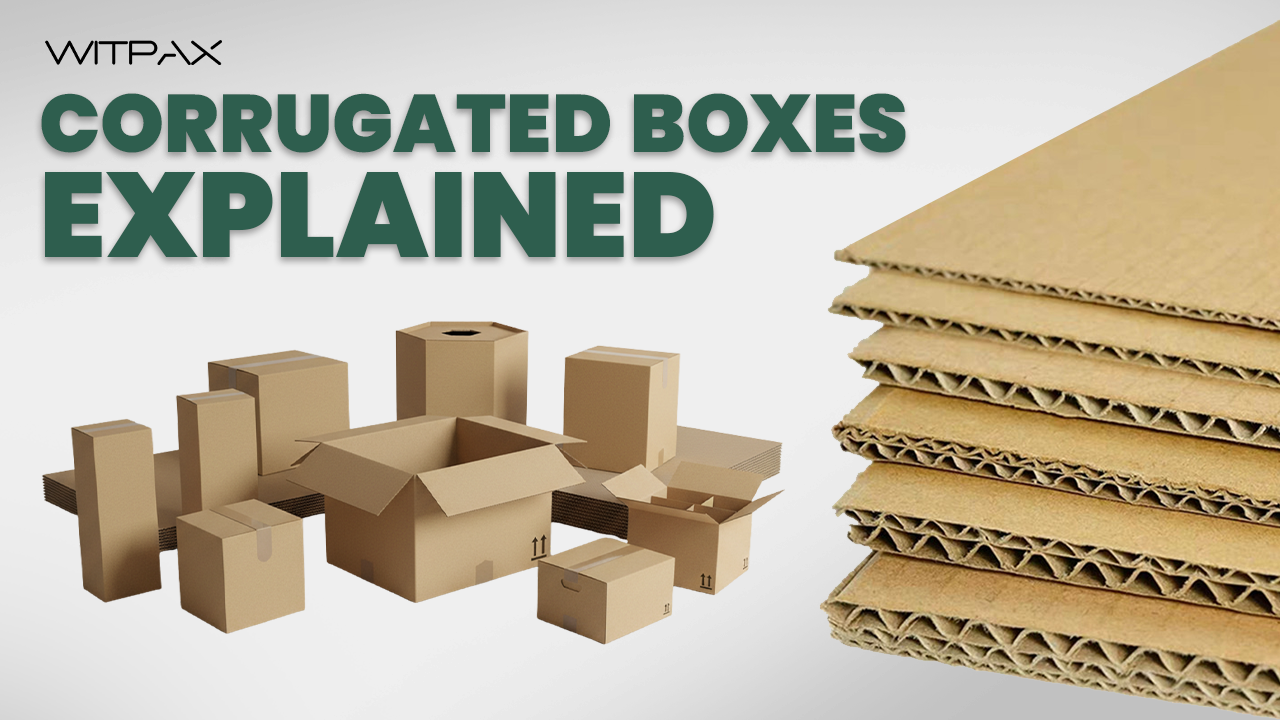
A corrugated box is a lightweight yet strong packaging container made from corrugated cardboard. This design offers great protection for items like pizza boxes, bottle carriers, and smartphones. It is lightweight, which helps keep shipping and storage costs low. Plus, many are made from recycled materials, supporting sustainability.
Corrugated boxes’ common types include slotted boxes, telescope boxes, folders, die-cut boxes, and tab lock roll end. Corrugated boxes serve many purposes. They are used for shipping and transport. They also help with product packaging and custom or display packaging.
How is a corrugated box made?
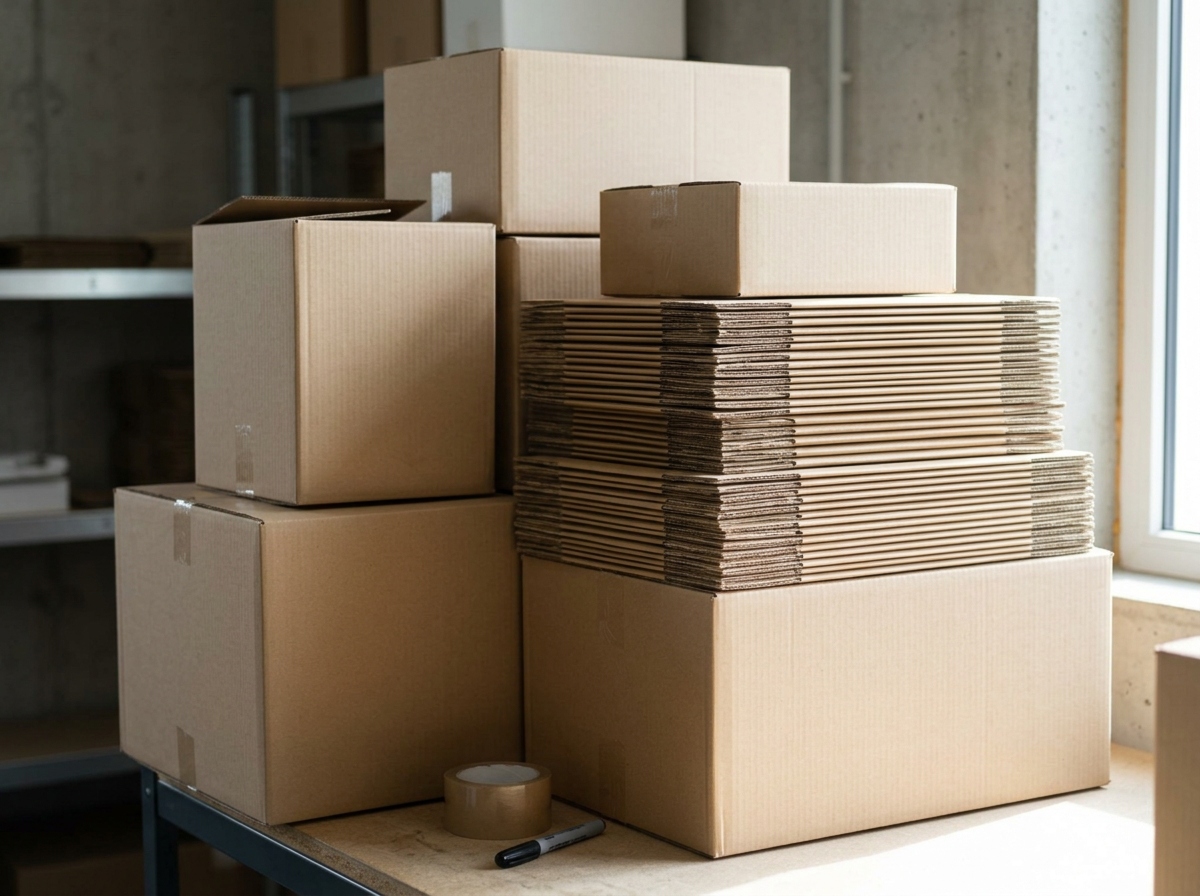
Corrugated boxes are made by cutting sheets of corrugated cardboard. Die-cutting machines cut the sheets to the right size, add slots for interlocking box flaps, and fold lines for easy folding into shape.
After preparing the sheets, glue is applied to the flaps or side seams. Once the glue sets, the boxes are folded flat and stacked in bundles.
What is corrugated cardboard?
Corrugated cardboard is a durable and lightweight material made by sandwiching a fluted (wavy) paper layer between two flat linerboards. This structure provides great strength and shock absorption.
Corrugated cardboard is also called corrugated fiberboard, which is the correct and more precise term for it. Fiberboard is a type of thick paper material included in the broader category called cardboard. Because of its special wavy (corrugated) layer, people usually say “corrugated cardboard” instead of “corrugated fiberboard.”
What is a linerboard in corrugated boards?
Linerboard is a flat paper material that forms the outer and inner surface of corrugated board. It is glued to the fluted (wavy) medium in the center, creating a strong structure. Linerboard protects products and offers a smooth surface for printing branding or product details.
There are several types of linerboard, each serving a specific purpose:
- Brown Kraft Liner is the most common type, made from virgin fibers. Known for strength and a natural brown finish.
- White Kraft Liner features a white outer layer for high-quality printing and a professional look.
- Test Liner is produced from recycled fibers and offers an eco-friendly option for corrugated boards.
- Barrier liners include special coatings or layers that resist moisture, grease, or chemicals.
What is flute in corrugated packaging?
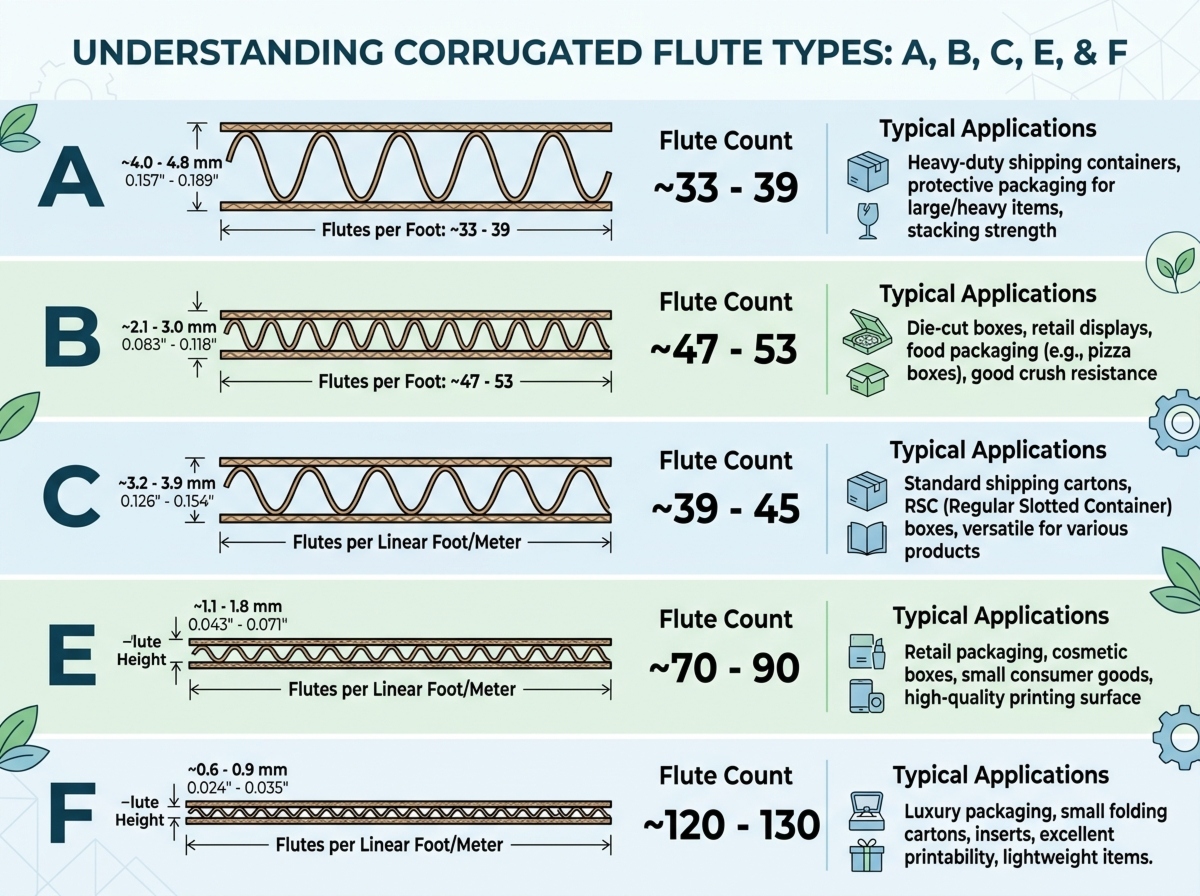
A flute is the wave-shaped layer inside corrugated boards that sits between liner boards. Flutes provide strength and rigidity for stacking and protecting products. They absorb shocks during shipping and cushion fragile items. They help keep the box’s shape under pressure. Flutes also insulate against temperature changes.
There are five main flute types, each with specific thicknesses and applications:
- A-Flute: The thickest flute, measuring about 5 mm. It offers excellent cushioning and strong stacking capabilities, making it ideal for heavy or fragile items. But it provides less detail for printing.
- B-Flute: Approximately 3 mm thick, B-flute resists crushing well and supports high-quality printing. It is commonly used in retail packaging applications.
- C-Flute: Around 4 mm thick, C-flute strikes a good balance between strength and cushioning. It is compressible, crush-resistant, and the most common flute type for shipping boxes.
- E-Flute: A thin flute at roughly 1.6 mm, E-flute saves space and reduces costs. It is widely used for consumer goods and retail packaging.
- F-Flute: The thinnest flute at about 0.8 mm, F-flute is stiff and smooth. It is suited for premium packaging that demands rigidity and excellent print quality.
What are three types of corrugated cardboard?
The four types of corrugated cardboard are single face, single wall, double wall, and triple wall. Each type has unique strengths and protection levels to suit different packaging needs. A single face works well for cushioning and wrapping fragile items; a single wall is great for lightweight items like books. A double wall suits heavier products, such as appliances. A triple wall is best for industrial equipment, like machinery parts.
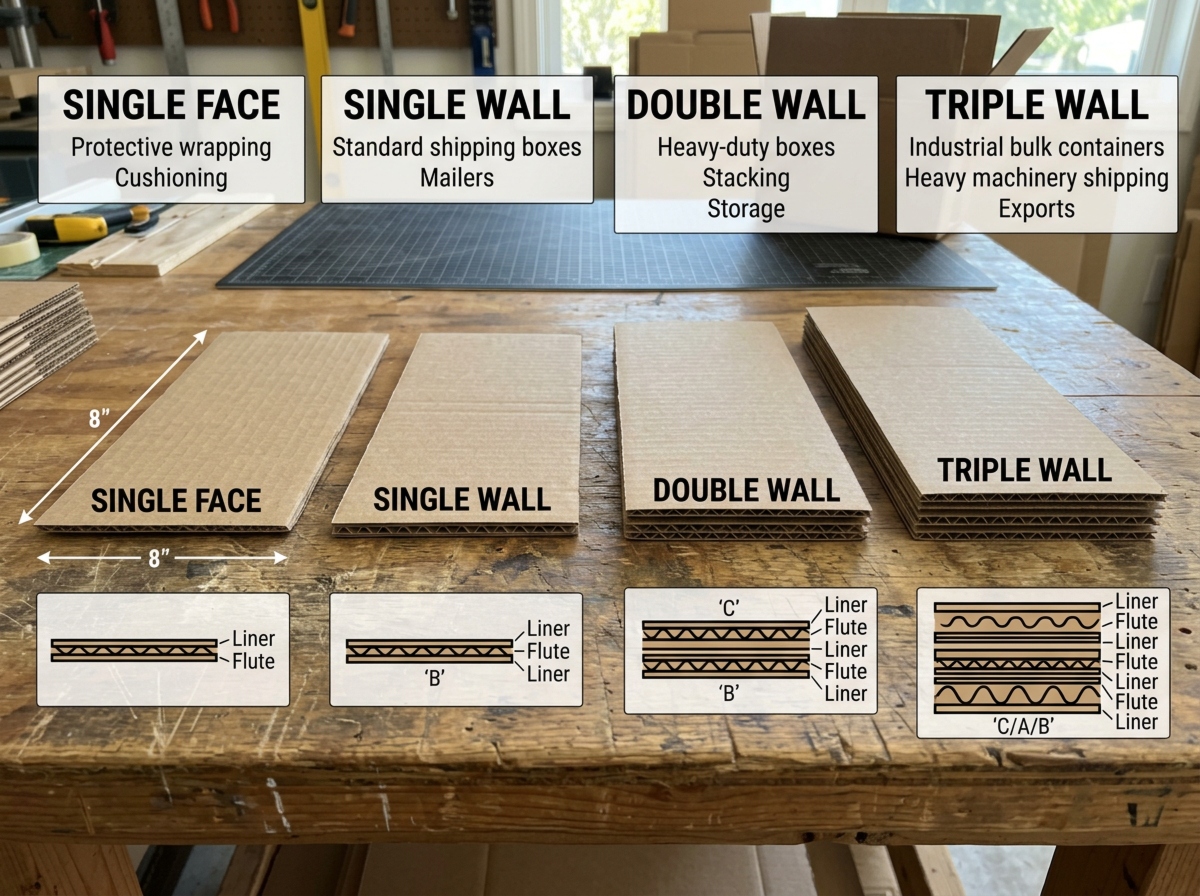
- Single face
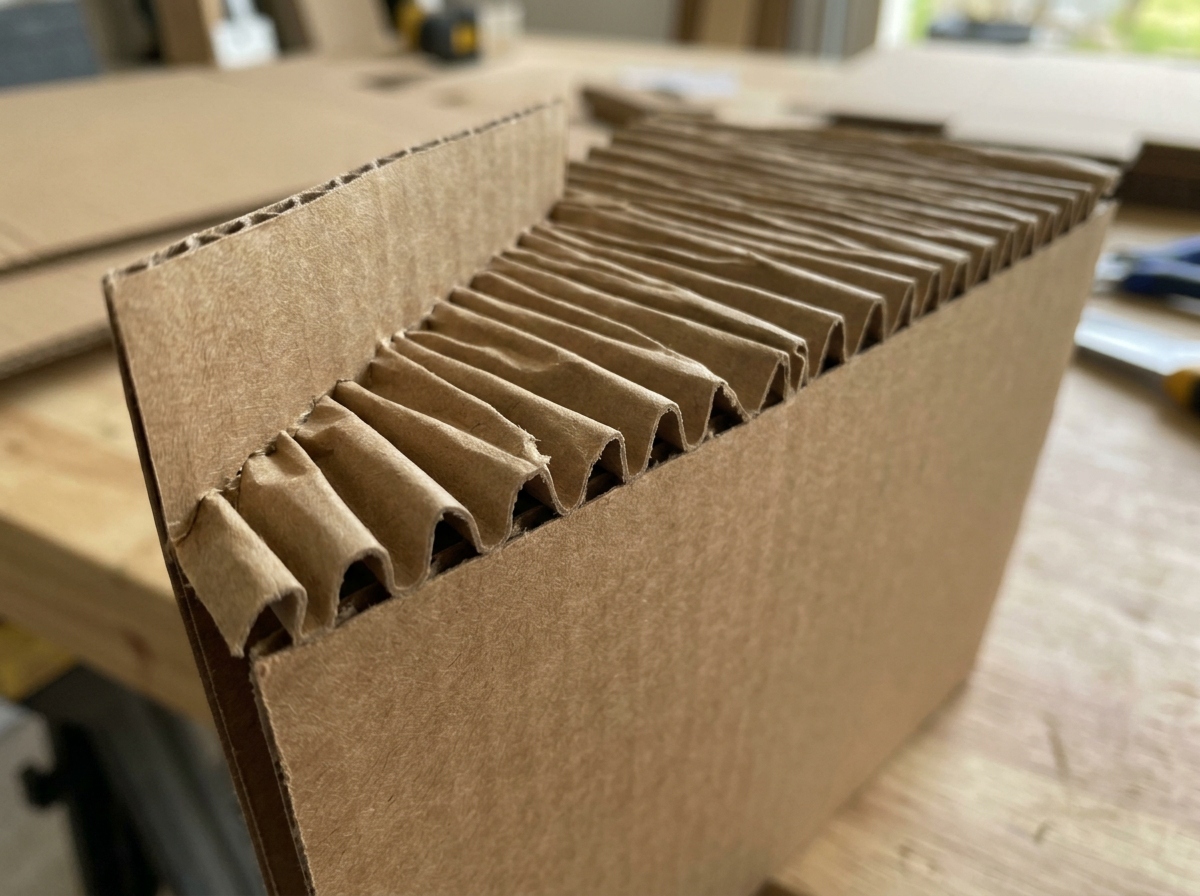
Single-face corrugated cardboard consists of one fluted layer attached to a single linerboard. It’s lightweight and flexible, plus it cushions well. This makes it perfect for wrapping and protecting lightweight, delicate items.
- Single wall
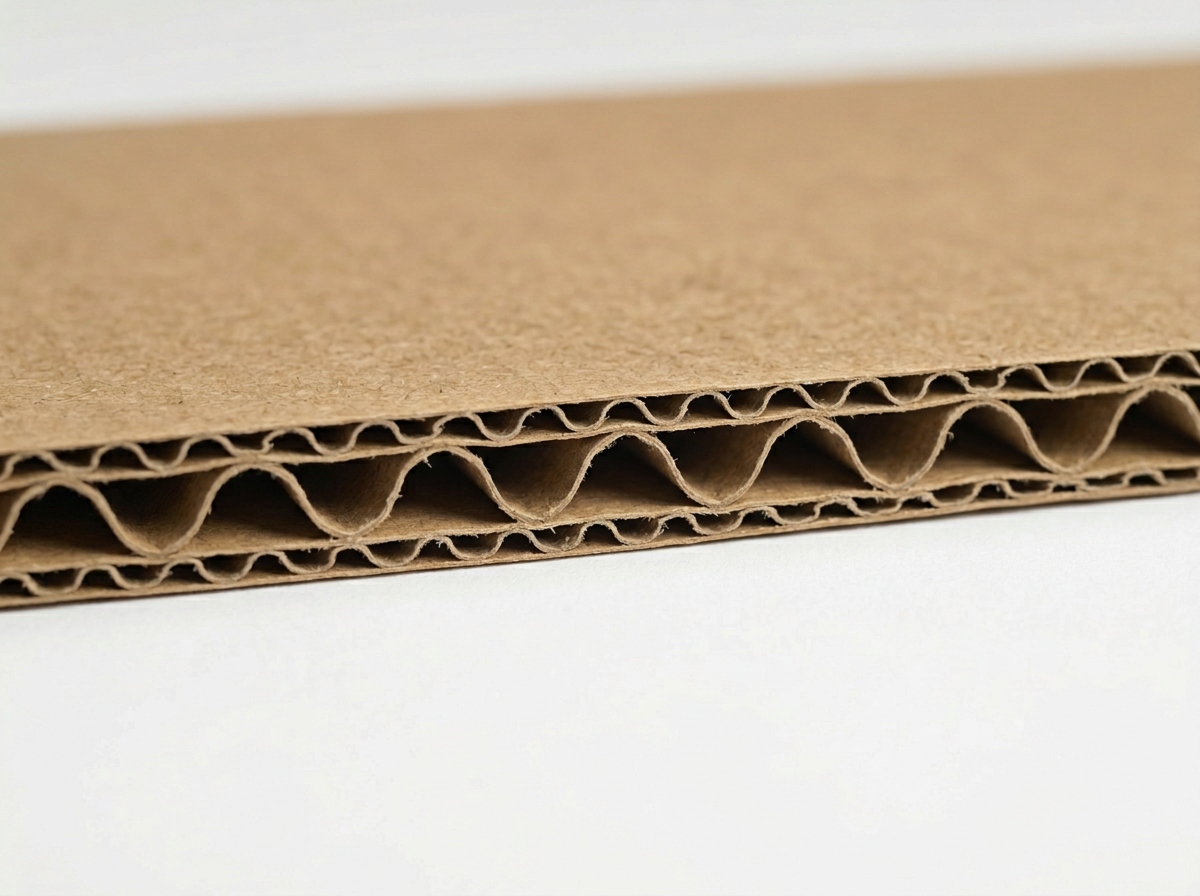
A single wall corrugated board has one fluted paper layer glued between two flat linerboards. This is the most common type used for everyday packaging. A single wall is light, which cuts shipping costs. Plus, it has a smooth surface that’s great for printing.
- Double wall
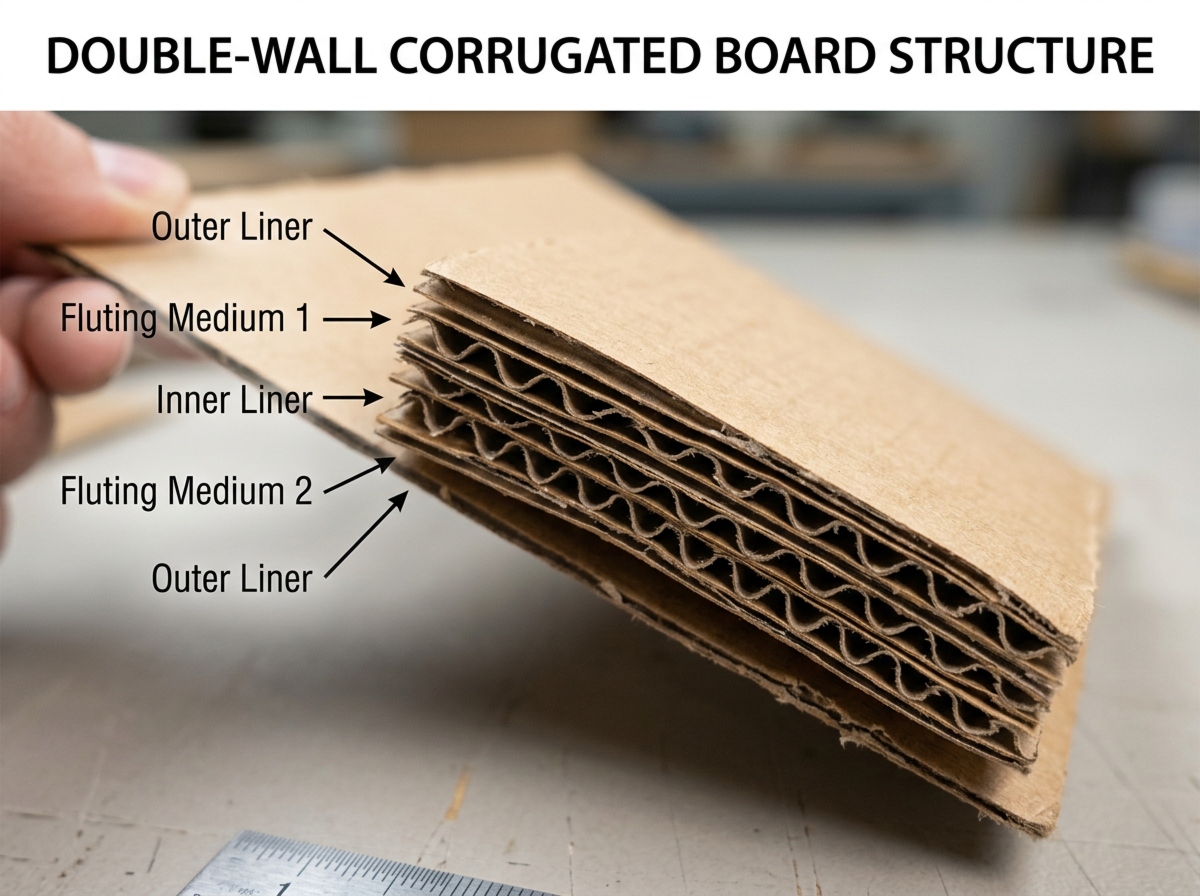
A double-wall corrugated board is built with two fluted layers and three linerboards. This extra layer makes the board thicker and stronger than a single wall and increases both cushioning and crush resistance. Double-wall boxes work well for shipping heavy and fragile items.
- Triple wall
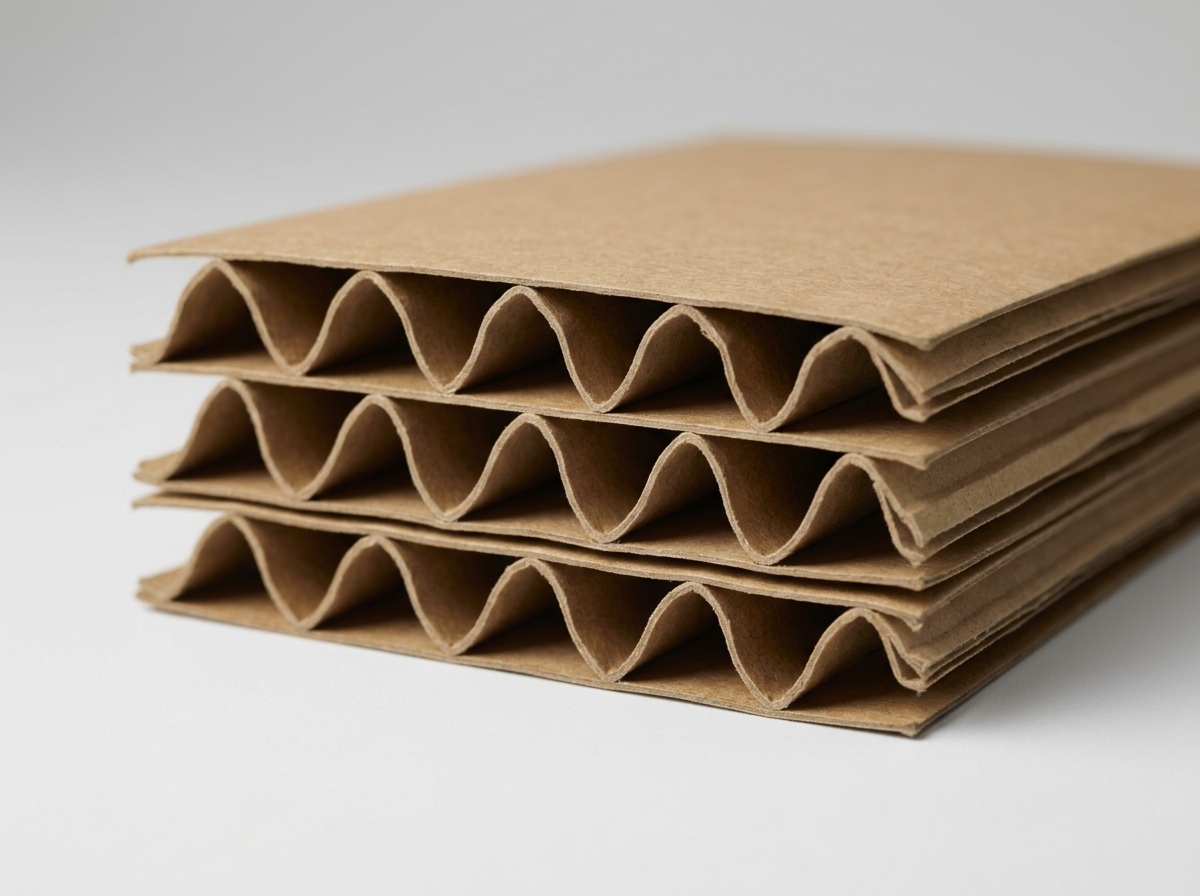
A triple-wall corrugated board has three fluted layers and four linerboards, making it the strongest type. This heavy-duty structure can handle very heavy loads and rough handling. They are sometimes used instead of wooden crates for shipping industrial equipment, like engines and metal parts.
5 Common types of corrugated boxes
Corrugated boxes come in five types based on their structure and packaging purpose:
- Slotted Boxes: Made from a single sheet of corrugated board, these boxes fold easily and are ideal for a wide range of products.
- Telescope Boxes: Designed with a top and a bottom that fit over each other for added strength and protection. Perfect for stacking fragile items.
- Folders: These are single-piece designs. They wrap snugly around flat or narrow items, such as books, documents, and framed pictures.
- Die-cut boxes: Custom-shaped boxes that fit products well and support strong branding.
- Tab Lock Roll End boxes: Sturdy, glue-free boxes. They have locking flaps, are easy to put together, and can be reused.
- Slotted Boxes
Slotted boxes are the most common type of corrugated box. They are made from one sheet of corrugated cardboard. The cardboard is scored and slotted, allowing flaps to fold and create the box. They are efficient to produce and easy to store flat.
Slotted boxes have the following variations:
- Regular Slotted Container (RSC): The top and bottom flaps are the same length. They meet at the center when closed, providing good protection for most items.
- Half Slotted Container (HSC): Like an RSC but with only one set of flaps (usually on the bottom); the open top makes it convenient for easy loading and display.
- Full Overlap Slotted Container (FOL): All flaps are the same length and overlap completely when closed. This design provides extra strength and protection for heavy or fragile items.
- Telescope Boxes
Telescope boxes are designed with two separate pieces: a top (lid) and a bottom (body) that fit over each other, much like a telescope tube. This double-wall design offers great stacking strength. Telescope boxes have the following variations:
- Full Telescope Design Style Container (FTD): The top and bottom sections are the same depth. They telescope over each other, creating double walls on all sides. This design offers the greatest protection.
- Design Style Container with Cover (DSC): The bottom is a one-piece tray. Flaps fold up to create side walls. A separate cover fits snugly on top.
- Full Telescope Half Slotted Container (FTHS): Merges the designs of a telescope box and a half-slotted container. The bottom is like a half-slotted container with an open top, while the full-depth lid telescopes over it, adding strength and ease of packing.
- Folders
Folders are made from one piece of corrugated cardboard. To make a folder, the cardboard is creased and folded around the product. Then, it is secured with flaps or tabs. Folders are lightweight, easy to assemble, and provide a neat, protective fit without excess bulk. Folders are designed to wrap around flat or narrow items such as books, printed materials, and framed pictures.
- One-Piece Folder (OPF): This is a single sheet of corrugated cardboard and has flaps that wrap around the product.
- Five-Panel Folder (FPF): This folder has five panels. It wraps around the product, giving it reinforced edges and added stacking strength.
- Trays are open-top containers made from one piece of corrugated board. They have low side walls and are used to hold or display items such as canned drinks and fruit.
- Die-cut boxes
Die-cut boxes are custom-shaped packages made using a die-cutting process. This method ensures precise dimensions and unique designs. They fit products well, protect them better, and look good for branding. They are often used for electronics, cosmetics, food, and gift items.
- Tab Lock Roll End boxes
Tab Lock Roll End boxes have flaps that roll in and lock with tabs, making them strong without using glue. They are easy to set up, sturdy, and reusable. These boxes are often used for promotional kits, electronics like headphones, and subscription packaging.
What are the tests for corrugated boxes?
To make sure corrugated boxes are safe and perform well, we use different tests and simulations. The table below shows some of the major tests, what they measure, and how they help in packaging design and quality control.
| Test/Model | What It Measures | Certification Implies | Why Customers Demand It |
| Box Compression Test (BCT) | Maximum vertical load before failure | Box can handle stacking weight during shipping and storage | Ensures pallet safety and prevents product damage in transit |
| Edge Crush Test (ECT) | The strength of the board edge | Strong edges for stacking strength and structural stability | Predicts performance in stacking |
| Mullen Test (Burst Strength) | Pressure required to burst the board (puncture resistance) | Box can resist internal/external pressure and rough handling | Protects contents from punctures, tears, and crushing forces |
What are the certifications and standards for corrugated boxes?
Certifications and standards in corrugated boxes check how well items resist compression, stack durability, and protect against moisture and impact during shipping. They prove that boxes can withstand real-life shipping and storage conditions and keep products safe from damage. Major certifications and standards include:
- ASTM D1974 outlines proper methods for closing, sealing, and reinforcing fiberboard boxes. It keeps boxes securely closed during handling and transport.
- ISO 12048 is an international standard. It tests how strong filled shipping boxes are when compressed and stacked. It checks if a box can hold the weight of stacked boxes during storage or transit.
- ISTA (International Safe Transit Association) protocols include tests that mimic real-world shipping conditions. These tests cover drops, vibrations, impacts, and environmental changes. Passing ISTA tests proves that packaging can withstand the tough handling of shipping.
What are corrugated boxes used for?
Corrugated boxes are popular packaging choices. They are used for shipping, product packaging, and custom displays. Many industries rely on them, including electronics, food and beverage, personal care, and retail.
Shipping and transport
Corrugated boxes are the top choice for shipping and distribution. They offer great strength, durability, and cushioning. Corrugated boxes protect fragile products, including electronics like tablets and phones, books, and industrial parts such as valves and machine components.
Their design helps stack items efficiently. This allows for safe, space-saving storage in warehouses and transport vehicles. Also, you can easily label corrugated boxes for tracking. They meet shipping rules for various industries, which helps logistics run smoothly.
Product packaging
Corrugated boxes are common for packaging products. They are used in many industries, such as food and beverage, heavy-duty industrial, and electronics.
In the food and beverage sector, corrugated boxes help keep perishable items safe. They provide ventilation, resist moisture, and offer cushioning. This ensures freshness and safety during transport and storage. For heavy-duty and industrial uses, corrugated boxes’ tough build can handle rough handling and stacking. They are perfect for packaging machinery parts, automotive parts, and other large items.
Custom and display packaging
Corrugated boxes are widely used in marketing and retail to create attractive packaging and displays. Examples include point-of-purchase (POP) stands for chips or lipsticks, countertop displays for earbuds or smartwatches, and windowed cartons that showcase toys or bakery items.
Corrugated boxes can be made in custom shapes and designs, often featuring die-cut windows and vibrant, colorful printing. This helps brands, like snack companies and electronics retailers, stand out. They use bold logos and bright designs to grab attention. Eye-catching promotions, such as “Buy 1 Get 1 Free,” also boost sales.
Corrugated boxes can be printed in small batches and updated quickly. This gives businesses great flexibility. They are perfect for seasonal promotions, like Valentine’s Day gifts or Black Friday sales.
How to choose the right corrugated boxes?
Choose the right corrugated boxes for Heavy duty products
To choose the right corrugated boxes for heavy-duty products, focus on three key factors.
- Bursting Strength (Mullen Test): This test shows how much pressure a box can handle before it bursts. It is important for preventing punctures.
- Edge Crush Test (ECT): Shows how strong the box edges are to hold heavy stacks without crushing.
- Flute Size: Larger flutes like C provide better cushioning and support for heavy or bulky items.
Choose the right corrugated containers for shipping
When choosing corrugated containers for shipping, consider distance and shipping method. Longer distances need stronger boxes with higher ECT or burst strength to handle stacking and rough handling. Shipping by air or courier? Lighter boxes cut costs. For sea or truck shipping, choose boxes that are durable and moisture resistant.
Choose the right shipping box for branding
Select branded shipping boxes based on the printing method. Use flexographic for simple designs, digital for vibrant short runs, and litho-lamination for a premium finish. Add custom inserts and easy-open features to create a memorable unboxing experience.
Why choose corrugated boxes for packaging?
Businesses prefer corrugated boxes because they protect products, cut costs, support sustainability, and enhance brand visibility.
- Ensure product protection
Corrugated boxes are tough and long-lasting. Their fluted layer sits between two linerboards. This design forms air pockets that soak up shocks. This design resists impacts, vibrations, and compression during transport.
They also handle risks like rain, humidity, stacking pressure, and dust. Features such as moisture barriers, reinforced edges, and corner protectors add extra protection.
A 2016 study by Piergiovanni found that food in corrugated boxes had a 4.9% failure rate. In contrast, plastic boxes had an 8.3% failure rate under the same conditions. This shows that corrugated packaging helps reduce damage during transit.
- Reduces packaging costs
Corrugated boxes save money. They use fewer raw materials and don’t need costly finishes, like laminates or UV coatings. They are mostly made from recycled fibers such as OCC (old corrugated containers), which costs less than virgin fibers.
Their lightweight design cuts shipping fees. Also, they ship flat, which saves warehouse space and lowers logistics and labor costs.
- Improving packaging sustainability
Corrugated boxes are made from corrugated cardboard, which comes from renewable paper fibers. This material is biodegradable and compostable. It cuts down on landfill waste. It also stops pollution from plastic packaging and harmful chemicals.
Corrugated cardboard is fully recyclable. It’s mostly made from recycled materials, like old cardboard boxes (OCC). This helps support a circular economy by cutting waste and saving resources. In 2022, the Confederation of European Paper Industries (CEPI) reported an 82.5% recycling rate for paper packaging in Europe.
- Enhance brand visibility
Brand visibility refers to how easily and frequently a brand is recognized and remembered by consumers. Corrugated boxes increase brand visibility. They provide customizable surfaces for logos, colors, and taglines. This helps businesses stand out.
In e-commerce, packaging is key for branding since there are no physical store visits. Customized corrugated boxes connect the brand and the consumer. They improve the unboxing experience and strengthen the bond with the brand.
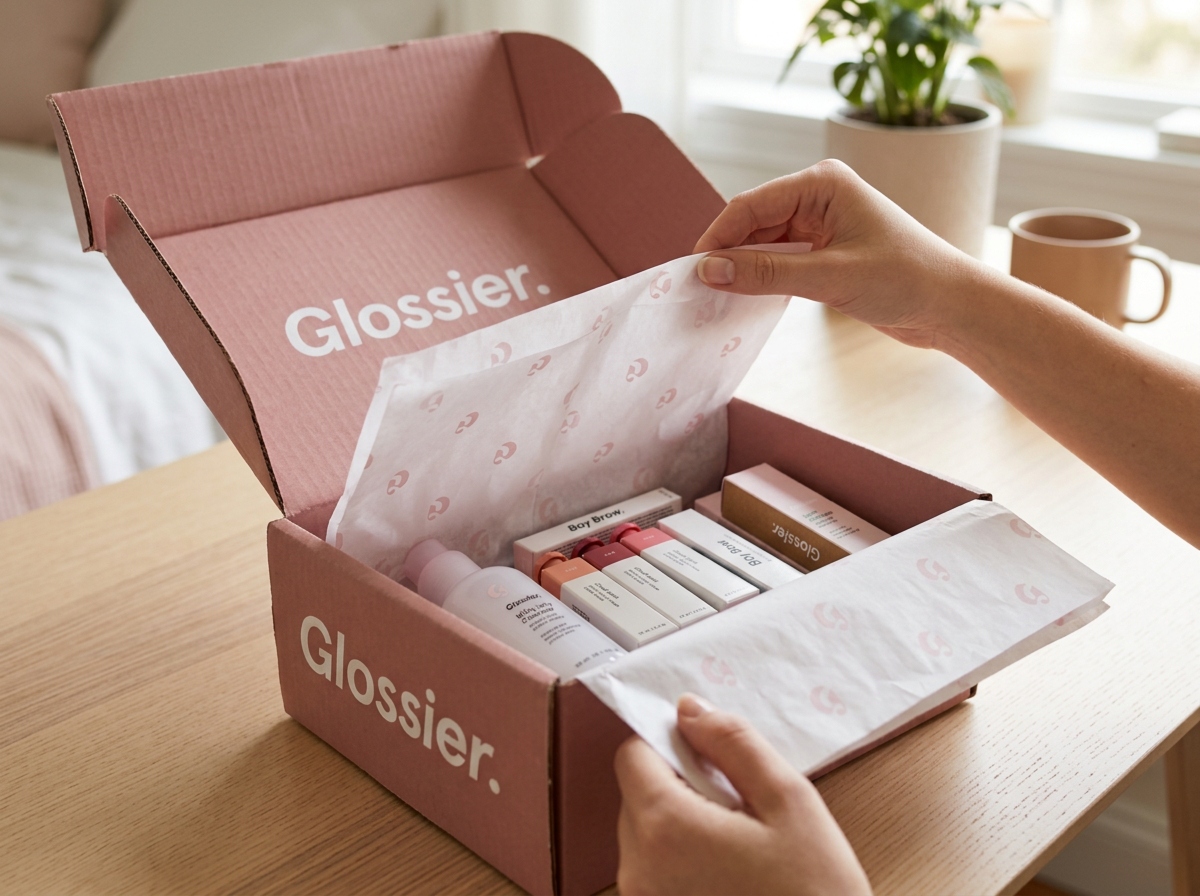
Glossier uses special pink corrugated boxes. This helps build its brand identity and makes unboxing memorable.
How do I measure a corrugated box properly?
To measure a corrugated box correctly, always use the inside dimensions, not the outside. This ensures your product fits comfortably and leaves room for protective materials.
If you plan to add cushioning like bubble wrap or foam inserts, allow a little extra space so the fit isn’t too tight. The standard order for box dimensions is Length × Width × Height (L × W × H):
- Length (L): The longest side of the box opening (left to right when looking inside).
- Width (W): The shorter side of the box opening (front to back).
- Height (H): The distance from the box opening down to the base (top-to-bottom depth).
Are there standard sizes for corrugated boxes or can they be custom made?
Corrugated boxes are available in many standard sizes for shipping. They can also be made to fit specific product shapes, sizes, or branding needs. For custom corrugated boxes, work with a packaging manufacturer. They can design and produce boxes that fit your product and brand perfectly.
Can corrugated boxes be recycled? Are they environmentally friendly?
Yes, corrugated boxes can be recycled and are widely regarded as environmentally friendly. Corrugated boxes are made from corrugated cardboard. This material is recyclable and often contains recycled fibers. Recycled fibers come from old cardboard boxes used in shipping (OCC) and paper waste collected from homes and offices.
How is a corrugated box different from a regular cardboard box?
A corrugated box differs from a regular cardboard box mainly in its structure and strength.
Corrugated boxes consist of a fluted paper layer between two flat linerboards. This design makes them strong, cushioned, and resistant to crushing.
Regular cardboard boxes, also known as paperboard or chipboard, have one flat layer of thick paper. They lack the fluted layer, so they’re less sturdy. This makes them better for lightweight or retail packaging, not for heavy-duty shipping.
What is the typical cost range for custom corrugated boxes?
Custom corrugated boxes usually cost between $0.10 and $3.00 each. The price depends on size, material strength, how much customization you want, and how many you order. Basic shipping boxes without printing are cheaper. Premium boxes cost more because they have full-color printing, special finishes, or double-wall strength.
What is the difference between folding cartons and corrugated boxes?
Folding cartons are made from single-layer paperboard. They are thinner and lighter. You can find them in retail packaging, for cereal boxes, cosmetics, and small electronics, such as earbuds or phone chargers. Whereas corrugated boxes are made from corrugated cardboard. This design makes them stronger and more resistant to impact. Corrugated boxes are great for shipping, storage, and protecting heavier products during transport.