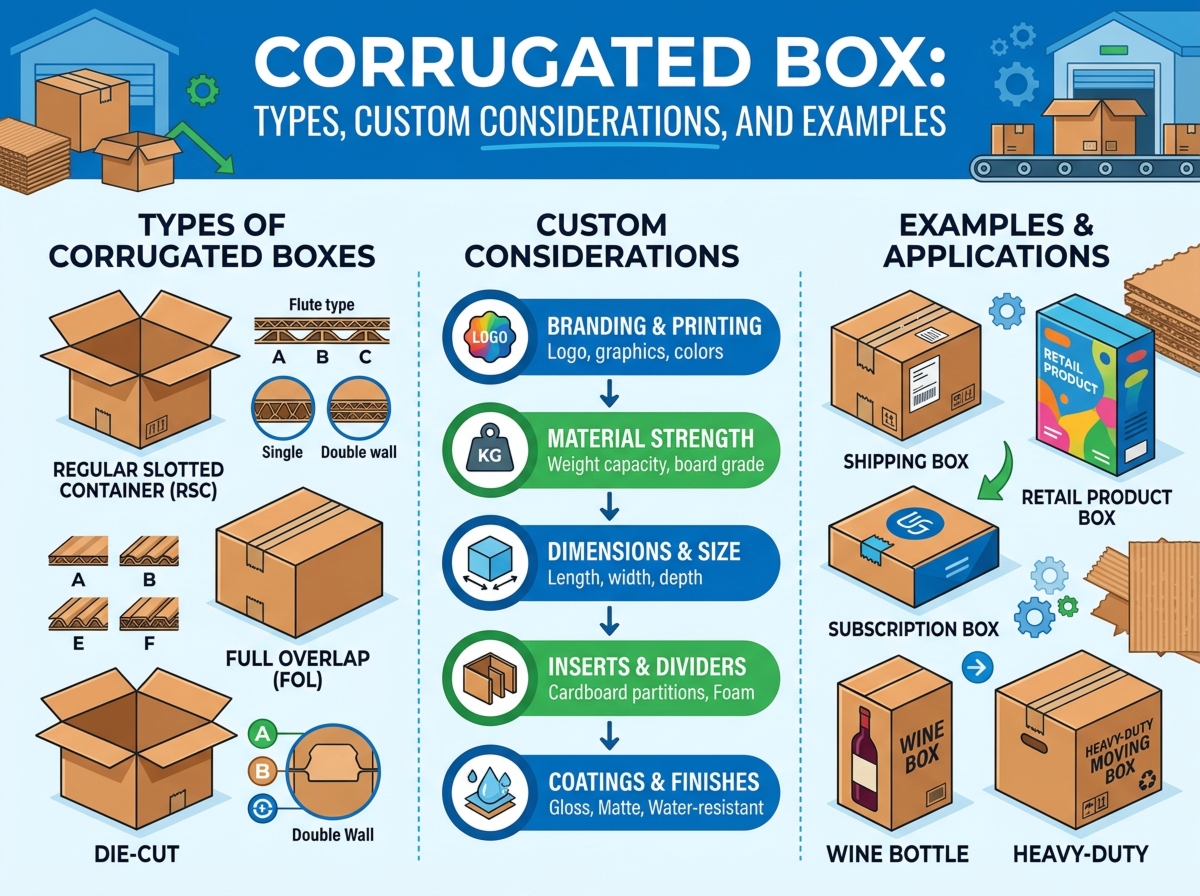
A corrugated box is a strong, lightweight packaging container made from corrugated cardboard. Corrugated cardboard has a fluted layer between two flat linerboards. This design gives it strength and cushioning.
Common corrugated box styles include Regular Slotted Container (RSC), Half Slotted Container (HSC), Overlap Slotted Container (OSC), Full Overlap Slotted Container (FOL), Folders, Mailer Box, Telescope Boxes, Full Telescope Design Style Container (FTD), Full Telescope Half Slotted Container (FTHS), and Die-Cut Boxes.
Corrugated boxes come in different wall structures: single wall, double wall, and triple wall. They also vary by flute type, which can be A, B, C, E, or F. These factors affect the box’s strength and thickness.
Customization of corrugated boxes depends on product protection needs, branding and aesthetics, cost and budget, and customization options. Examples of corrugated boxes include e-commerce shipping boxes, pizza boxes, subscription boxes, shoe boxes, and packaging for heavy machinery parts.
Classification of corrugated boxes by style
Corrugated boxes are classified according to their styles into the following types: Regular Slotted Container (RSC), Half Slotted Container (HSC), Overlap Slotted Container (OSC), Full Overlap Slotted Container (FOL), Folders, Mailer Box, Telescope Boxes, Full Telescope Design Style Container (FTD), Full Telescope Half Slotted Container (FTHS), and Die-Cut Boxes.
- Regular Slotted Container (RSC)
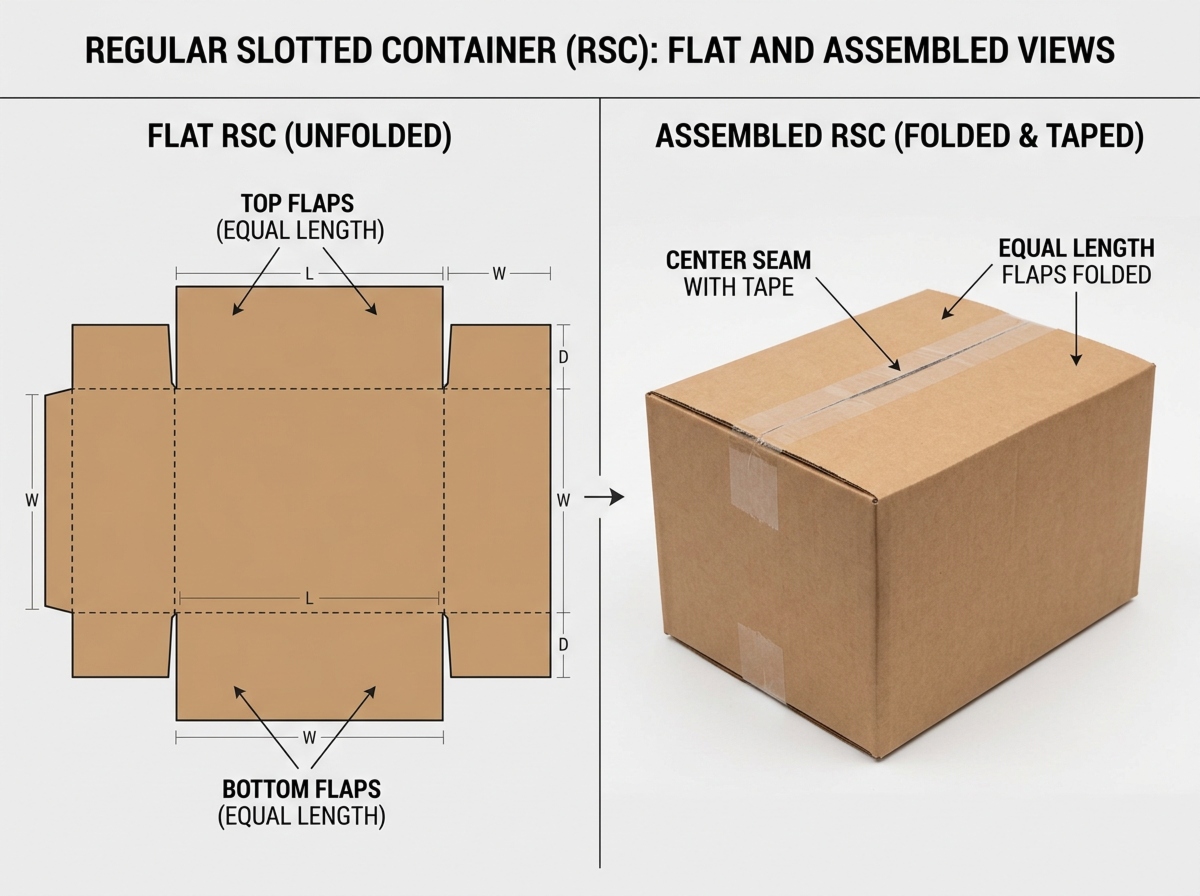
The Regular Slotted Container (RSC) is the most common and cheapest corrugated box style used today. Also called a standard shipping box or slotted carton, it is designed with flaps of equal length, typically the outer flaps that meet at the center when the box is closed and are usually sealed with tape. The inner flaps do not meet and leave a gap, which varies based on the box’s length-to-width ratio.
The RSC is made from one sheet of corrugated board. It requires minimal cutting and has no extra folds or covers. This design gives it a clean rectangular shape, complete with top and bottom flaps. It is efficient to produce, ships flat, and is easy to store.
Assembly is simple: fold the box into shape, tape the bottom flaps, place the product inside, and seal the top flaps. The design allows for stacking. It fits internal dividers or cushioning. Also, it works well in manual and automated packing lines.
RSC boxes are popular for many uses. They are perfect for e-commerce shipping, retail delivery, storing electronics, warehouse needs, and general packaging.
- E-commerce Shipping: Packaging clothing, electronics (desktop computers, printers, TVs), books, and household goods.
- Retail Product Packaging: It protects small appliances like toasters and blenders. It also safeguards toys, cosmetics, and personal care items.
- Warehouse Storage: Organizing office supplies, spare parts, and household items.
- Moving boxes: Boxes filled with books, kitchenware, or clothes during a household relocation.
- Food and beverage: Shipping dry goods, snacks, outer cartons containing cereal boxes, and bottles like wine, beer, and olive oil. Liquids and fragile bottles often need dividers, padding, or double-wall RSCs for safe transport.
- Industrial Shipping: Transporting lightweight machinery parts, tools, and small equipment.
- Half Slotted Container (HSC)
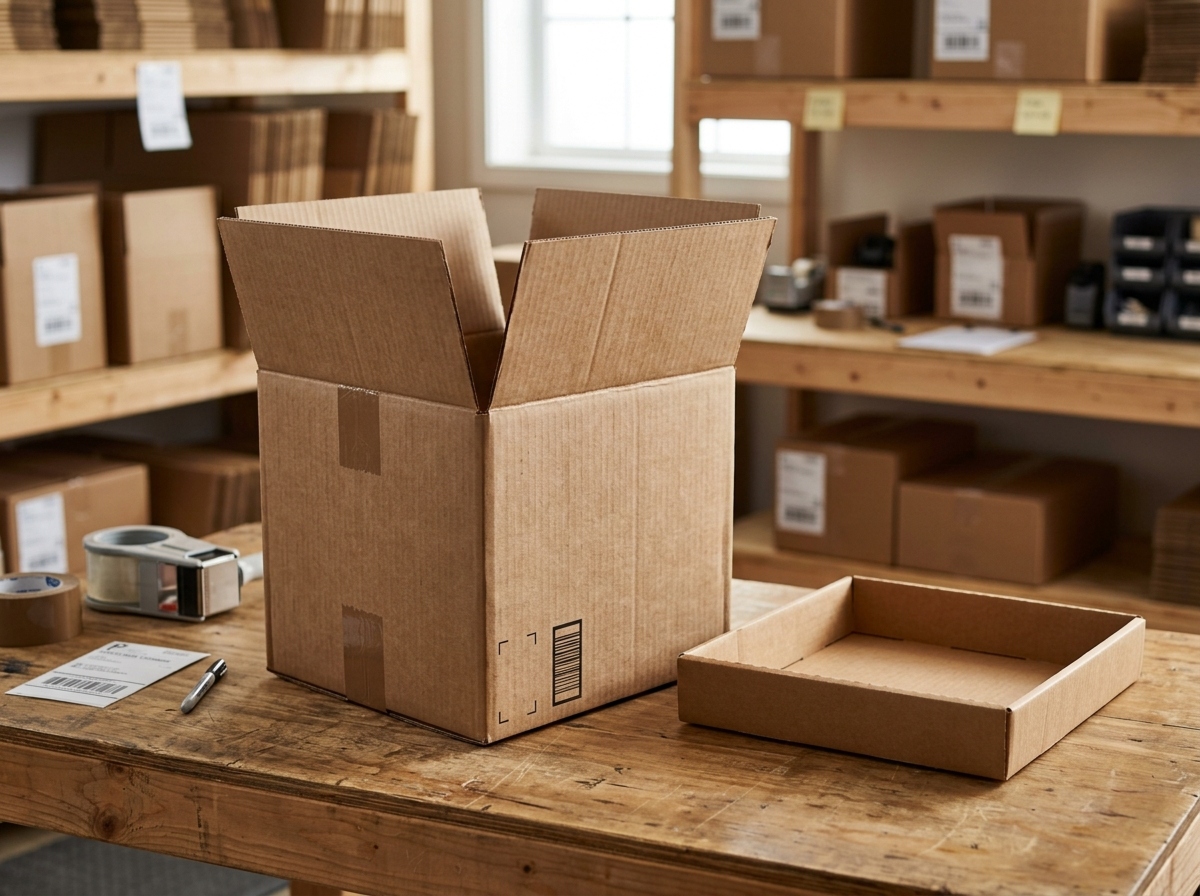
The Half Slotted Container (HSC) is a variation of the RSC with no top flaps. It is made from a single sheet of corrugated board and features flaps only on the bottom.
In appearance, the HSC looks like an open box with four bottom flaps (two outer and two inner) that fold inward. The outer flaps meet at the center and are usually sealed with tape. The top remains completely open, allowing products to be easily inserted or removed. It is often used with a separate lid or paired with a cover like a full telescope top.
Assembly involves folding the box into shape and sealing only the bottom flaps with tape or glue. Since the top is open, there is no need for upper flap sealing, which saves time during packing.
The HSC is valued for its easy loading, clean appearance, and ability to pair with display or cover options. The HSC’s common applications include:
- Record Storage: Used in offices, schools, and government buildings for storing files and documents.
- Specialized Packaging: This is for telescopic box designs with covers. They protect oddly shaped products, like furniture parts, sports gear, and automotive accessories.
- Food Packaging: Used for bulk packing of bakery goods and fresh produce.
- Electronics Packaging: HSCs package larger electronics such as audio devices, small appliances, and computer parts. They come with cushioning and optional lids for added protection.
- Retail Display: Open-top HSCs serve as dump bins for promotional or seasonal sale items.
- Shoe and Apparel Boxes: Often paired with detachable lids for packaging and displaying shoes and clothing.
- Overlap Slotted Container (OSC)
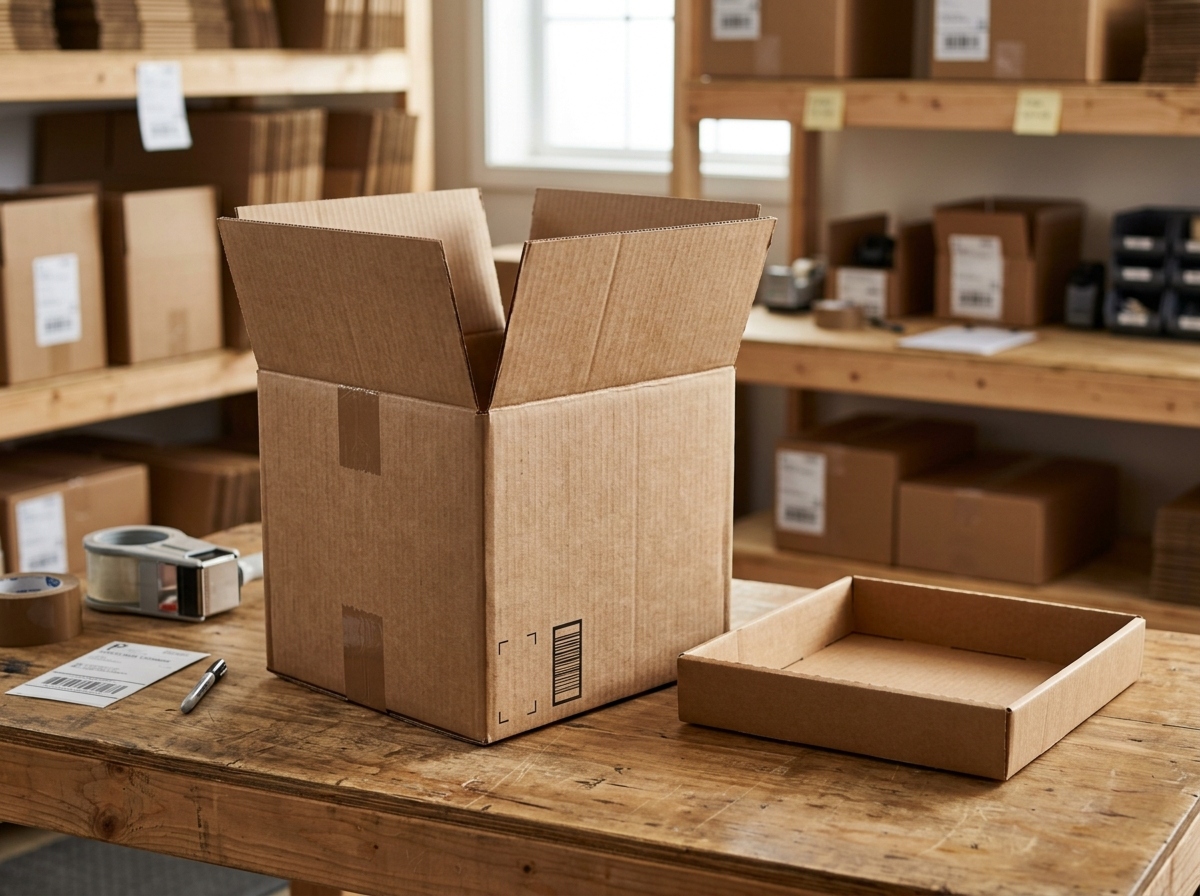
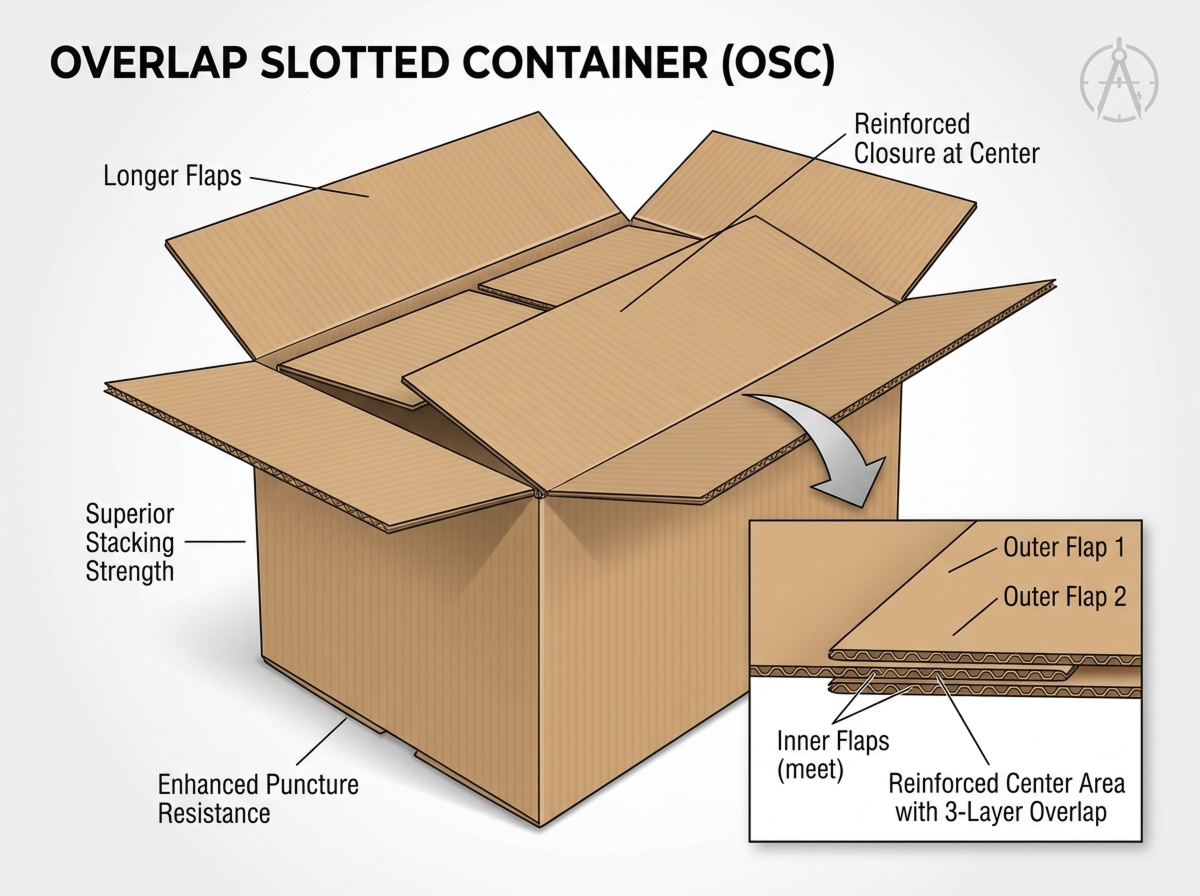
The Overlap Slotted Container (OSC) is similar to the Regular Slotted Container (RSC). Both are made from one sheet of corrugated board. They also have four flaps on the top and bottom. However, they differ in flap design. The OSC outer flaps overlap by at least one inch (or more) when closed, instead of just meeting in the center as they do with an RSC. The overlapping design makes a strong closure. It resists bending and punctures. This feature makes the box great for heavy or high-stress shipments.
The amount of overlap can vary based on how much reinforcement is needed. It is shipped flat and assembled by folding it into shape and sealing both the top and bottom flaps, usually with tape, staples, or glue.
OSCs are great for moving heavy items. They can carry bulk books, reams of printer paper, metal tools, and automotive parts with sharp edges. They are great for hardware kits and other heavy items. They provide extra durability and puncture resistance during transport.
- Full Overlap Slotted Container (FOL)
The Full Overlap Slotted Container (FOL) is a heavy-duty box in which the outer flaps are long enough to completely cover each other when closed. This forms a double layer on the top and bottom. It provides excellent strength, puncture resistance, and insulation.
It is assembled like an RSC but provides better protection for heavy or fragile items. FOL boxes are often used to ship furniture parts, metal tools, and industrial equipment. They are also great for fragile electronics like flat-screen monitors, laptops, and tablets. These boxes provide extra support during transit.
- Folder/One Piece Folder (OPF)
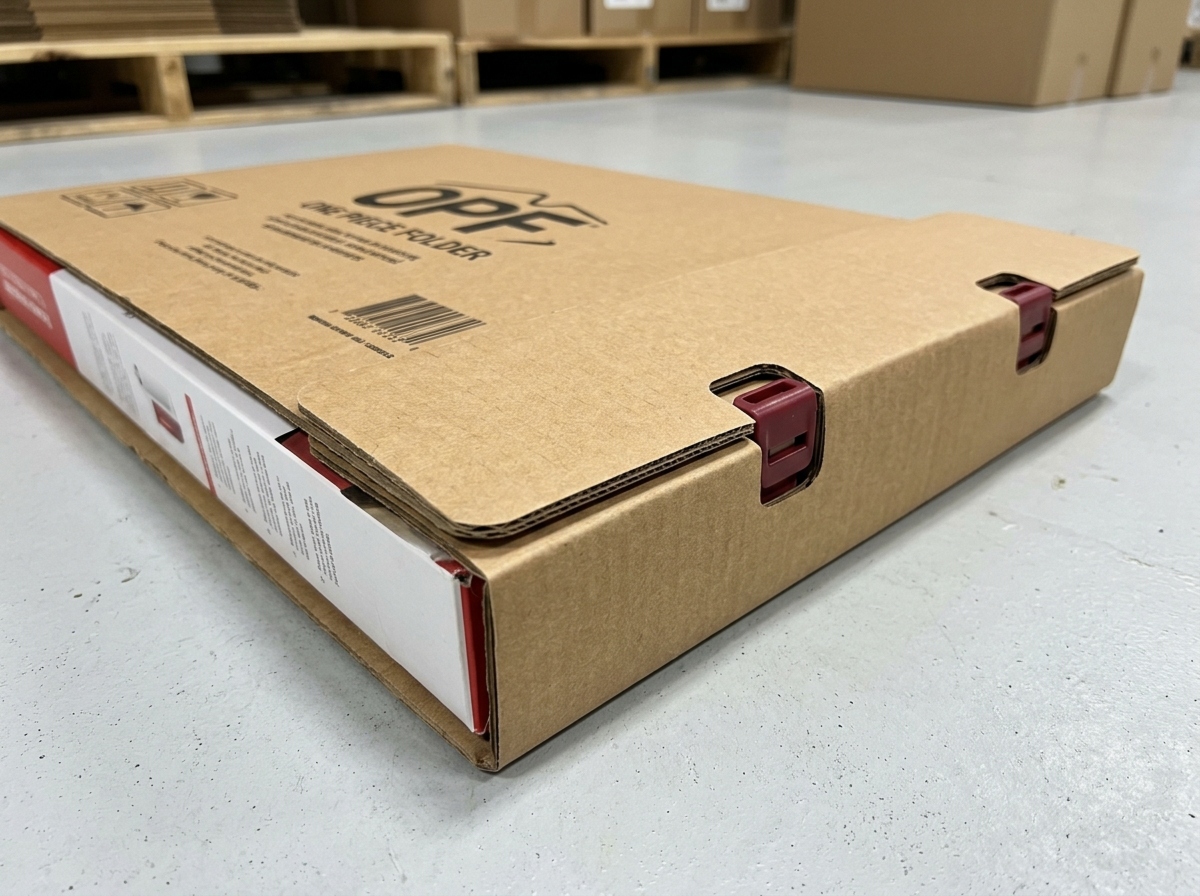
The One Piece Folder (OPF), also called a folder-style box, is made from a single corrugated sheet that folds around the product. All flaps are on one side, and it closes securely with tape, glue, or straps. It offers a tight fit and good protection for flat, narrow items.
OPFs are ideal for shipping or storing books, catalogs, laptops, picture frames, printed materials, and other thin products. The design keeps things from moving inside the box. It also safeguards the edges and corners during handling.
- Mailer Box
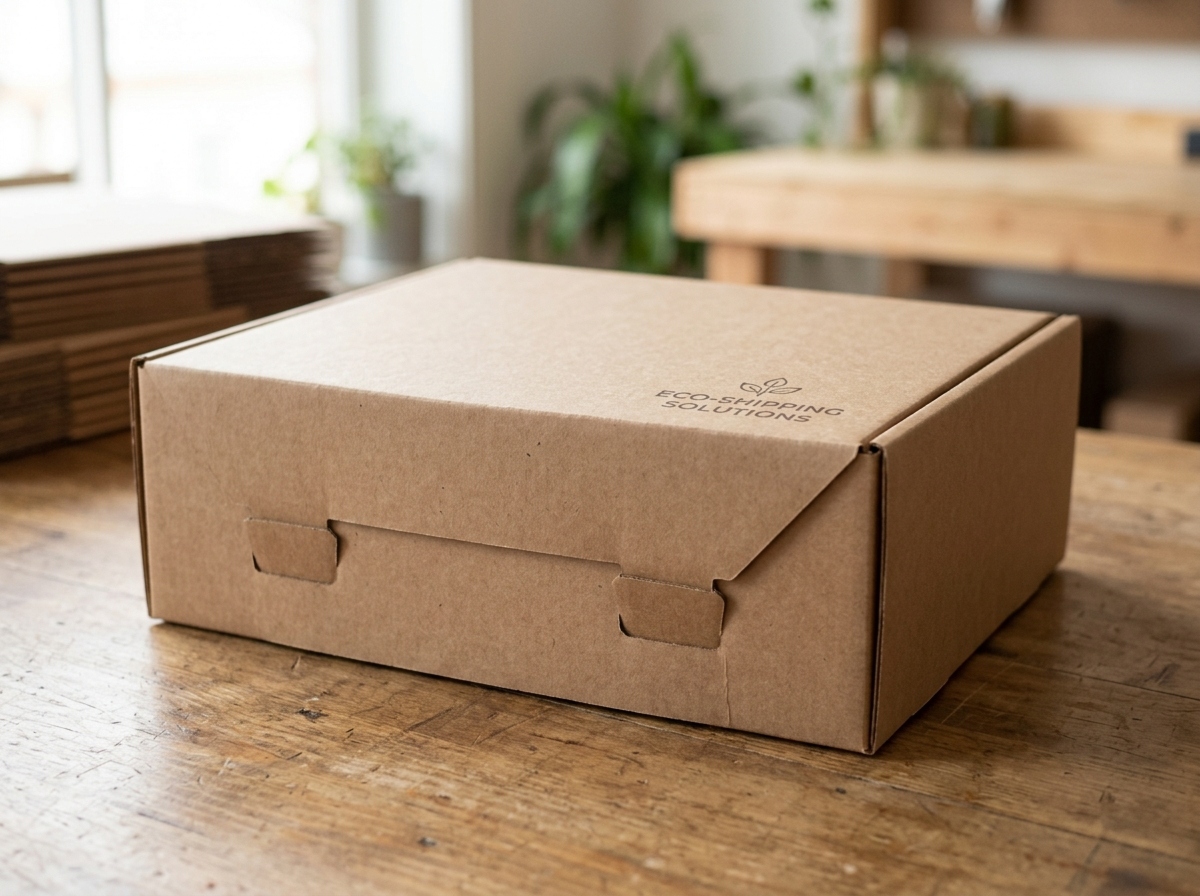
A Mailer Box is a self-locking corrugated box. It allows for easy and secure shipping without needing extra tape or glue. But, some boxes may still need tape or glue due to product weight or handling needs. It typically features tuck-in flaps and locking tabs that hold the box closed.
Assembly is simple. The box is folded along pre-scored lines, the side panels are tucked in, and the locking tabs snap into slots to secure the closure. This quick setup makes mailer boxes ideal for fast packing operations.
Mailer boxes are commonly used for subscription kits (beauty, snacks, wellness), small electronics (wireless earbuds, smart devices), and cosmetics.
- Telescope Boxes
Telescope Boxes consist of two separate pieces (a top cover and a bottom tray) that fit over each other to form a complete box. This design offers adjustable height and added protection. It’s great for tall or odd-shaped items.
Assembly is easy. The bottom tray is placed first, the product is set inside, and then the top cover slides over to close the box securely.
Telescopic boxes work great for long or oddly shaped items. This includes posters, fishing rods, and golf clubs. They work well for flat and fragile items like framed artwork, mirrors, and flat-screen TVs. Telescopic boxes also carry heavy or bulky items. This includes appliances, furniture parts, and large machinery components.
- Full Telescope Design Style Container (FTD)
[Image: Full Telescope Design Style Container (FTD) with overlapping top and bottom trays for strong double-wall protection]
The Full Telescope Design Style Container (FTD) consists of two fully separate trays (base and lid) that completely overlap each other on all sides. This full-coverage design makes for strong double walls. This gives the box great stacking strength and impact resistance.
FTD boxes are commonly used for large, flat, or fragile items such as mirrors, framed artwork, monitors, and glass panels. They also work well for bulkier items like furniture parts and machinery. This is especially true when you need adjustable height and strong corners.
- Full Telescope Half Slotted Container (FTHS)
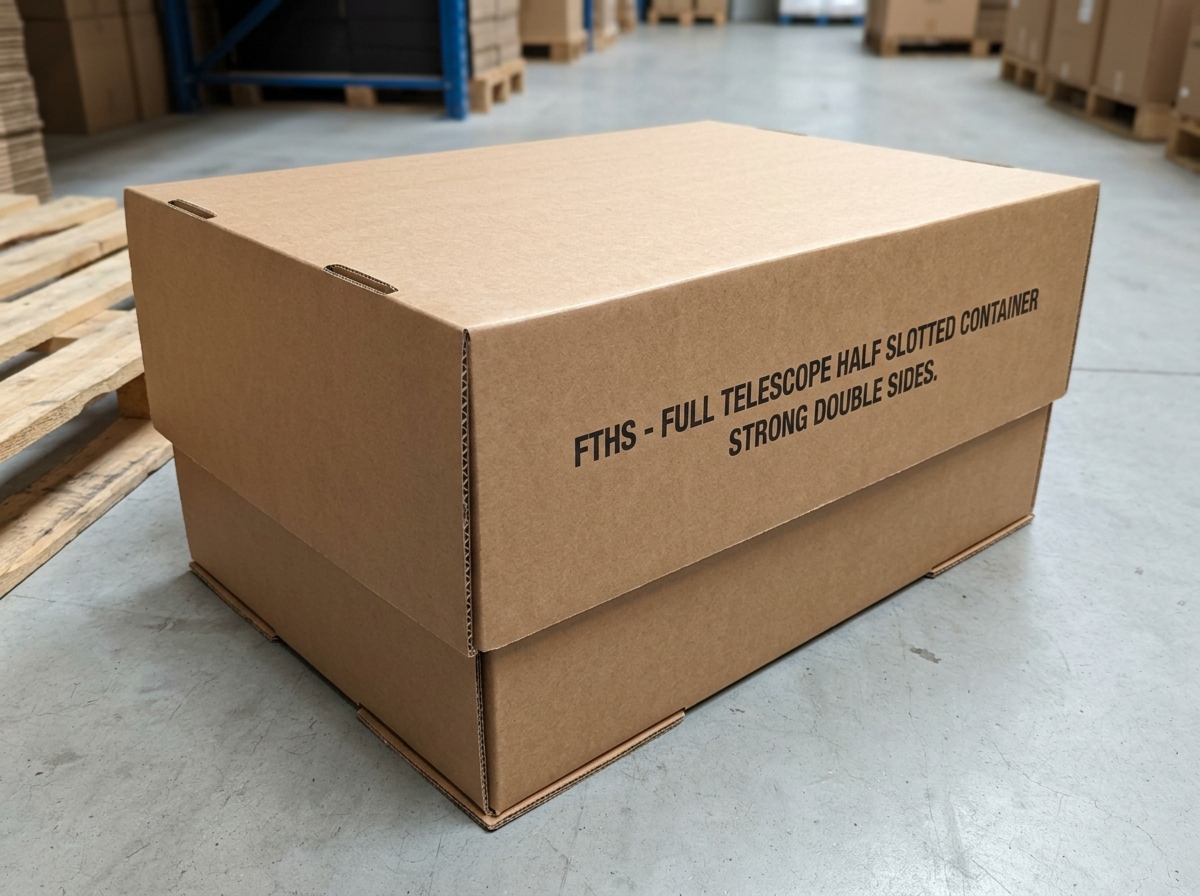
The Full Telescope Half Slotted Container (FTHS) combines a half-slotted base with a fully telescoping lid. The base is like an HSC (open on top with bottom flaps), while the lid is a full cover that slides over the base, overlapping on all four sides.
This design offers strong double walls on the sides and excellent top protection while saving material on the base. It is easy to load from the top and provides flexibility for products of varying heights.
FTHS boxes are great for flat or tall items. They work well for electronics, framed posters, prints, and gift sets. These boxes offer both protection and a nice look.
- Die-Cut Boxes
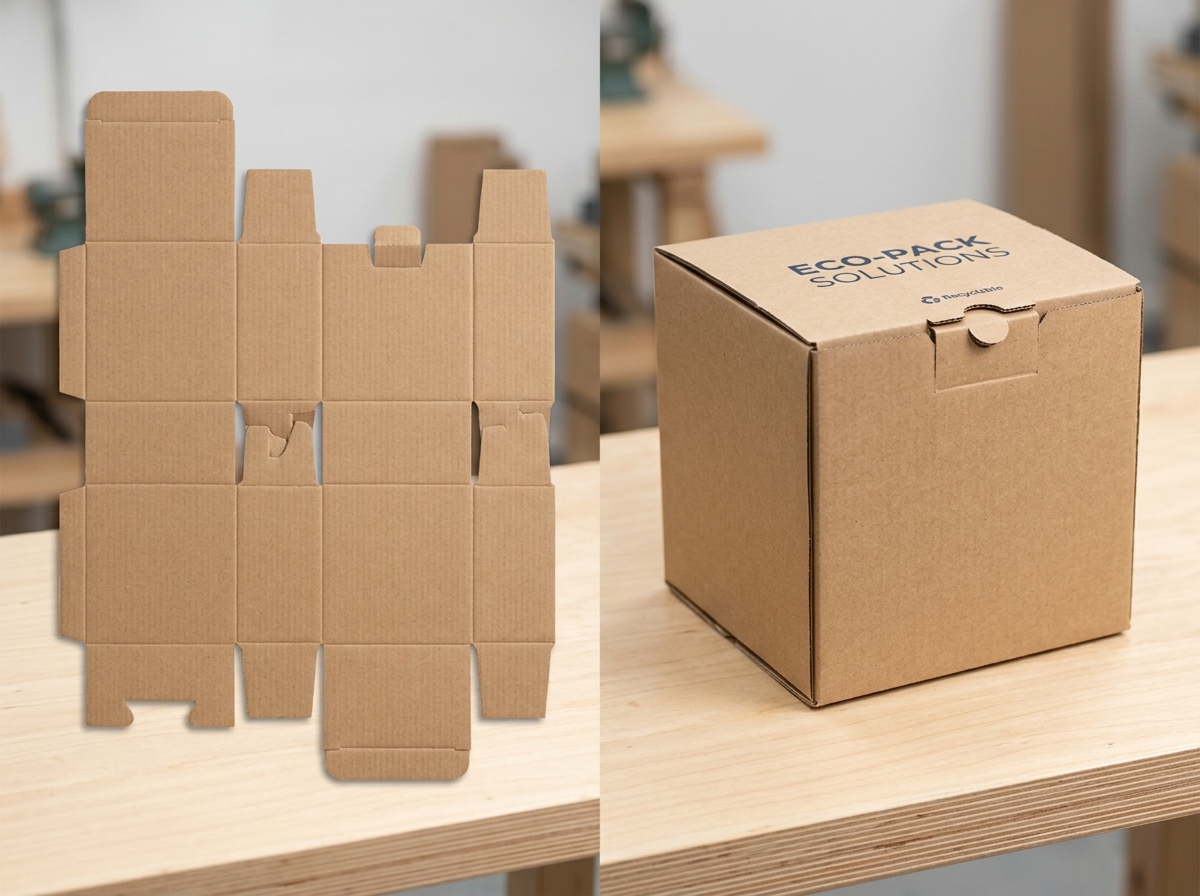
Die-cut boxes are specially shaped corrugated containers. They use a cutting die for unique designs, curves, slots, and locking features that regular boxes can’t offer. This method allows for precision cuts, unique openings, and built-in closures.
Die-cutting is commonly used for mailer boxes, display packaging, and custom folders (like OPFs). Die-cut boxes are popular for many uses. You’ll find them in cosmetic kits, subscription boxes, and for smartphones and accessories. They are also great for custom gift sets and food items, like pastries or chocolates.
Corrugated Cushioning and Divider
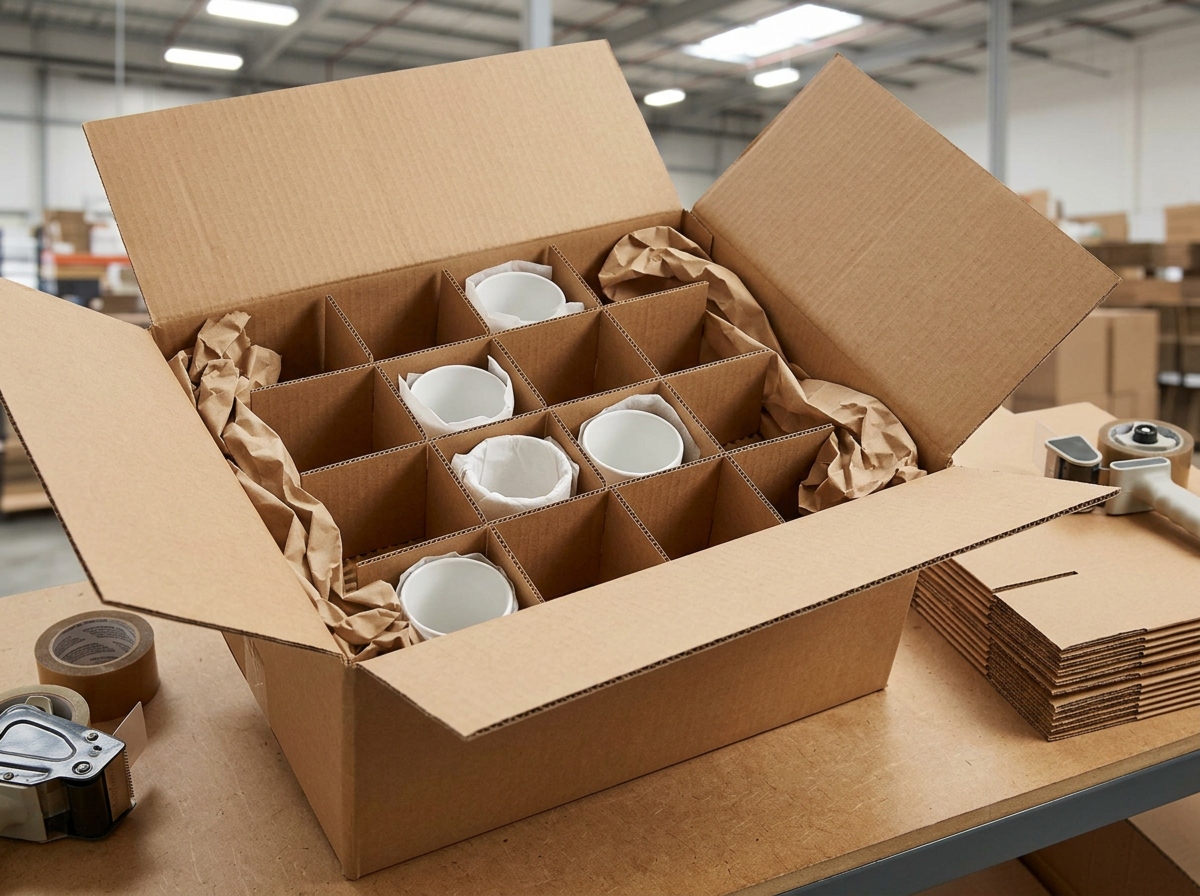
Corrugated cushioning is protective padding made from corrugated boards. It includes pads, blocks, cradles, die-cut trays, and liners. These inserts go around or under products to keep them safe during handling and shipping. They absorb shock and resist compression. They also protect against drops, vibration, and stacking pressure while in transit. Cushioning is used for items like glass bottles, electronic gadgets, ceramics, or fragile equipment.
Corrugated dividers are internal partitions or grid structures that separate many items inside one box. They make separate compartments to stop products from touching or hitting each other. This helps keep things organized and prevents damage or breakage. They are widely used for wine bottles, jars, cosmetic containers, and small boxed items in bulk shipping.
Corrugated Container Graded by Wall Style
Corrugated containers come in different types based on their layers: single wall, double wall, and triple wall. The number of walls impacts their strength and durability.
- Single Wall consists of one flute layer sandwiched between two liners (liner + flute + liner). It is lightweight. People often use it for packaging and shipping light to medium-weight items. This includes smartphones, packaged foods like cereal boxes, clothing, and small electronics.
- Double Wall has two flute layers and three liners (liner + flute + liner + flute + liner), offering greater strength and protection. It’s great for heavier or delicate items that need extra support. This includes wine bottles, glass kitchenware, bulk cosmetics, and medium appliances like microwaves.
- Triple Wall has three flute layers between four liners (liner + flute + liner + flute + liner + flute + liner). This design offers excellent durability for heavy or bulky items. It’s great for shipping industrial tools, construction gear, automotive engines, and heavy machinery parts over long distances.
Corrugated Box Classifications by Flute Type
Flutes are the wave-shaped corrugated layers inside corrugated boards that provide strength, cushioning, and thickness. There are five main types of flutes in corrugated board: A, B, C, E, and F. They vary in size and thickness, from 0.8 mm to 5 mm.
- A-Flute: The thickest flute, around 5 mm, offers great cushioning and strong stacking strength. It is ideal for heavy, fragile items but offers less detail for printing.
- B-Flute: B-flute has a medium thickness of about 3 mm. It offers strong crushing resistance and great print quality. It is commonly used in retail packaging.
- C-Flute: This is the second thickest, measuring around 4 mm. C-flute gives a nice mix of strength and cushioning. It is compressible, crush-resistant, and the most widely used flute for shipping boxes.
- E-Flute: At about 1.6 mm thick, E-flute is space-saving and budget-friendly. It’s ideal for packaging consumer goods and retail items.
- F-Flute: The thinnest flute, about 0.8 mm thick, F-flute is stiff and smooth. It is ideal for premium packaging that requires rigidity and fine printing quality.
Considerations for Customizing Corrugated Packaging
Customizing corrugated packaging relies on several factors:
- Product protection needs
- Shipping and handling
- Branding and aesthetics
- Cost and budget
- Customization options
Each aspect plays a vital role in creating effective packaging solutions.
- Product protection needs
Consider the product’s fragility and weight when choosing corrugated packaging. Fragile or heavy items need double or triple-wall boxes. These boxes provide the best crush resistance and cushioning. Larger flutes like A-flute or C-flute provide great shock absorption. This helps keep items safe from damage when being handled or transported.
- Shipping and handling
Shipping and handling conditions affect packaging durability. Products facing rough shipping conditions enjoy double or triple-wall boxes for added strength. Flutes like C-flute or B-flute improve durability against stacking and vibrations. Adding cushioning and secure sealing further protects items throughout transport.
- Branding and aesthetics
Branding and aesthetics highlight quality printing. They use methods like digital and litho-lamination to display brand colors and visuals. Custom styles, like self-locking mailers and die-cut designs, improve the unboxing experience. They often feature internal prints or special inserts to boost appeal.
- Cost and budget
Cost and budget influence packaging choices. Single-wall RSCs with C-flute offer a cost-effective solution for standard products. Double or triple-wall boxes and custom die-cut styles cost more for materials and tooling. But they offer better protection for heavy or valuable products.
- Customization options
Customization options enhance both function and presentation. Common add-ons are coatings for moisture or scuff resistance. Also, features like ventilation holes or handles are often added to RSC, HSC, or custom die-cut boxes. These meet specific product or handling needs.
Examples of Corrugated Boxes
Corrugated boxes are widely used in many industries for packaging and shipping. They are often used as shipping boxes for e-commerce, pizza, subscriptions, shoes, and heavy machinery parts. Each box is designed for specific product needs.
- E-commerce shipping boxes
E-commerce shipping boxes are usually Regular Slotted Containers (RSC). They are made from single or double-wall C-flute for extra strength. They commonly include custom branding through printing, lamination, or foil stamping. One well-known example is Amazon’s brown corrugated box with its printed smile logo. These boxes are widely used to ship online orders such as books, clothing, electronics, cosmetics, and household items.
- Pizza Boxes
Pizza boxes are typically made in a mailer-style design using B-flute or E-flute for strength and heat retention, and print quality. They often include small vents to reduce moisture buildup and a grease-resistant coating to protect the box. These boxes need to meet food safety standards, like FDA rules in the U.S. A well-known example is the Domino’s pizza box. It’s made from corrugated material to ensure safe and fresh delivery.
- Subscription Boxes
Subscription boxes are often made as One Piece Folders (OPF) or custom die-cut boxes. They usually have hinged lids and locking tabs. E-flute or B-flute is used for durability and smooth printing surfaces. These boxes are usually single-wall to cut weight and save on shipping. They have high-quality printing inside and out. Many also come with custom inserts to organize products and improve the unboxing experience.
A great example is Birchbox’s subscription packaging. It’s well-known for its appealing design and smart organization.
- Shoe Boxes
Shoe shipping boxes typically use die-cut or One Piece Folder (OPF) styles, often with hinged lids. Made from single-wall B-flute or E-flute, they balance crush resistance, print quality, and compact design. They often feature die-cut windows or custom internal fitments to secure the shoes during transport and storage. Brands like Adidas use such corrugated boxes for shipping footwear safely.
- Heavy Machinery Parts Box
Heavy machinery parts need strong packaging. This protects heavy and oddly shaped pieces during shipping and storage. Triple-wall corrugated boxes with custom inner supports offer the best protection. But double-wall boxes can work for moderately heavy parts.
Caterpillar and John Deere use these strong boxes to transport engine parts and industrial machines safely.
What is the difference between HSC and RSC boxes?
Regular Slotted Containers (RSC) and Half Slotted Containers (HSC) are two popular box styles. They differ in flap design, closure, protection, cost, and applications. See the table below for details.
| Feature | RSC Box | HSC Box |
| Flaps | Four flaps on top and bottom | One set of flaps (usually on the bottom) |
| Closure | Flaps meet in the middle, typically taped | Open top(can be used with a separate lid) |
| Protection | Good overall protection, fully enclosed | Suitable for general use; lid needed for enhanced security and protection |
| Cost | More affordable for bulk packaging due to simple design | Potentially more economical because it uses fewer materials |
| Uses | General shipping and storage, e-commerce packaging | Larger items, display bins, frequent access needed or retail display |
What are three types of boxes?
The three common types of boxes are folding cartons, rigid boxes, and corrugated boxes. They differ in materials, strength, and applications.
A corrugated box is made from corrugated fiberboard. This material has a fluted inner layer between two linerboards. They are strong, lightweight, and offer good protection. They are widely used for e-commerce packaging, moving boxes, pizza delivery, and heavy machinery parts.
A folding carton is a lightweight, durable, and versatile type of packaging made from paperboard. These boxes are usually pre-cut and shipped flat to save space, then assembled at the point of use. They work well for lightweight products. Plus, they enable high-quality printing and creative designs. Folding cartons are popular in retail. You often see them in food packaging, like cereal. They are also used for cosmetics, pharmaceuticals, and small electronics.Rigid boxes, also called set-up boxes, are strong, non-collapsible boxes made from 2–3 mm thick chipboard wrapped in paper or fabric. They have a strong, classy appearance, which makes them perfect for luxury items. This includes cosmetics, smartphones, perfumes, jewelry, and high-end gifts. Unlike folding cartons, the design is printed on the wrap, not directly on the box.