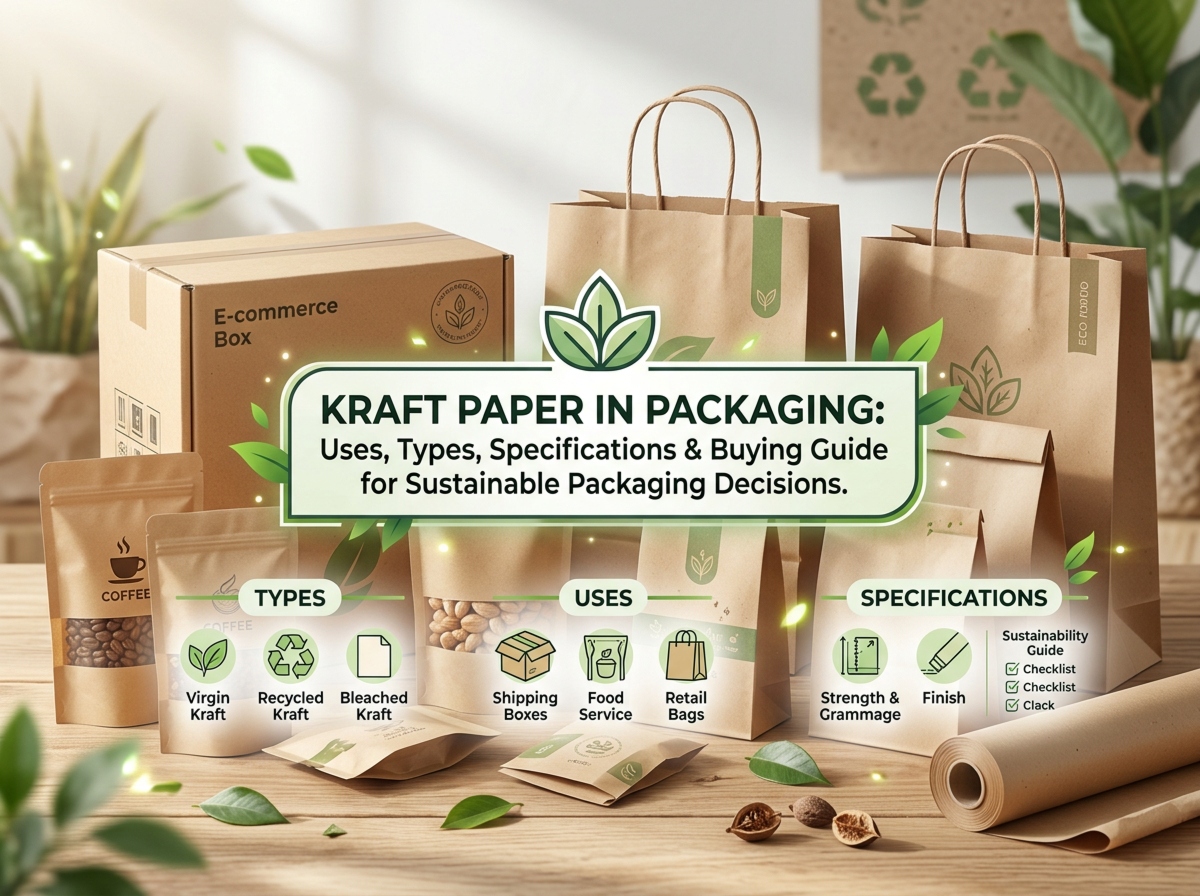
Kraft paper plays a central role in modern packaging because it balances strength, cost, and sustainability. It is a durable paper made from chemical wood pulp that brands use for bags, boxes, wraps, and protective layers across food, retail, and industrial packaging. Its natural look and reliable performance make it a common choice for everyday shipping and storage needs.
Different packaging goals call for different kraft options. The material comes in multiple types and grades, including virgin, recycled, coated, and specialty papers, each with clear benefits. Weight, thickness, and surface finish shape how the paper performs under load, moisture, and handling.
Smart buying depends on matching the paper to the job. This guide explains how kraft paper works, where it fits best, which technical details matter, and how packaging teams customize it for size, strength, and branding.
What Is Kraft Paper?
Kraft paper is a strong packaging paper made from wood pulp using the kraft process. It’s usually brown (but can be white or coated), offers high tear/tensile strength for shipping, and comes in grades like unbleached, bleached, sack kraft, and kraftliner for different packaging needs.
How is Kraft Paper Made?
Kraft paper is produced by cooking softwood chips (often pine/spruce) in a chemical liquor to dissolve lignin while preserving long cellulose fibers. The pulp is then washed and screened, formed into a web on a wire screen, and dried/compacted through heated rollers. Producers may apply coatings or surface treatments to improve grease resistance and print performance.
What Are Common Types and Grades of Kraft Paper?
Common types and grades of kraft paper include unbleached (brown) kraft, bleached (white) kraft, recycled kraft, and coated or laminated kraft.
Unbleached (Brown) Kraft Paper
Unbleached kraft is made from virgin fibers without a bleaching step, which preserves long fibers and typically increases tear resistance and tensile strength. Because it tolerates weight and rough handling well, it’s commonly used for shipping sacks, cartons, and industrial wrapping where durability matters more than bright printing.
Some unbleached kraft is produced with a smoother side (often called machine-glazed) to improve handling and print results, and some grades are treated to improve grease resistance for certain food packaging applications.
Bleached (White) Kraft Paper
Bleached kraft removes much of the natural color from the pulp, producing a brighter surface that improves ink holdout, color contrast, and graphic sharpness. Brands often choose it for retail packaging, labels, and presentation-focused packaging where clean printing and premium appearance are critical.
Bleached kraft usually remains strong enough for many packaging uses, but it may be slightly less tear-resistant than unbleached kraft because the processing changes the fiber matrix.
Recycled Kraft Paper
Recycled kraft uses recovered fibers from post-consumer or post-industrial sources, reducing virgin pulp demand and supporting sustainability goals. Because recycled fibers vary in length and quality, strength and appearance tend to be less consistent than virgin kraft, and print sharpness can be slightly lower.
It fits best in wrapping, void fill, and light-duty packaging. For applications that still require stronger performance, manufacturers often blend recycled fibers with virgin fibers to balance cost, sustainability, and durability.
Coated and Laminated Kraft Paper
Coated kraft adds a surface layer to improve moisture resistance, grease resistance, and print performance. Laminated kraft bonds paper with films or foils to create higher barrier protection against air, water, and oils—useful when packaging must protect sensitive goods or withstand challenging conditions.
These upgraded structures cost more, but they support demanding use cases such as takeout packaging, moisture-sensitive items, and certain pouch or barrier-style formats.
What are Applications Of Kraft Paper in Packaging?
Kraft paper packaging serves many roles across retail, food, and industrial markets. Its strength, print quality, and range of grades make it suitable for both simple protection and branded presentation.
Retail and Shopping Bags
Retailers often choose kraft bags for daily shopping needs. These shopping bags hold clothing, books, and personal items without tearing. Unbleached kraft paper gives a natural look, while bleached grades support clean printing.
Stores use flat and twisted handles based on load needs. Many retail packaging programs also use kraft boxes for small product boxes at checkout. Kraft packaging folds well and stores flat, which saves space.
Common retail uses include:
- Shopping bags for apparel and gifts
- Kraft boxes for cosmetics and accessories
- Die-cut windows to show the product inside
Retailers value the balance of cost, strength, and appearance.
Food and Industrial Packaging
Food packaging relies on kraft paper for wraps, sacks, and liners. Bakeries use grease-resistant bakery wraps for bread and pastries. Food brands also use kraft paper for dry goods where moisture control matters.
Industrial packaging depends on heavier grades. Grain sacks and multi-ply sacks carry seeds, cement, and animal feed. These sacks resist punctures and handle rough transport.
Typical uses include:
- Bakery wraps and sandwich papers
- Grain sacks and bulk food bags
- Industrial packaging for powders and pellets
Many grades remain recyclable when uncoated, which supports waste reduction goals.
Corrugated Boxes and Protective Packaging
Corrugated boxes rely on kraftliner made from strong kraft paper. This liner forms the outer layers of shipping cartons. It protects products during stacking and transport.
Protective packaging also uses kraft paper as void fill and interleaving sheets. Crumpled paper fills empty space and limits movement. Flat sheets separate items to prevent scratches.
Key applications include:
- Corrugated boxes for shipping
- Void fill for e-commerce orders
- Interleaving sheets for glass or metal parts
These uses reduce damage without adding complex materials.
Custom Printing and Branded Solutions
Brands use kraft packaging to support clear, simple design. Custom printing works well on smooth kraft surfaces. Offset printing handles large runs with consistent color.
Die-cutting allows custom shapes for kraft boxes and retail displays. Brands add logos, product details, and handling marks without heavy coatings. This keeps the material easy to recycle.
Common branded uses include:
- Branded packaging for retail shelves
- Custom printing for logos and labels
- Die-cut packaging for unique box shapes
Kraft paper supports both function and brand clarity without excess materials.
How to Choose Kraft Paper for Packaging According To Specs?
Choosing kraft paper specs comes down to three decisions: GSM for stiffness, burst/tear/tensile for failure resistance, and barrier treatments for moisture/grease/chemical exposure.
Paper Weight (GSM) and Stiffness
Choose GSM based on load, panel rigidity, and how well the sheet must hold creases and folds. GSM drives caliper and bending stiffness, which determines whether a bag sags, a wrap tears during handling, or a carton panel buckles under stacking.
Use 40–70 GSM for wrap/void fill (needs conformability, not panel rigidity),
80–120 GSM for bags/liners (needs shape retention and runnability),
125–200 GSM for sack kraft/carton-style uses (needs panel stability and puncture tolerance).
Burst Strength (Mullen)
Burst strength measures how well kraft paper resists rupturing under multi-directional pressure. It matters most for stacking, compression, and packed loads that create bulging. Choose higher burst when the main risk is crushing or pressure failure in shipping.
Tear Strength (Elmendorf)
Tear strength measures how strongly the paper resists ripping after a small cut or nick starts. It matters for rough handling, abrasion, sharp corners, and die-cut edges. Choose higher tear when the main risk is a small tear spreading during transit or opening.
Tensile Strength (MD/CD)
Tensile strength measures how much pulling force the paper withstands before breaking, tested in machine direction (MD) and cross direction (CD). Low CD tensile often shows up as seam splits and edge breaks. Choose higher tensile (especially CD) when the main risk is pulling, lifting, sealing stress, or forming/filling tension.
How To Make Kraft Paper Packaging Resistant to Moisture, Grease, Chemical?
To make kraft paper packaging resistant, add only the barrier you need: use sizing or a water-based coating for humidity, PE coating or film lamination for prolonged moisture or direct water, grease-resistant treatment for oils, and formula-specific compatibility testing for solvents, fragrances and surfactants. For print quality, use a light surface coating/varnish instead of heavy barrier films.
How to Customize Kraft Paper Packaging
Custom kraft paper packaging depends on three core choices. The buyer must match paper type and grade to the product, confirm sustainability standards, and select the right printing and supply method. Each choice affects cost, performance, and environmental impact.
Choosing the Right Type and Grade
Kraft paper comes in several grades that control strength, thickness, and use. He or she should start with the product weight and handling needs. Light items need lower grades, while heavy or fragile items need stronger paper.
Common kraft paper grades
| Grade | Typical Use | Key Traits |
| DD30–DD40 | Tissue wrap, food liners | Thin, flexible |
| DD50 | Bags, inner wraps | Balanced strength |
| DD60+ | Boxes, shipping wrap | High tear resistance |
Rolls work best for machines and high-volume packing. Sheets suit hand wrapping and small batches. Brown kraft paper keeps a natural look, while white kraft supports brighter print. Choosing the right grade reduces waste and improves protection.
Sustainability and Environmental Certifications
Many brands choose kraft paper for recyclable and eco-friendly packaging goals. Buyers should check fiber sources and certifications before ordering. These details confirm real sustainability, not marketing claims.
Key certifications to look for
- FSC®: Confirms responsible forest sourcing
- PEFC: Verifies sustainable forestry practices
- Recycled content labels: Show post-consumer fiber use
Uncoated kraft paper breaks down more easily and supports composting in many regions. Water-based inks lower chemical impact. These choices reduce environmental impact while meeting sustainable packaging standards. Clear certification marks also help brands communicate trust to customers.
Customization and Sourcing Options
Custom packaging solutions rely on simple, practical design choices. Printing methods affect cost and clarity on kraft paper. Dark inks work best, while white ink helps colors stand out on brown surfaces.
Common customization options
- Logo and brand text printing
- White ink for contrast
- Spot color or full-color printing
- Die cuts or window cutouts
- Hot foil for premium items
Local suppliers offer faster turnaround and lower shipping impact. Overseas suppliers may reduce unit cost for large runs. He or she should request samples to check print quality and paper feel. Clear specs avoid delays and ensure consistent results.