A soft-touch finish is a coating that gives printed materials a smooth, soft feel, like velvet. It also helps the surface slide easily when touched. Printed materials include packaging, business cards, and book covers. A soft-touch finish makes printed materials feel high quality and pleasant to touch.
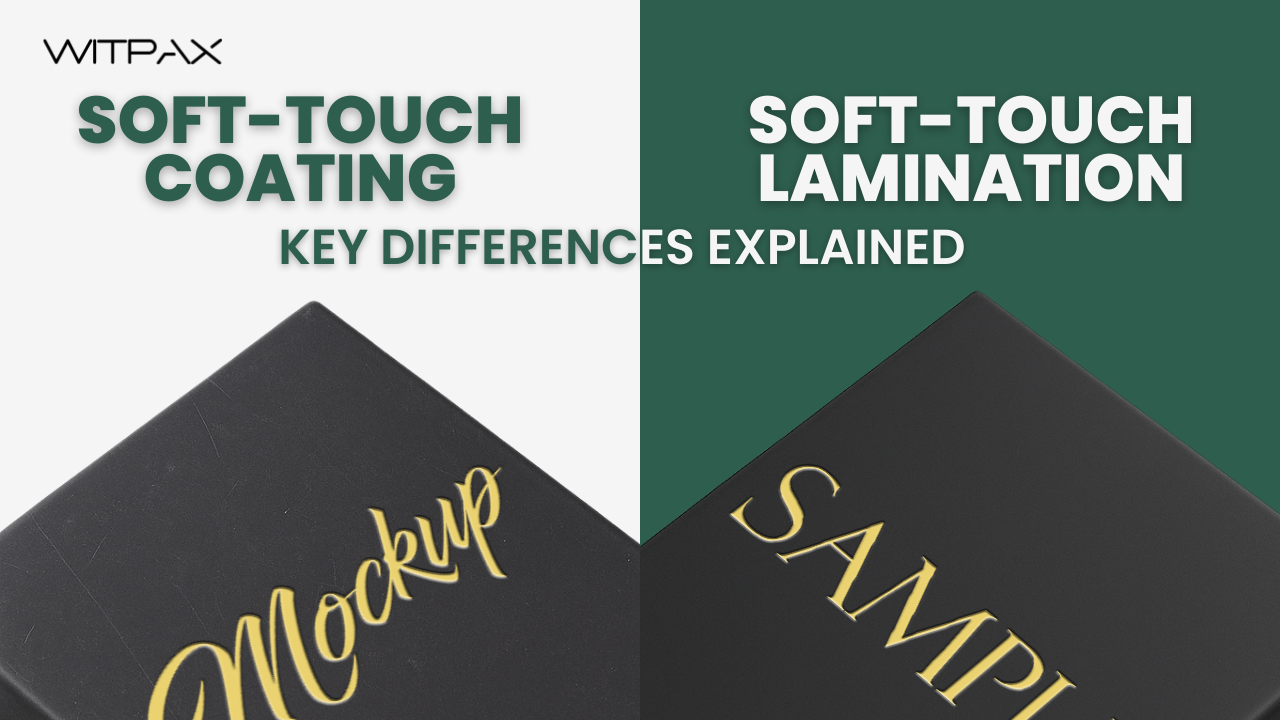
There are two main types of soft-touch finishes. Soft-touch coating applies a liquid to the printed surface. Soft-touch lamination bonds a thin matte film to the printed material’s surface. These two types vary in durability, tactile experience, cost, design flexibility, and sustainability.
Soft-touch lamination is great for luxury packaging. It provides better protection, lasts longer, and feels thicker and more premium.
What is soft-touch coating (aqueous or UV)?
Soft-touch coating is a liquid layer applied to printed surfaces using printing presses. It dries to a soft, velvet-like texture that gives a smooth and premium feel. The coating consists of liquid polymers, acrylics, or UV-curable materials. It can be either water-based or solvent-based. The coating can be applied in-line during printing or after printing.
Soft-touch coating method uses a very thin layer, measured in microns, and does not need a plastic film. It helps keep the material lightweight while adding a soft-touch effect. Common uses include presentation folders, direct mail, and high-end brochures.
What is soft-touch lamination?
Soft-touch lamination adds a thin plastic film to printed items. This includes packaging and business cards. This film gives them a soft and smooth feel. The film is usually made from polypropylene (PP), polyester (PE), or special materials. It is bonded with an adhesive. This film adds a matte, velvety texture with a slightly rubbery feel. It also helps protect the surface by resisting fingerprints, scratches, and scuffs. The film is thicker than a coating, usually between 1 and 5 mils.
Soft-touch lamination is commonly used for luxury packaging, book covers, and marketing collateral.
What are the differences between soft-touch lamination and coating?
Soft-touch lamination and coating differ in the following aspects:
- Durability and protection
- Tactile experience
- Cost considerations
- Design flexibility
- Sustainability
Durability and protection
Lamination provides better scratch resistance than coating. Tests like EN 16094 and ASTM D4060 show that laminated materials last longer. They also resist wear better. Coatings tend to scuff or crack faster, especially with heavy use or outdoor exposure. Laminates also offer about 70% more water and tear resistance than coatings. This extra protection keeps the surface strong and extends the product’s life.
Tactile experience
Soft-touch lamination offers a deeper, more luxurious texture with a rich velvet-like feel. It enhances grip and helps resist fingerprints. This makes the surface feel more durable and high-end.
In contrast, soft-touch coating feels softer but is more even and thinner. The tactile difference affects how users interact with the product. Lamination gives a stronger sensory impact, and coating offers a gentle, consistent touch.
Cost considerations
Soft-touch coating is cheaper. It uses fewer materials and can be produced faster. It is a good choice for short runs or cost-sensitive projects. Lamination costs more due to film, adhesive, and setup fees. It also takes more time to produce. For big orders, lamination can be a good choice. But coating is usually cheaper when you think about waste, speed, and return on investment.
Design flexibility
Soft-touch coating gives more design flexibility. It pairs nicely with various color options. This helps match the printed design better. You can also add special effects like spot UV or foil stamping more easily.
Soft-touch lamination has more design limits. It depends on the type of film used, so color and texture options are not as flexible.
Sustainability
Aqueous soft-touch coating is more sustainable. It has lower VOC emissions, is easier to recycle, and fits better with green rules. Its water-based formula helps reduce environmental impact.
Laminated materials are harder to recycle. This is because the plastic film needs to be separated from the paper. This adds waste and raises the carbon footprint. While biodegradable films exist, they are costly and not widely used.
When is lamination clearly better?
Choose lamination for:
- Luxury packaging lamination is used for perfume boxes, gift boxes, and premium electronics. Brands like Apple and Chanel use it for a soft, smooth feel that shows quality.
- Moisture protection. Lamination protects items like cosmetics and food from water damage and spoilage.
- Large production runs. Lamination saves money by reducing waste and keeping quality the same.
- Heavy-use items: Lamination is tough. It can take lots of use without scratching or wearing down. This makes it great for items like phone cases and perfume bottles.
- Consistent soft-touch feel. lamination ensures every package feels soft and smooth in the same way.
When should I choose a soft-touch coating?
Choose soft-touch coating when you are focused on one or more of the following aspects:
- Selective or spot applications: Great for adding a soft touch to areas like logos or images.
- Environmental sustainability focus: Water-based coatings offer better recyclability and lower VOC emissions.
- Short to medium production runs: Soft-touch coating works well for small batches.
- Easy integration with printing: Works smoothly with existing coating processes during printing.
- Cost-sensitive projects: Provide soft-touch effects without high material or setup costs.
Why Does Luxury Packaging Prefer Soft-Touch Lamination?
Luxury packaging favors soft-touch lamination for the following reasons:
- Enhanced Sensory and Brand Experience: Lamination offers a soft, velvety touch. This feeling makes customers fond of the product and helps them remember the brand.
- Superior Protection and Durability: Lamination protects packaging from scratches, water, and damage. It keeps products safe and looking new.
- Consistency and Market Impact: The soft-touch finish is consistent across all items. This helps the brand appear professional and trustworthy.
Is Soft-Touch Lamination More Durable Than Coating?
Yes, soft-touch lamination is more durable than coating. Tests from ASTM show that lamination protects surfaces better from scratches and damage. Test data show that laminated materials last longer in real-world use. Soft-touch lamination keeps packaging safe and looking fresh longer, even with regular handling.