Lamination in packaging is often considered a simple surface upgrade, but in real production environments, the choice can directly affect durability, recyclability, cost, and long-term performance. Businesses usually start researching lamination when printed packaging fails under handling, loses visual quality over time, or creates unexpected sustainability constraints.
Different films, bonding methods, and finishes behave very differently across moisture exposure, transport stress, and recycling systems. Treating lamination as a purely visual decision often leads to over-engineering or compliance issues later.
This article explains how lamination in packaging actually works, the materials and film types used, the functional benefits and limitations, and where each lamination approach is most effective—so packaging decisions are based on performance and context, not assumptions.
What Is Lamination in Packaging?
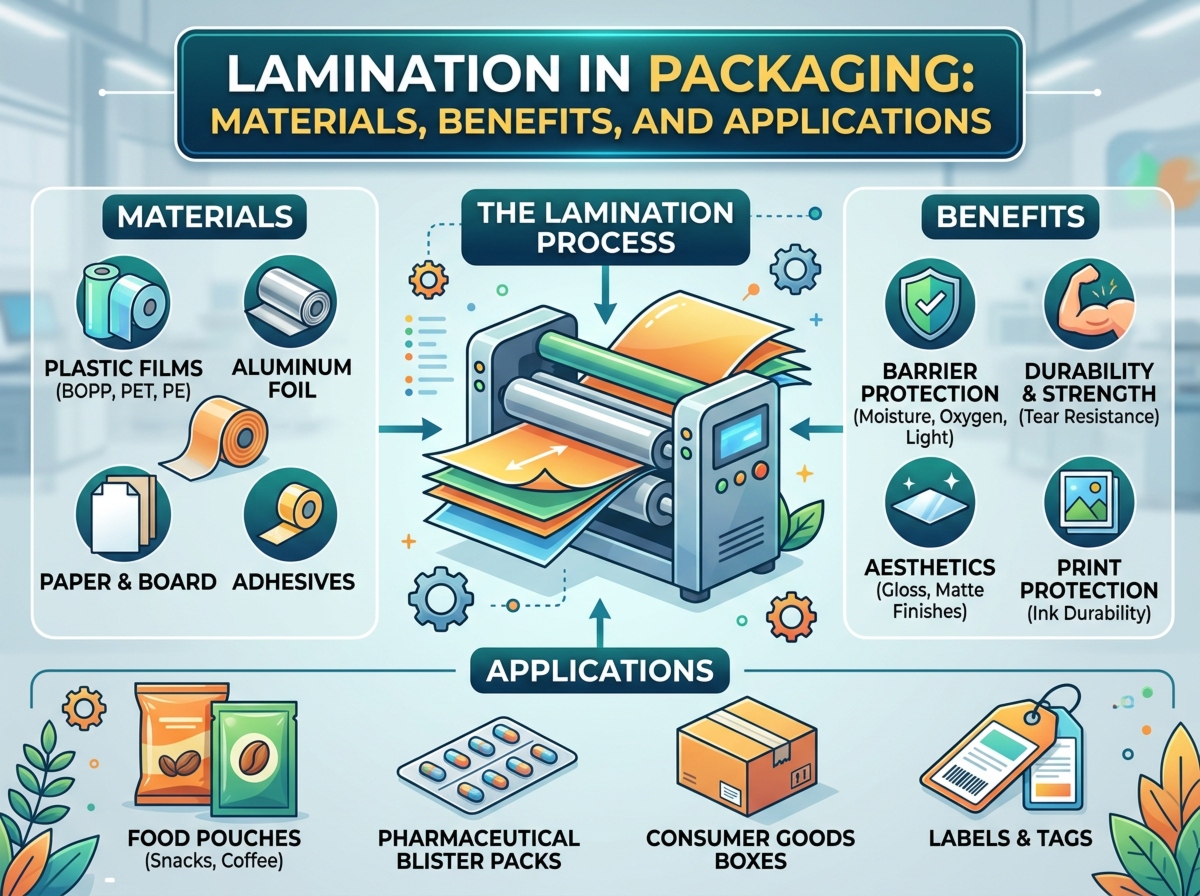
Lamination in packaging is a post-print finishing process where a thin plastic film — usually BOPP (biaxially oriented polypropylene) or PET (polyethylene terephthalate) — is bonded to paper or paperboard to protect the printed surface and enhance visual appeal.
The film adheres through heat, pressure, or adhesive bonding, creating a single composite structure that improves surface durability, barrier protection, and tactile quality without changing the original packaging form.
Typical film thickness ranges from 12–25 µm, and the choice of substrate such as coated paperboard, corrugated liner, or specialty stock influences both bond strength and final texture.
This combination of materials increases resistance to moisture, scratches, and abrasion, while adding optical clarity or a soft-touch finish that elevates brand perception.
Types of Lamination in Packaging
There are five common types of lamination in packaging: gloss lamination, matte lamination, soft-touch lamination, thermal lamination, and film lamination.
Gloss Lamination
Gloss lamination gives your packaging a high shine and strong color depth. You’ll notice brighter images, sharper text, and bold contrast.
Designs stand out under store lighting. You can wipe gloss surfaces clean with ease, since the smooth film resists light moisture, dust, and fingerprints.
It’s useful for items people handle a lot. You’ll spot gloss lamination on retail boxes, food packaging, and promotional cartons.
Brands use it when visual impact matters more than glare. Since the surface reflects light, it works best where you can control lighting.
Matte Lamination
Matte lamination creates a low-glare surface and a calm, clean look. It softens colors and reduces reflections, which helps with readability.
This finish feels smooth and a bit warm. No shine here—just a more controlled, refined appearance.
Many brands use matte for a modern, serious tone. You’ll see it on cosmetics, electronics, and health products.
It works when you want packaging to feel premium but not flashy. Just know: matte can show scuffs if handled roughly.
Soft Touch Lamination
Soft touch lamination adds a velvet-like texture to your packaging. The surface feels smooth and rubberized—almost a surprise when you touch it.
This tactile effect signals quality. Use it when feel matters as much as looks.
Soft touch makes your product stand out through touch, not shine. It also reduces glare and fingerprints.
It appears often on rigid boxes, luxury goods, and gift packaging. It costs more than standard finishes, but it really supports high-end branding.
Handle it with care during packing—sharp pressure can leave marks.
Thermal Lamination
Thermal lamination bonds film to paper using heat and pressure. You don’t need liquid adhesives, so the process stays clean and fast.
This method works well with many paper stocks. You get consistent quality and lower unit costs at scale.
Thermal lamination suits both gloss and matte films. It also supports quick turnaround times.
This option fits large-volume production—cartons, folders, book covers. If you need reliable output and cost control, it’s a solid choice.
Just test it on heat-sensitive materials first.
Film Lamination (BOPP / PET)
Film lamination uses plastic films like BOPP or PET to protect packaging. These films add strength and resist tearing, moisture, and surface wear.
They help packaging survive shipping and handling. You’ll pick this type for demanding environments.
BOPP offers flexibility and clarity. PET is stiffer and more heat resistant—both improve durability.
Common uses? Industrial packaging and e-commerce mailers. Film lamination protects printed surfaces during transit.
Lamination Materials Used in Packaging
Lamination materials determine surface durability, visual finish, cost, and recyclability. In packaging, lamination typically uses plastic films bonded to paper, paperboard, or corrugated substrates, with BOPP, PET, and PVC being the most common.
Common Lamination Materials
| Material | Protection | Finish | Cost | Typical Use |
| BOPP | Medium | Gloss / Matte | Low | Retail cartons |
| PET | High | Clear, Smooth | Medium | E-commerce, heavy handling |
| PVC | High | Firm, Glossy | Medium–High | Specialty packaging |
Material choice should be driven by handling conditions and disposal requirements—not appearance alone.
Lamination vs Coating vs Varnish
You pick between lamination, coating, and varnish based on protection, feel, and cost. All three add a top layer after printing, but they work differently and fit different uses.
Lamination bonds a thin plastic film to the printed surface. You get strong protection from moisture, scuffs, and tearing.
It adds stiffness and a smooth or soft-touch feel. That’s helpful for packaging that gets handled a lot.
Coating uses a liquid layer that dries on the surface—often aqueous or UV coatings. These protect against light wear and fingerprints, dry fast, and cost less than lamination.
Coatings keep paper flexible and lighter. Varnish applies a clear liquid during or after printing, offering basic protection and visual appeal.
You can use gloss, matte, or spot varnish to highlight areas without adding thickness.
| Feature | Lamination | Coating | Varnish |
| Protection level | High | Medium | Low to medium |
| Material | Plastic film | Liquid coating | Liquid varnish |
| Durability | Strong | Moderate | Light |
| Cost | Higher | Medium | Lower |
| Common uses | Boxes, covers | Cartons, sleeves | Labels, highlights |
If you want premium or heavy-use packaging, lamination makes sense. For speed, lower cost, or a lighter finish, coatings or varnish might be the better fit.
Advantages and Disadvantages of Packaging Lamination
Packaging lamination adds a thin film to your printed package. You use it to protect the surface and control how the package looks and feels.
Advantages
- Stronger protection: Lamination helps your package resist moisture, dust, and scuffs. It cuts down on damage during shipping and handling.
- Better appearance: You can pick gloss, matte, or soft-touch finishes. Each one improves color depth and print clarity in its own way.
- Longer shelf life: The film slows wear and fading. Your packaging keeps a clean look for longer.
- Ink stability: Lamination seals the ink and lowers the risk of smudging or color transfer.
If your product faces a lot of handling or long transport, lamination can make a real difference.
Disadvantages
- Higher cost: Lamination adds material and processing steps, so your unit cost goes up.
- Recycling limits: Plastic films can make recycling harder, and some systems need special separation.
- Reduced flexibility: Laminated materials can feel stiffer, which doesn’t suit every package design.
- Production time: The extra step can slow your schedule, especially on short runs.
If cost or recyclability matters most, you might want to rethink lamination for your package.
Is Lamination Sustainable?
Lamination can support sustainability, but it really depends on the materials and methods you pick. Traditional plastic films often block recycling and add waste. Newer options try to cut that impact while keeping protection and shelf life.
You can choose biodegradable or compostable films, like PLA-based laminates. These use plant-based materials and break down under proper composting conditions. They work for some food, retail, and printed packaging, but not all.
Or you could use plastic-free coatings. These swap plastic films for paper-based or mineral coatings. They improve recyclability and still add some strength and surface protection.
Solventless lamination cuts emissions during production. It uses less energy and skips harmful solvents. Many brands use it to lower their factory impact without changing how the package performs.
Some designs stick to mono-material structures. That means using one main material—like all paper or all plastic. Sorting and recycling get easier this way.
| Option | Key Benefit | Main Limit |
| Biodegradable film | Uses renewable sources | Needs proper composting |
| Plastic-free coating | Improves recyclability | May reduce barrier strength |
| Solventless lamination | Cuts emissions | Still uses adhesive |
| Mono-material design | Easier recycling | Fewer material choices |
If sustainability is a top priority, matching your lamination choice to your product, waste system, and local recycling rules is key.
Common Applications of Lamination in Packaging
Lamination shows up across many packaging types because it adds protection and improves print quality. You bond thin films to paper, board, or flexible materials to meet specific needs.
Food and beverage packaging uses lamination to protect products from moisture, air, and grease. You’ll find it on snack pouches, frozen food bags, and beverage cartons. Clear barriers help keep food fresh during storage and transport.
Retail cartons and boxes rely on lamination to resist scuffs and scratches. Glossy or matte finishes control shine and help with shelf appearance. Soft-touch films add a smooth feel but don’t change the box shape.
Flexible packaging uses lamination to combine strength and ease of use. You’ll see it on stand-up pouches, sachets, and resealable bags. Extra layers can support easy-peel seals or anti-fog features.
| Application | Why You Use Lamination |
| Food pouches | Moisture and oxygen control |
| Folding cartons | Scratch resistance and print clarity |
| Personal care packs | Clean look and spill protection |
| Labels | Durability during handling |
Pharmaceutical and health packaging also use lamination. It protects printed information and supports clean handling in busy environments. If you need durability and cleanliness, lamination is worth considering.
How to Choose the Right Lamination for Your Packaging
Start with your product’s needs. Match lamination to how you ship, store, and use the package. Heavy handling, moisture, or long shipping times call for stronger protection.
Think about how your brand should look and feel. Lamination changes surface shine and touch, so pick a finish that fits your product price and audience.
Common lamination options
| Finish | Look | Feel | Best use |
| Glossy | Bright, high contrast | Smooth | Retail shelves, bold designs |
| Matte | Low shine, soft color | Smooth | Premium boxes, clean style |
| Soft-touch | Low shine | Velvet-like | Luxury items, gifts |
Check how the package will function. Some laminations resist scratches, scuffs, and moisture better than others. If customers open the box often, durability matters more.
Review your budget early. Specialty films like soft-touch cost more than standard glossy or matte films. Balance appearance with cost to avoid surprises down the line.
Consider print quality and colors. Glossy films make colors pop, while matte films reduce glare. Dark colors often look richer with matte or soft-touch finishes.
Ask your printer about materials and processes. Confirm film thickness, sealing strength, and recycling limits. Clear details help you avoid design or production issues later.
If you want packaging that stands up to handling and looks sharp on the shelf, lamination deserves a spot on your shortlist.
FAQ
Is laminated packaging waterproof?
Yes, lamination adds a plastic film that resists moisture and spills. You get better protection from water, but it’s not fully waterproof—seams and edges can still let liquid in.
Can laminated packaging be recycled?
Recycling depends on the materials used. Many laminated packages combine paper and plastic, which makes recycling harder.
Some suppliers offer recyclable or mono‑material options. Always check your local recycling rules before making a decision.
What is the difference between matte and soft touch lamination?
Matte lamination gives a smooth, low‑gloss finish that reduces glare. Soft touch lamination feels velvety and adds a premium texture.
Both protect the surface, but soft touch costs more and can show fingerprints. If tactile feel matters, soft touch might be the better choice.Does lamination significantly increase packaging cost?
Lamination adds a small cost compared to uncoated packaging. The final price depends on film type, order size, and finish.
If durability or appearance matters, lamination usually makes sense. For most, the extra protection is worth considering.