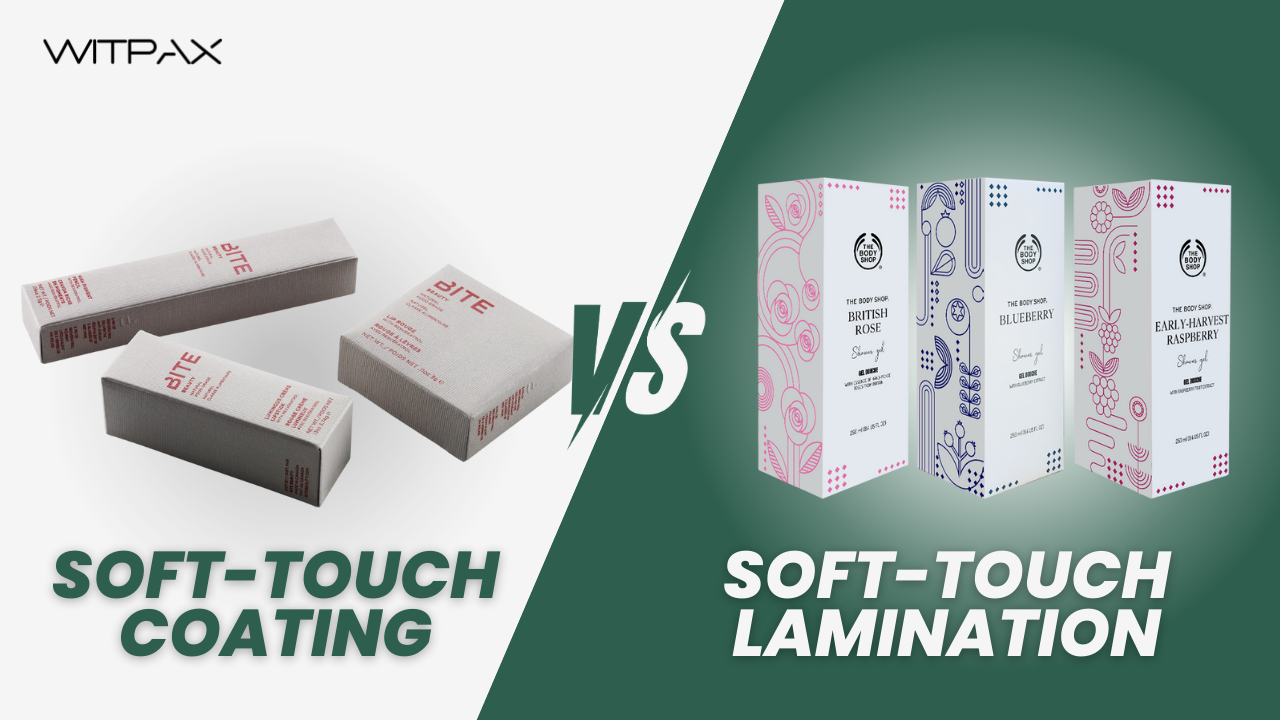
For packaging finishes, two common techniques dominate the market. They are soft-touch coating and soft-touch lamination. They may feel the same, but differ in application, durability, and sustainability.
Let’s break them down.
What is Soft-Touch Coating (Aqueous or UV)?
A soft-touch coating is a liquid coating applied to printed surfaces. Then, it dries to a velvety, almost suede-like texture.
- Definition: Soft-touch coating finish contains polymers, acrylics, or UV-curable materials. It’s applied in ultra-thin layers of either water- or solvent-based. You can also add it in-line during printing or after.
- Benefits: This coating type delivers a premium tactile feel without adding film. So, it’s lightweight, cost-efficient, and quick to produce.
- Common Uses: Direct mail pieces, presentation folders, and upscale brochures.
What is Soft-Touch Lamination?
Soft-touch lamination uses a thin film, giving a silky matte finish.
- Definition: This laminate type is a thin plastic film, about 1–5 mils thick. Material options include PP, PE, or other specialty materials.
- Benefits: Soft-touch lamination provides a velvet-like finish. It can resist fingerprint marks, scuffs, and moisture.
- Common Uses: luxury packaging, books, and magazine covers.
What are the Differences Between Soft-Touch Lamination and Coating?
Soft-touch lamination and coating differ in durability, tactile impact, and cost.
Durability and Protection
Lamination is more durable because of its thicker film. It’s ideal for parcels that face frequent handling, shipping, or retail display. Coating offers a subtle layer of protection but is more prone to wear over time.
Tactile Experience
Soft-touch lamination gives a smooth feel and even softness. It may be subtle, but it is effective for print materials where budget and speed matter.
Cost Considerations
Soft-touch coating comes with lower setup costs. It also means faster production and less waste. So, it is cheaper for short and medium print runs.
Meanwhile, lamination is more expensive upfront. This is because of costlier materials and setup requirements. Still, it can be cheaper for large production volumes.
Design Flexibility
Soft-touch coating merges well with inks, foils, and specialty finishes. Hence, there is more room for color matching and design freedom. Meanwhile, film stock availability limits lamination options. Still, it is ideal when you need consistent results across thousands of pieces.
Sustainability
Aqueous soft-touch coating is more recyclable and releases lower VOCs. Meanwhile, lamination poses challenges in recycling. This is because you must separate the film from the paper first.
When is Lamination Clearly Better?
Choose lamination for:
- Luxury Packaging. This option boosts the tactile and visual appeal that premium brands like. Examples are jewelry cases, perfume, and chocolate boxes.
- Products Needing Moisture Protection. Laminated film forms a barrier against moisture. So, it’s ideal for items stored or displayed in humid conditions. You’ll find these on wine labels, beverage cartons, and cosmetics packaging.
- Large-Volume Production Runs. Lamination ensures every piece looks and feels the same. Manufacturers use it to keep quality steady in thousands of packages.
- Heavy-Use Packaging. Fragile and premium products and accessories often come in laminated boxes. This is to withstand repeated handling to stay scuff-free on retail shelves.
- Consistent Soft-Touch Requirements. Lamination gives a uniform texture for large batches. Coating, on the other hand, may differ based on how it’s applied.
When to Choose Soft-touch Coating?
Opt for soft-touch coating for:
- Selective or Spot Soft-Touch Applications. Coating allows only specific areas of a design, like logos or key visuals, to carry the velvet finish. Also, this makes marketing pieces more engaging without the cost of full coverage.
- Environmental Sustainability Priorities. Aqueous soft-touch coatings are easier to recycle. They also emit fewer VOCs than plastic films.
- Short to Medium Production Runs. Coatings deliver a premium feel for less. This is why they’re ideal for limited campaigns, event materials, or product launches.
- Integration with Existing Coating Processes. Printing presses are now equipped for aqueous or UV coatings. So, adding soft-touch is straightforward. This makes it a suitable choice for businesses that need speed and efficiency.
- Cost-Sensitive Projects Requiring Soft-Touch Effects. Choose coating when budgets are tight, but tactile appeal is still important. They provide the soft-touch effect without the premium price tag of lamination.
Why Does Luxury Packaging Prefer Soft-Touch Lamination?
Luxury packaging often uses soft-touch lamination for the sensory experience. It also protects the product and maintains quality in large production runs.
- Enhanced Sensory and Brand Experience. Soft-touch lamination provides a velvet-like surface. Premium products and accessories use this feature to boost branding.
- Superior Protection and Durability. Soft-touch lamination resists fingerprints, scuffs, and moisture. Hence, keeping packaging pristine in displays and handling.
- Consistency and Market Impact. Luxury brands rely on uniformity worldwide. Lamination keeps the brand looking consistent and offers protection for large batches.
Is Soft-Touch Lamination More Durable Than Coating?
Yes, soft-touch lamination is more durable than coating. Laminated finishes surpass coatings when it comes to scuff, moisture, and fingerprint resistance.