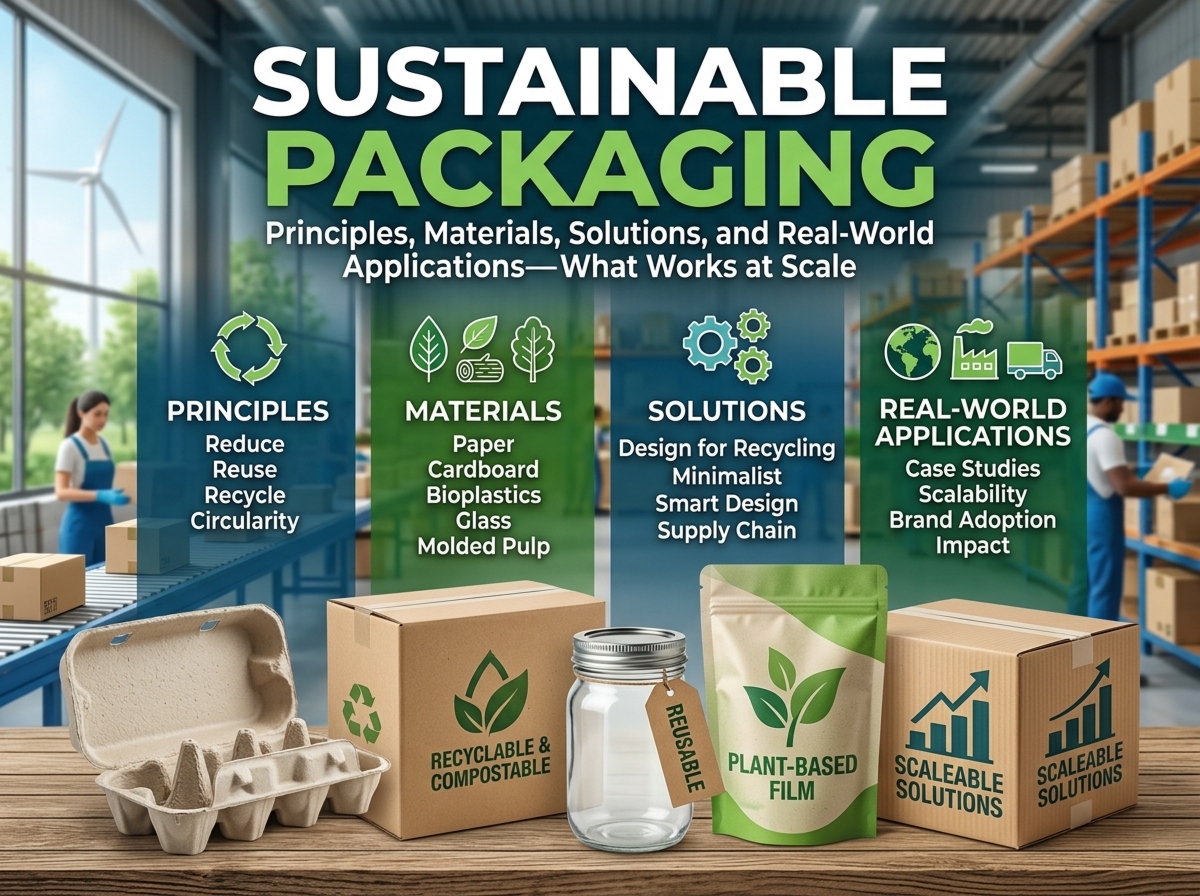
Sustainable packaging refers to the development and use of packaging solutions that have minimal environmental impact and footprint, typically by using recyclable, biodegradable, or reusable materials. Sustainable packaging looks at the entire lifecycle — how materials are sourced, produced, transported, used, and recovered. It replaces single-building long-term efficiency, reducing emissions, and meeting growing customer and regulatory demands.
As global e-commerce, retail, and manufacturing industries shift toward circular systems, brands that adopt sustainable packaging gain a strategic edge: lower costs, stronger trust, and scalable growth. In this guide, we’ll explore what sustainable packaging means, how it works, what materials make it poss
What Is Sustainable Packaging?
Sustainable packaging means designing packaging that reduces harm to the environment throughout its life. It’s about how we source, make, use, and finally get rid of the materials.
The goal? Lower waste, pollution, and resource use, but still keep the product safe. Most sustainable packaging relies on renewable, recycled, or recyclable materials like paper, cardboard, molded fiber, glass, and some plant-based plastics.
Designers cut down on extra layers and empty space to use less material. They look past the box, too—energy, water, and emissions during production and shipping all matter.
It’s also about making sure people can reuse, recycle, or compost the packaging easily. That’s a big part of real sustainability.
Key principles include:
- Material efficiency: use less material without losing strength
- Responsible sourcing: pick materials with a lighter environmental footprint
- End-of-life planning: design for reuse, recycling, or composting
Sustainable packaging isn’t just about cost or looks—unlike traditional packaging. It balances price, function, and the planet’s needs.
Companies can cut waste, keep up with regulations, and answer customer calls for responsible products. It’s not always easy, but it’s worth it.
Why Sustainable Packaging Matters
Sustainable packaging matters because it actually lowers the environmental toll of packaging and helps businesses stay in the game long-term.
- Environmental impact: Packaging choices shape energy use, water use, and emissions from start to finish. Smarter design shrinks that footprint from raw materials to the trash (or, hopefully, the recycling bin).
- Plastic waste: Single-use plastics stick around for decades. Swapping them for reusable, recyclable, or compostable options helps cut down plastic pollution in land and water.
- Packaging waste: Too much packaging just fills up landfills and costs more. Right-sized designs and recycled content help trim the fat without risking product safety.
- Environmental sustainability: Using renewable or recycled stuff helps keep natural resources safe and eases the strain on ecosystems. That’s something everyone can get behind, right?
- Brand reputation: People notice packaging. If a company makes real changes, it can boost trust and reputation—without falling into the “greenwashing” trap.
- Corporate sustainability: Packaging is front and center in most sustainability plans. It helps companies set and measure real progress, not just talk about it.
- Sustainable development goals: Smarter packaging ties into global goals like responsible production and less waste. It’s a way for businesses to show they’re on board with bigger priorities.
- Regulatory readiness: Rules around waste and recycling keep getting stricter. Companies that go sustainable now are ready for whatever comes next.
- Cost control: Using less material and shipping lighter packages can save real money over time. The savings add up, especially at scale.
- Market fit: Retailers and partners want packaging with a lighter footprint. Sustainable choices open doors in markets that care about the environment.
What Makes Packaging Sustainable? (Key Principles)
Sustainable packaging aims to protect products while cutting environmental harm at every step—and still making business sense.
- Circular economy: Keep materials in the loop through reuse, recycling, or composting. Waste shouldn’t be the end—it should be a new beginning for packaging materials.
- Recyclability: Use materials people can actually recycle at scale. Simple designs and clear labels make a difference in what really gets recycled.
- Biodegradability: Some packaging breaks down naturally under the right conditions. Compostable materials shine where composting systems exist—otherwise, not so much.
- Renewable resources: Tap into stuff that nature replaces, like plants or paper fiber. That eases pressure on resources we can’t get back.
- Renewable feedstock: Go for plant-based sources over fossil fuels. If managed right, this can really shrink the carbon footprint.
- Material efficiency: Less is more. Lighter, smarter designs mean less waste and lower transport emissions.
- Responsible energy use: Make it with renewable energy when possible. Clean energy boosts sustainability all along the supply chain.
- Safety and function: Keep products safe without toxic inks, coatings, or additives. Safe materials protect people and the planet.
The 7 R’s of Sustainable Packaging
The 7 R’s help companies design and manage packaging to cut waste and shrink the environmental hit at every stage.
- Reduce: Use less material, lighter designs, and right-sized packages to cut waste at the source. This lowers resource use, energy, and emissions.
- Reuse: Create packaging people can use again and again—think refillable bottles or returnable crates. It stretches product life and cuts the need for new stuff.
- Recycle: Pick materials that recycling systems can handle, like paper, glass, and some plastics. Clear labels help people recycle right and avoid mix-ups.
- Recover: When recycling falls short, recover value through energy or material capture. It’s not the top option, but it beats the landfill.
- Refuse: Skip harmful or pointless packaging—single-use stuff that serves no real purpose. Sometimes the best option is to say no from the start.
- Rethink: Shake up packaging formats, materials, or even delivery models to boost efficiency. Rethinking often uncovers new ways to cut waste and recycle better.
- Responsibility: Producers take on end-of-life costs and duties. This pushes better design and stronger recycling systems.
What Are Common Sustainable Packaging Materials?
Lots of brands pick materials that cut waste and emissions but still protect products. Here’s a look at some of the most popular options.
Paper and Paperboard Packaging
Paper and paperboard are everywhere in sustainable packaging. They come from tree or crop fibers and work for boxes, cartons, and wraps.
Recycled paper cuts demand for new pulp and saves energy and water. Most paper packaging sticks to water-based inks and simple coatings for easy recycling.
Paperboard gives good strength without much weight. It ships flat, which saves space and shipping emissions. You’ll see it in food, retail, and shipping all the time.
Common uses
- Corrugated boxes for shipping
- Folding cartons for food and retail
- Molded fiber trays for protection
Recycled Packaging Materials
Recycled packaging turns waste into new packaging. This keeps materials circulating and out of landfills.
Cardboard, paper, glass, and metals get recycled most often. They work best when supply chains actually collect and sort them cleanly.
Recycled plastics matter too. They cut demand for new plastic and work well when reuse fits the product’s needs.
Key benefits
- Lower raw material use
- Reduced energy needs
- Support for circular systems
Compostable and Bio-Based Materials
Compostable packaging breaks down into natural elements if you’ve got the right conditions—think heat, moisture, and microbes.
Most options come from starch, cellulose, or plant sugars. People use fermentation to turn these into polymers like PLA and PHA.
PLA comes from corn or sugarcane, while PHA is made by microorganisms. Both work for compostable packaging if you have access to the right composting facility.
Sustainable Plastic Alternatives
Sustainable plastic alternatives replace fossil plastics with plant-based, recycled, or biodegradable materials. Bioplastics like PLA fit short-life uses—think food service or films that break down faster.
Some biodegradable packaging really does break down faster than old-school plastics, but it depends on the design and where it ends up. Clear labeling helps people know what to do.
Brands often mix things up—pairing recyclable and compostable materials to fit the product and still lower impact.
What Are Popular Sustainable Packaging Solutions in Practice 2026?
By 2026, more brands have adopted sustainable packaging that cuts material use, boosts recycling, and shrinks shipping impact. The focus? Smarter design, simpler materials, and systems that let people reuse or refill packaging.
Right-Size Packaging to Reduce Waste and Emissions
Right-size packaging matches the box or mailer to the product. That means less empty space and fewer fillers. Companies use software and automated cutters to make custom sizes fast—even at scale.
Smaller packages weigh less and take up less space, so shipping burns less fuel and costs less. Material costs drop too.
- Box-on-demand machines
- Reducing void fill by design
- Testing pack sizes during product development
Right-sizing also leans into minimalism. It strips out extra layers and focuses on protection over flashy displays.
Paper-Based Protective Packaging Systems
Paper-based systems swap plastic fillers for renewable stuff like molded pulp, corrugated inserts, or paper cushioning. These protect products and are easy to recycle.
Manufacturers design clever paper structures for strength, using folds and layers instead of coatings. That keeps it recyclable in normal paper streams.
Paper-based packaging works for electronics, cosmetics, and food. It also makes labeling and branding straightforward.
Mono-Material Packaging Design
Mono-material design sticks to one material for the whole package. This makes recycling easier and cuts sorting mistakes. By 2026, more brands ditch mixed laminates.
Designers use structure—thickness, folds, closures—to get the performance they need. This shift streamlines manufacturing and cuts waste.
Mono-material packaging also fits with smart features. Brands print QR codes with water-based inks to share product info without extra parts.
This approach lines up with recycling rules in a lot of places. It also makes it easier for people to know how to get rid of packaging the right way.
Sustainable Packaging for Ecommerce Shipping
Ecommerce shipping puts a lot of pressure on packaging to be both tough and light. These days, people are leaning into fiber-based mailers, recyclable padding, and cartons that actually fit the product.
More brands are swapping out plastic mailers for paper ones. They want something that resists moisture and tearing but still feels easy to open—nobody wants to hunt for scissors just to open a box.
Smart packaging is catching on. Brands use QR codes for tracking returns and giving recycling instructions. They can tweak their packaging over time with the data they collect.
Some features that stand out in 2026:
- Flat-pack designs that don’t hog warehouse space
- Materials with a high percentage of recycled content
- Clear recycling labels printed right on the box
Reusable and Refill Packaging Models
Reusable and refill packaging cuts down on single-use waste. By 2026, you’ll see it everywhere—food, beauty, home care. Brands craft containers to last and make them easy to clean.
Refill systems come as pouches, concentrates, or in-store stations. These options mean less material per refill and a more unified look across products.
What do the best models have in common?
- Containers that can take some wear and tear
- Refills that don’t make you jump through hoops
- Instructions that actually make sense
How to Choose Custom Packaging for Your Business
Businesses have to protect their products and show off their brand, all while keeping up with sustainability. The trick is finding materials and designs that work for the product and the planet—plus, making sure customers know how to toss it out properly.
Key Customization Options
Custom packaging starts with structure and materials. Lots of companies pick mono-material designs because they’re easier to recycle than mixed stuff. Using boxes that actually fit the product means less waste and lower shipping bills.
Design matters, too. Simple graphics, fewer colors, and water- or soy-based inks keep things easier to recycle. Clear labels help people know what to do when they’re done with the package.
Common customization options include:
- Box size and shape to cut down on filler and wasted shipping space
- Material thickness that protects but doesn’t go overboard
- Minimal print coverage for less ink and better recyclability
- Closure types that skip the plastic tape and extra bits
When you add clear messaging on the package, folks trust your brand more—especially if they care about the environment. It also helps you meet store and local requirements.
What Is the Best Sustainable Packaging for Food and Beverages
Food and drink packaging has to keep things fresh and safe, no question. Paperboard with food-safe coatings works for dry snacks. Molded pulp trays are great for eggs and produce.
For drinks and wet stuff, a lot of companies go with paper-based cartons that have thin liners. These use less plastic but still keep the shelf life decent. Glass and aluminum are solid picks since almost everyone can recycle them.
You’ll want to check for moisture resistance, heat tolerance, and whether your local recycling center will even take the stuff. Labels should spell out how to toss the package—makes life easier for everyone and cuts down on mistakes at the bin.
Honestly, simple designs just work better. Clear ingredient and disposal labels build trust and help people make the right call when they’re done.
What Is the Best Sustainable Packaging for Ecommerce and Retail
Ecommerce packaging needs to be strong and lightweight. Easy returns matter, too.
Corrugated cardboard made from recycled fiber works well for this. Most places can recycle it, which is a relief.
Right-sized boxes help cut down on extra packing material. They also lower shipping emissions, which feels like a win.
Retail packaging has a different focus. It’s usually about shelf appeal and keeping products safe.
Kraft paper, molded pulp inserts, and paper mailers often stand in for plastic fillers. They don’t usually raise costs much, which is nice for businesses.
Retailers and brands can really help by using clear disposal icons. Short, direct messages also guide eco-conscious shoppers after their purchase.
FAQ
Are recyclable and compostable packaging the same?
No, recyclable and compostable packaging are not the same.
Recyclable packaging is made from materials that can be collected, processed, and reused to create new products — like corrugated cardboard, glass, or certain plastics (e.g., PET).
Compostable packaging, on the other hand, is designed to break down into organic matter under specific conditions (industrial composting or home composting environments).
Why is sustainable packaging important for brands?
Sustainable packaging is crucial because it connects brand values, customer trust, and operational efficiency in a single system.
For brands, sustainable packaging isn’t just environmental — it’s strategic. It influences repeat purchase behavior, brand reputation, and profit margins by reducing both returns and dimensional weight charges.
Is sustainable packaging more expensive than conventional packaging?
yes — sustainable packaging can cost more per unit because of advanced materials or limited supply. But in the long term, it often becomes more cost-effective when you consider the full lifecycle economics:
Right-sizing reduces dimensional weight fees and void-fill usage. Durable materials lower damage and return rates.Lightweight or mono-material designs cut freight and recycling costs. Improved customer loyalty reduces acquisition spend.In essence, the initial cost gap is offset by operational savings and higher customer retention. Over time, sustainable packaging supports scalable growth — it saves money