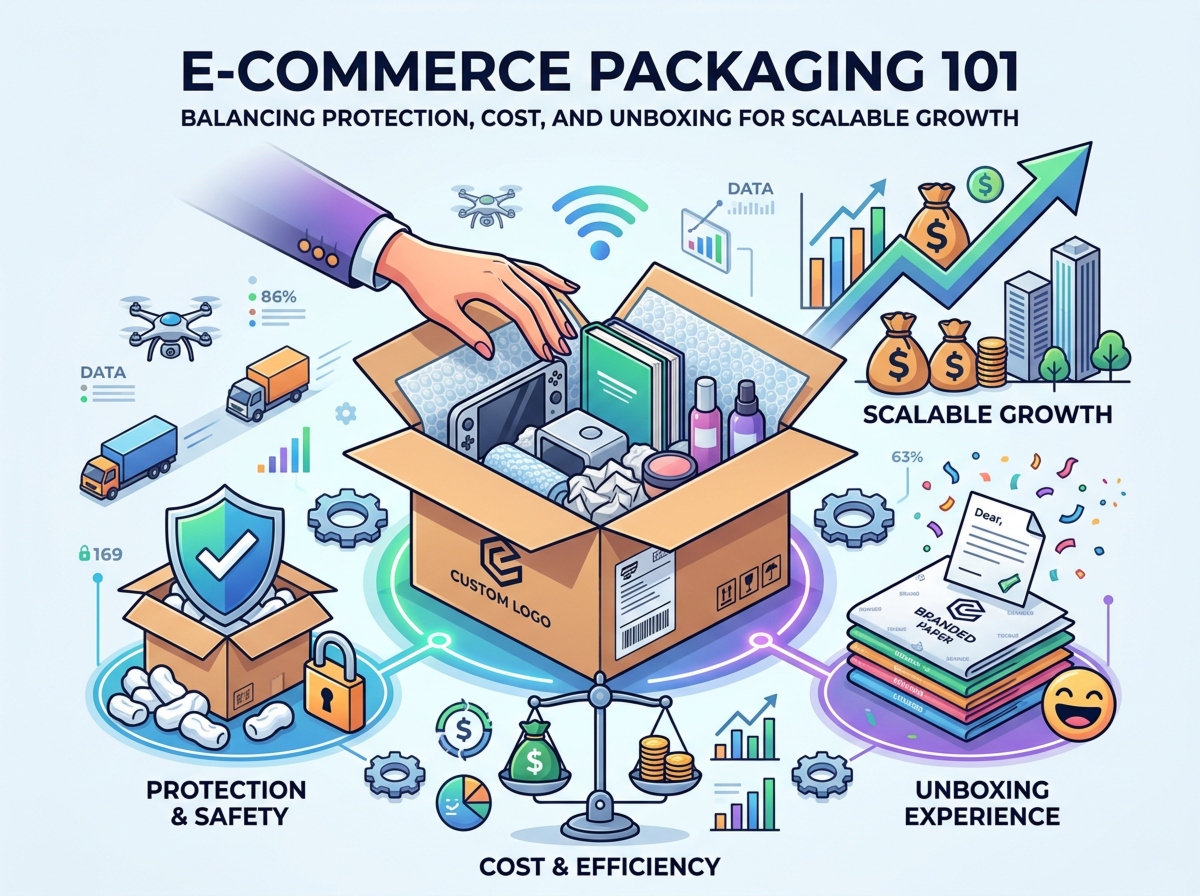
You ship products to real homes, not store shelves. E-commerce packaging covers the boxes, mailers, inserts, tape, and fill you use to protect an item in transit and present it on arrival.
Shipping adds drops, stacking, and long travel. Packaging has to handle stress while still feeling clean and intentional when opened.
Good e-commerce packaging balances protection, cost, and unboxing by using the smallest package that keeps the product secure, controls shipping spend, and supports your brand at the moment of delivery.
Oversizing raises dimensional weight, which is a carrier pricing method based on box size, not just weight. Too little protection leads to damage, returns, and lost trust.
Every choice sends a signal. Corrugated strength, infill type, tape, and layout affect breakage rates, shipping fees, and how your brand feels in hand.
If you know why packaging fails, you can make decisions that protect the product, respect the budget, and make unboxing feel planned instead of rushed.
What Is Ecommerce Packaging?
Ecommerce packaging refers to the protective and presentational materials used to house, secure, and deliver products ordered online—from outer cartons to inner inserts and branding elements.
You design it to survive shipping while still feeling intentional when the box opens. You ship through conveyors, drops, stacking, and weather swings. Packaging has to handle those forces without driving up cost.
Oversizing increases dimensional weight and void-fill spend. Weak materials raise damage rates and returns.
In most parcels, packaging serves three jobs at once. It protects the product, controls shipping costs, and sets the tone for unboxing.
When you ship glass or liquids, protection takes priority. When you ship apparel or small goods, right-sizing and materials usually matter more.
Key components you work with
- Outer packaging: Boxes, mailers, poly bags, envelopes. Sets size, strength, and shipping cost.
- Inner protection: Dunnage, bubble wrap, kraft paper, air pillows, peanuts. Limits movement and absorbs impact.
- Branding inserts: Receipts, stickers, coupons, notes. Adds clarity and brand cues.
Right-sizing means matching the package to the product’s dimensions to reduce empty space. Dimensional weight is the carrier’s pricing method that charges for volume, not just scale weight.
Why Ecommerce Packaging Matters
Ecommerce packaging shapes how your product arrives, how much you spend to ship it, and how customers judge your brand from the first touch.
- Screen Presence: Your product lives on a screen until delivery. Packaging sets the bridge between digital promise and physical reality.
- First Physical Interaction: Packaging becomes your first real handshake with the customer. This moment sets expectations for quality, care, and trust before they even see the product.
- Unboxing: Unboxing means the process of opening a shipped package. Simple structure, clear layout, and minimal waste make the experience feel intentional, not overdone or careless.
- Damage Reduction: When you ship glass, liquids, or electronics, packaging controls loss. Proper cushioning, tight fit, and tested materials reduce breakage and cut returns caused by transit damage.
- Shipping Cost Optimization (DIM): Dimensional weight (DIM) is a carrier pricing method based on package size, not just weight. Oversizing increases DIM charges and void-fill spend, which raises costs on every shipment.
- FFP Packaging: Frustration-Free Packaging (FFP) removes excess materials and hard-to-open elements. You lower labor time, reduce waste, and deliver a faster, cleaner opening experience.
- Cost Control: Packaging often ranks just behind labor in fulfillment spend. Smart material choices and right-sizing protect margins without sacrificing protection.
How Should I Package My Products? (Decision Framework)
You package products to protect them, control shipping cost, and shape how customers feel when they open the box. Good decisions come from matching the product’s risk to the package, then choosing the smallest format that still protects the item.
Key Decision Factors
Start with product risk, which means how likely an item is to break, leak, or deform in transit. Glass, liquids, and electronics need rigid walls and shock control.
Soft goods and durable items often ship safely in mailers. Next, consider shipping mode. Parcel carriers sort packages by machines and drop them several times.
This causes edge crush and corner impacts. Fragile items fail when boxes flex or void fill shifts.
Factor in dimensional weight, which is the billed weight based on box size, not scale weight. Oversizing raises shipping cost and void-fill spend.
Finally, think about unboxing intent. Branded tissue, inserts, or print work best when they stay simple. Extra elements add cost and slow packing if they don’t support the product or brand.
Right-Size Packaging Rules
Right-sizing means using the smallest package that protects the product through the full delivery cycle. It reduces damage, lowers dimensional weight, and speeds packing.
- Leave 0.5–1 inch of space around the product for cushioning.
- Use rigid boxes for fragile or heavy items. Use mailers for soft or unbreakable goods.
- Choose void fill (paper, air pillows) that stays in place and doesn’t compress under weight.
Test fit matters. If the product moves when you shake the box, the package will likely fail.
Packaging by Product Condition (Scenario Playbook)
You ship many types of products, and each one fails in different ways. The right packaging choice depends on how the item behaves in transit, how carriers handle it, and what customers expect when they open it.
Match protection level to risk to control damage, cost, and brand impact.
Standard Items
Standard items include apparel, books, and boxed goods that resist light drops. You focus on fit, not force.
Right-sizing matters because oversizing increases dimensional weight—the carrier fee based on box size, not actual weight.
Use corrugated boxes or poly mailers that match the product size. Add minimal void fill (loose material that fills empty space) to stop movement, not to cushion impact.
- Single-wall corrugated box or mailer
- Kraft paper or thin air pillows
- One seal strip or tape line
Clean folds and centered branding support a tidy unboxing. Extra layers add cost without reducing damage for most parcels.
Fragile Items
Fragile items crack, chip, or leak when they shift or collide. Glass, ceramics, and liquids need controlled movement and shock absorption.
You protect the item first, then the box. Use a box rated for weight and drop risk. Wrap each unit so it can’t touch another surface.
Shock absorption means material that slows impact, like molded pulp or foam.
- Double-box when shipping glass or liquids
- Cushion all sides, not just the top
- Seal liquids in leak-proof bags
Clear “fragile” labels help, but structure matters more. Poor internal fit causes most breakage.
Oversized / Heavy Items
Heavy items stress boxes, seams, and carriers. Damage often comes from compression or drops during handling.
You manage weight and leverage, not just padding. Use double-wall or triple-wall corrugated boxes. Reinforce edges and seams with filament tape.
Keep weight centered to prevent tipping.
- Overloaded boxes that bow or split
- Thin pallets for freight shipments
- Loose items inside large cartons
Oversizing increases dimensional weight and void-fill spend. When possible, ship parts separately or use custom inserts to lock the load in place.
Heat-Sensitive Goods
Heat-sensitive goods degrade when exposed to high or low temperatures. Food, cosmetics, and supplements often fall into this group.
You control time and insulation. Use insulated packaging, which slows heat transfer. Pair it with gel packs or phase-change materials when needed.
Ship early in the week to avoid weekend delays.
- Insulated liners or foam panels
- Gel packs sized to transit time
- Priority shipping services
Test in real conditions. A liner that works in spring might fail in summer. Balance protection with disposal concerns to avoid customer frustration.
Hazardous Goods
Hazardous goods include items that can burn, corrode, or react. Examples include batteries, aerosols, and chemicals. You have to follow carrier and legal rules.
Use packaging tested for the hazard class. UN-rated packaging meets international safety standards for dangerous goods. Labels and documents matter as much as the box.
- Match packaging to hazard type
- Use required markings and paperwork
- Train staff on packing rules
Mistakes lead to fines, delays, or rejected shipments. When in doubt, confirm requirements with the carrier before you ship.
What Are the Main Types of Ecommerce Packaging?
Ecommerce packaging choices affect damage rates, shipping cost, and how your brand feels at the door. Each option trades off protection, weight, and presentation, so you need to match the package to the product and shipping method.
Corrugated Cardboard Boxes
Corrugated cardboard boxes use fluted paper between liner sheets to absorb impact. Fluting means the wavy layer that adds strength without much weight.
You use these boxes for most parcels because they protect well in transit. They handle stacking, drops, and long carrier routes.
Thicker walls increase strength but raise cost and weight. Sizing matters. Oversized boxes increase dimensional weight, which is the price carriers charge based on box size, not mass.
Extra space also raises void-fill spend. Choose the smallest box that fits the item with light cushioning.
Corrugated boxes recycle easily. Many buyers expect them, so they feel familiar and trustworthy.
Regular Slotted Containers (RSC)
An RSC is the most common corrugated box style. All flaps meet in the center and seal with tape.
This design keeps cost low and sourcing simple. You pick RSCs when you ship standard items in steady volumes.
They ship flat, store well, and assemble fast. That saves labor during packing peaks.
RSCs rely on tape for strength. Poor taping causes bottom failures during drops.
Use the H-taping method, which seals the center seam and both edges. RSCs work best with consistent product sizes. If your catalog varies, you may need several box sizes to avoid overpacking.
Custom Boxes
Custom boxes use tailored dimensions, prints, and finishes. You design them to fit your product and brand.
Tight sizing keeps items from moving around. Less movement means less breakage and fewer fillers needed—plus, you cut down on dimensional weight.
Printing costs extra, so use it on purpose. A simple logo, your brand color, or a short message can boost recognition during unboxing.
Overdesign slows down packing and leads to more mistakes. Custom boxes work best for repeat buyers or premium items.
They’re usually not worth it for low-margin goods or stores with tons of SKUs.
Bags and Envelopes
Bags and envelopes use thin plastic or paper to ship soft goods. They’re lighter than boxes, so shipping costs drop.
People use them for apparel, fabrics, and other non-breakables. They fight off moisture but can’t handle crushing.
If carriers stack heavy stuff on top, damage risk goes up. Poly bags cost less but feel kind of basic.
Paper mailers feel more eco-friendly, but they rip if you overfill them.
Padded and Bubble Mailers
Padded mailers add cushioning inside a bag or envelope. Cushioning is just material that soaks up shocks, like paper padding or bubble film.
Use them for small, fragile things—cosmetics, electronics accessories, that sort of stuff. They protect better than flat mailers and don’t add much weight.
Bubble mailers handle drops well but can pop if squeezed. Paper-padded mailers are easier to recycle but add a bit of weight.
Size matters here too. If you oversize, items slide and hit the edges. Go for a snug fit and seal it well to avoid corner damage.
Foil Sealed Bags
Foil sealed bags use layered films with an aluminum barrier. That barrier blocks air, light, and moisture.
People use them for food, supplements, and powders. They keep stuff fresh by limiting oxygen exposure.
Heat sealing closes the bag and shows if someone tampered with it. Bad seals break in transit and cause leaks, so test seal strength before you go big.
Usually, foil bags ship inside a box or mailer. The bag protects the product; the box or mailer protects the shipment.
Rigid Boxes
Rigid boxes use thick paperboard and don’t fold flat. They hold their shape and feel premium.
Use them for luxury goods, gifts, or subscription kits. They protect well from crushing and make unboxing feel special.
They cost more to ship because they weigh more and take up space. That raises dimensional weight on most routes.
Rigid boxes make sense when the product value covers the cost. If margins are thin, they’ll eat into your profit fast.
Tape Options for Ecommerce Packaging
Tape does more than just close a box. It affects damage rates, labor time, and how secure the parcel feels when your customer gets it.
Weak tape fails first on long routes and heavy loads. Pick tape based on load weight, box material, and shipping conditions.
Heat, cold, and dust change how adhesive works. A good match cuts down on re-taping and shrink.
- Adhesive: the sticky part that holds tape to the box.
- Tensile strength: how much pull the tape can take before it snaps.
- Tamper evidence: signs the box was opened during shipping.
Clear Acrylic Packing Tape
Clear acrylic tape uses a water-based adhesive that sticks best at room temperature. You’ll see it everywhere in daily pick-and-pack lines.
Use it for light to mid-weight parcels, usually under 40 lbs. It goes on fast and works well with hand dispensers.
In cold warehouses, the bond gets weaker—expect more failures in winter.
Water-Activated Tape (Kraft)
Water-activated tape uses starch-based adhesive that bonds when wet. It fuses with corrugate fibers as it dries.
Pick this for heavier boxes or long shipping routes. It gives you a strong, tamper-evident seal and helps prevent theft.
You’ll need a dispenser, which takes a bit longer to set up but makes sealing more consistent.
What Is the Best Infill or Dunnage for Ecommerce Packaging?
Direct answer: Choose infill that protects items, stops movement, and keeps returns down. In most boxes, you want to prevent shifting without adding a bunch of weight or waste.
Dunnage is just the stuff you put inside a box to cushion and secure products during shipping. If you use a box that’s too big, you’ll spend more on void fill and shipping.
Right-sizing your box and picking the right dunnage usually cuts down on damage. Choose infill based on fragility, weight, and how the box will move on a truck.
If you’re shipping glass or liquids, wrapping matters more than just filling the space. For soft goods, light fillers do the trick.
- Kraft paper: Flexible padding for light to medium items. Uses more volume.
- Air pillows: Lightweight void fill in right-sized boxes. Pops if crushed.
- Packing peanuts (foam vs cornstarch): Foam for impact protection, cornstarch for composting. They can be messy and shift around.
- Bubble wrap: Good for wrapping fragile items, but it’s plastic waste.
- Foam wrap: Thin wrap for sharp edges. Not easy to recycle.
- Shredded cardboard: Recycled cushioning for heavier stuff. Less uniform fill.
Electronics need special care. Use ESD bags to control static, add moisture barriers, and pair them with custom or layered foam.
If you skip this, you’ll get hidden damage and more returns. Honestly, you design infill by testing and adjusting—ship what survives real handling, not what just looks good on a bench.
Sustainability in Ecommerce Packaging
Sustainable packaging means you try to reduce harm across the entire life of a package. That covers how you source materials, how you ship them, and what happens after delivery.
You’re always balancing lifecycle impact, recyclability, and reuse. Lifecycle impact includes energy, water, and waste from start to finish.
Recyclability means customers can toss the package in common recycling bins. Reuse means the box or mailer can ship again or get a second life.
Oversizing boxes? That’s just waste. Bigger boxes raise dimensional weight and need more filler. Right-sizing usually cuts damage and shipping costs.
You can make practical changes without redoing your whole supply chain:
- Right-size packaging: Match box size to product size and fragility. Less filler, less damage.
- Material audit: Check your boxes, mailers, tape, and inserts. Swap out mixed or hard-to-recycle stuff first.
- End-of-life communication: Tell customers how to dispose of each item.
Eco-friendly options work best when they fit your products. Paper mailers are great for soft goods. Molded pulp works for small, fragile items.
Bio-plastics and plant-based films help when you need moisture resistance, like with liquids. Clear sourcing and disposal notes help your brand, too. A quick line on the box or insert builds trust and keeps recycling streams cleaner.
How to Customize the Packaging for Your E‑commerce Business?
Start with the product, not the brand. Size, weight, and fragility drive every packaging choice.
Right-sizing means picking a box that fits close, so you cut down on dimensional weight and filler costs. Oversized boxes hike up shipping fees and risk more damage.
Pick materials based on how your parcels travel. Corrugated boxes protect most goods in standard parcel networks.
If you ship glass or liquids, add protective inserts—these limit movement inside the box. Movement causes damage, even if the box is tough.
Use customization only where it matters. Custom printing on the outside helps with brand recall. Inside, a branded insert or packing slip often has more impact than a fancy custom structure.
Most of the time, keeping things simple keeps costs down and packing fast. Test small runs before you commit. Order short batches, track damage rates, packing time, and cost per unit.
Bulk pricing saves money, but only if your demand stays steady. Stick with repeatable choices. Standard box sizes, limited print colors, and shared inserts make packing easier.
Simple systems mean fewer mistakes and faster fulfillment.
- Custom box print: Use for high-volume SKUs.
- Branded inserts: Great for stories, care, or return info.
- Custom inserts: For fragile or premium items.
- Eco materials: Show brand values, work best with lighter goods.
How Can an Ecommerce Packaging Improve Branding and Unboxing Experience?
Your packaging does more than just protect the product. The look and feel of the box—inside and out—show your brand’s values and help build loyalty.
When the box looks planned and the contents feel organized, customers trust you more. Branding starts before the box opens.
Box size, print quality, and tape choice all signal how much you care. If you use a box that’s way too big, it just looks sloppy and wastes money on shipping and filler.
Inside, structure matters. The unboxing experience is really about how each item is arranged and feels as the customer opens the package.
If things shift, tear, or spill, your brand takes the hit.
Receipts and Inserts
Receipts and inserts help guide the customer after delivery. A quick thank-you card, mini catalog, or care note adds some context.
That way, you control the message—not just a boring packing slip.
Rewards and Offers
Coupons or loyalty cards give people a reason to come back. Put them on top so customers see value right away.
This usually helps boost repeat purchases.
Tissue Paper
Tissue paper is all about the reveal. On-brand colors or simple patterns slow down the unboxing and keep surfaces safe.
It works especially well for fragile, premium, or giftable items.
Stickers
Stickers are a cheap way to add branding and flexibility. Use them to seal tissue, mark fragile items, or invite some interaction.
Lots of customers reuse them, which keeps your brand around longer.
What Is the Most Popular Ecommerce Packaging Solutions in 2026?
In 2026, most ecommerce brands pick packaging that controls damage, shipping cost, and pack time. Paper-based systems lead the way because they meet sustainability rules and protect products without plastic.
Standard Corrugated Box + Paper Void Fill System
You’ll spot this setup in most parcels today. A corrugated box uses fluted paper layers to absorb shock during shipping.
Brands pair these boxes with paper void fill—crumpled or kraft paper that stops items from bouncing around inside.
This combo works well when you ship mixed product sizes. It handles books, home goods, and boxed items that aren’t fragile.
But oversizing causes headaches. Larger boxes mean higher dimensional weight fees and more void fill, which adds cost and waste.
Most brands right-size boxes and automate paper fill to keep packing fast and waste down.
Double-Wall Corrugated with Rigid Boxes For Luxury Touch
You’ll want double-wall corrugated when products need extra strength. Two fluted layers resist crushing in long-distance shipping.
Many premium brands add a rigid box inside. This thick paperboard box keeps its shape and looks sharp for cosmetics, electronics, and gift sets.
This setup costs more in materials and freight. It also slows down packing, so brands usually save it for higher-priced items where damage or returns sting more than packaging costs.
When you ship glass or liquids, this structure helps cut breakage and builds trust at delivery.
Modular Paper Infill Systems (Multi-SKU Operations)
Modular infill systems use folded paper structures that adjust to product size. You drop the item inside the paper form and place it in a box.
This matters if you ship lots of SKUs from one warehouse. A SKU is just a unique product version.
These systems cut down on guesswork at the packing station. Packers don’t need to wonder how much fill to use, so things move faster and training gets easier.
They also save material. Paper forms hold items snug without extra filler. Brands with high daily order volume make fewer packing mistakes and get more consistent protection.
Paper Mailer Solutions for Lightweight Products
Paper mailers now replace plastic poly mailers for soft goods and small items. They use padded or reinforced paper layers to keep contents safe.
They’re great for apparel, accessories, books, and flat items. Mailers ship lighter and take up less space than boxes.
Mailers cut dimensional weight and speed up packing. They also shrink storage needs in the warehouse.
Paper mailers work best for products that can bend a bit without damage. They don’t do well with sharp edges or things that need crush protection.
Most brands add peel-and-seal closures to skip tape and save time.
Frustration Free Packaging
Frustration free packaging ditches extra layers, plastic ties, and tough seals. It focuses on easy opening, clear labeling, and less waste.
You design this packaging to ship without an outer box. The product package itself has to protect the item during transit.
This approach cuts material costs and reduces damage from repacking. It also makes unboxing faster and simpler for customers.
It works best for sturdy items like household goods and small appliances. It doesn’t suit products that need to be hidden or need lots of cushioning.
Retailers often push this format to lower returns and save time in the warehouse.
What Your Packaging Says About Your Product
Your packaging sends a message before the product does. Customers judge quality, care, and trust in those first few seconds handling the box.
If the box looks damaged or wasteful, they’ll expect problems inside.
Size speaks louder than you might think. Oversized boxes drive up dimensional weight—shipping costs based on size, not just weight—and force you to use more void fill. That extra space raises costs and often looks like poor planning.
Material choice shapes perception. Thin boxes feel flimsy, but overbuilt packaging can look wasteful. Corrugated cardboard usually hits the sweet spot for strength, cost, and recyclability.
Common signals your packaging sends:
- Right-sized box: You care about efficiency
- Excess void fill: You overspend or rush
- Clean branding: You run a tight operation
- Reused or crushed box: You cut corners
Protection choices matter, too. If you ship glass or liquids, customers expect snug inserts and sealed bags. Send a broken item and they’ll assume you cared more about saving a buck than keeping things safe.
Unboxing shapes memory. Simple touches—like branded tape or a clean insert—show intent without costing much. Loud extras can distract from the product and slow packing down.
Your packaging doesn’t need to dazzle. It just needs to make sense, show up intact, and feel like you meant it.
FAQ
What is e-commerce packaging?
E-commerce packaging covers the box, mailer, inserts, and fillers you use to ship orders. You design it for safe transit, not for display on store shelves, so durability and fit really matter.
How do you balance protection and cost?
You pick a package size that matches the product. Oversized boxes bump up your dimensional weight charges—carriers often bill by box size, not just weight—and you end up wasting money on extra filler.
In most cases, a snug fit helps lower both shipping costs and the risk of damage. It’s a win-win, as long as you don’t make it too tight or tricky to pack.
When should you use custom packaging?
Custom sizes make sense if you ship the same products every day. They cut down on empty space and speed up packing, but you do pay more up front for setup.
If your catalog changes a lot or your order volume isn’t huge, stock boxes are probably easier and cheaper. No need to overcomplicate things.
What materials protect products without waste?
Corrugated boxes handle most shipments just fine. You can use paper padding, molded pulp, or corrugated inserts to keep things from moving around.
Inserts are shaped supports that hold products in place, which is key if you’re shipping glass or liquids. Nobody wants a mess on arrival.
How does packaging affect returns?
Damage is the main reason people return orders. If the fit is off, items can shift and end up cracked, leaking, or scuffed.
Better internal control usually means fewer damage claims and support headaches. It’s worth the effort.
Does packaging impact your brand?
Definitely, but function should always come first. A clean design, easy opening, and less filler make unboxing feel intentional.
Branding works best when it doesn’t add bulk or slow down your packing process. Keep it simple and thoughtful.