Foil stamping is a packaging finishing technique that applies a thin metallic foil layer through heat or UV adhesive. It transforms flat packaging into reflective, high-impact visuals that signal quality and brand value.
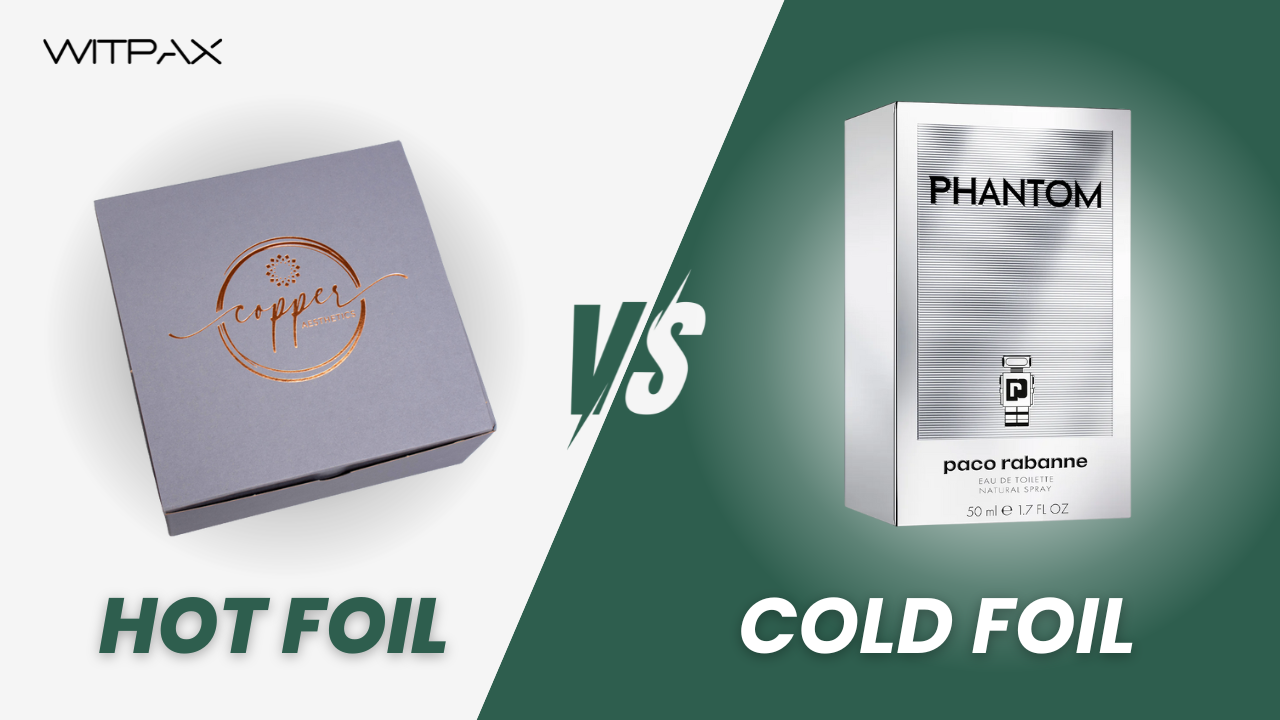
Hot foil creates embossed, tactile depth, while cold foil delivers smooth, precise shine inline with printing. Each method enhances packaging differently—balancing texture, brilliance, and production scale—helping brands choose the right finish for their design and identity goals.
This guide explains how each process functions within modern packaging workflows, how it influences perceived brand value, and how to combine foil with other finishes such as spot UV, embossing, or soft-touch lamination for layered visual hierarchy.
What Is Foil Stamping In Packaging?
Foil stamping is a packaging process that applies metallic or pigmented foil to a surface. A foil stamping machine transfers the foil onto paperboard, film, or labels during foil printing.
Packaging teams use foil stamping to add controlled shine, contrast, or texture. Because foil reflects light and sits on top of the surface, it changes how the package looks and feels in hand. In practice, this means logos, text, or patterns stand out without using extra ink colors. For many brands, foil isn’t just a finish—it’s a visual cue for quality and trust.
Foil stamping works on a printing press or as a post-press step, depending on the method. The process uses either heat and pressure or adhesive and UV curing. Both methods run on modern printing presses designed for repeat accuracy.
There are two main methods used in packaging:
- Hot foil stamping, which uses heat and a metal die
- Cold foil printing, which uses adhesive and UV light
What Is Hot Foil Stamping?
Hot foil stamping is a secondary process that applies metallic or pigmented foil to packaging surfaces. Hot foil stamping uses heat and pressure to bond foil to a substrate, creating crisp edges and a tactile metallic impression that you can see and feel. Printers often call this process hot foiling.
The process relies on a custom metal die, usually made from brass or magnesium. The press heats the die and presses it against foil and the material below. Because the foil uses a heat-activated adhesive, the foil transfers only where the die makes contact.
Hot foil stamping works best on firm substrates. Common materials include paperboard, coated stock, leather, and some plastics. Heat-sensitive materials may warp or discolor, which limits where hot foil can be used.
Brands choose hot foil stamping for controlled detail and tactile results. The metal die can emboss or deboss at the same time. In practice, this means raised or recessed foil that can be felt by touch.
Advantages
- Durable finish because the foil bonds under heat and pressure
- Embossing compatibility using the same metal die
- Long-lasting shine from solid foil layers
Limitations
- Higher die cost due to custom metal tooling
- Tooling costs increase with each additional foil color
- Slower setup compared to inline foil methods
Hot foil stamping suits short to medium production runs where detail control and tactile impact matter.
What Is Cold Foil Printing?
Cold foil printing applies metallic foil to packaging during printing without heat. It uses a UV-curable adhesive on the substrate, then cures it under UV light. Because it runs as an inline process, it works on many digital presses and offset presses.
Cold foiling, also called cold foil stamping, places foil with tight registration. The foil bonds only where adhesive prints, so fine lines stay sharp. In practice, this means text and small icons remain clear at production speed.
The method supports many foil colors and effects. Printers can overlay standard inks to create metallic colors and smooth gradients. This works well for gold, silver, rose, and custom shades.
Cold foil printing favors flat materials. Because it bonds best to smooth stock, it suits coated paper, labels, and flexible packaging. It does not add depth or texture.
Production teams choose cold foil for speed. Because it avoids heated dies, setup time stays short, and runs scale well on digital presses. This helps when schedules demand fast changeovers and consistent results.
Hot Foil vs Cold Foil: Main Differences at a Glance
Hot foil and cold foil use different application processes, printing techniques, and setup needs. These differences affect cost, speed, surface results, and where each method fits best in packaging production.
Difference Between Cold and Hot Foil
| Features | Cold Foil | Hot Foil |
| Application Method | UV adhesive applied inline on press | Heated metal die pressed into substrate |
| Setup Speed | Fast setup using standard printing plates | Slower setup due to custom die creation |
| Texture | Flat, smooth surface | Pressed texture with visible depth |
| Visual Finish | Metallic look with precise registration | Metallic look with sharp edges and relief |
| Durability | Moderate; depends on coating and substrate | High; foil bonds through heat and pressure |
| Sustainability | Less waste due to inline process | More waste from dies and slower runs |
| Best For | Medium to long runs, detailed graphics | Short runs, tactile accents, rigid stocks |
How to Choose Between Hot Foil and Cold Foil Finishes?
Choosing the right foil finish depends on design goals, materials, and production needs. The decision often comes down to detail level, run size, and how the packaging will be used.
Design Considerations
Hot foil uses a metal die and heat, which limits very fine lines but adds clear edge definition and depth. Because the die presses into the surface, it can support embossing and debossing.
Cold foil uses adhesive and UV curing, which allows thin lines and tight spacing. This method supports design flexibility, including gradients and small text. Designers can also overprint CMYK inks on cold foil. In practice, this means colored metallic effects without extra steps.
Material compatibility also matters. Hot foil works best on rigid boards and thicker stocks. Cold foil performs well on coated paper, labels, and flexible packaging.
When To Choose Cold Foil
Cold foil fits projects that need speed and scale. It runs inline on offset or digital presses, which reduces setup time. Because of this process, cold foil suits medium to large print runs with tight schedules.
This method supports variable data, such as changing names or codes. Digital foil systems can handle these changes without new tooling. In practice, this helps brands produce short versions within a larger run.
Cold foil also works well for custom packaging with detailed graphics. Labels, cartons, and sleeves often benefit from its precision. It uses less heat and fewer dies. Because of this setup, it reduces waste during long runs.
Cold foil is a practical choice when:
- The design includes fine text or patterns
- The project uses labels or flexible materials
- The run size is large or uses variable data
When To Choose Hot Foil
Hot foil suits projects where surface feel matters. The heated die bonds foil into the material, which creates a raised or pressed effect. Because of this contact, hot foil delivers clear tactile feedback.
This method fits short to medium print runs where tooling cost spreads across fewer units. It works well for rigid boxes, folding cartons, and thicker paperboard. These materials handle heat and pressure without warping.
Hot foil pairs well with embossing. The same die can add depth and foil in one pass. In practice, this supports structured designs for high-visibility packaging.
Can you combine hot foil and cold foil in one design?
Yes, designers can combine hot foil and cold foil in a single packaging design to achieve layered metallic effects that balance texture, brilliance, and speed.
Each method brings a distinct visual and tactile quality. Hot foil stamping adds embossed depth and a warm, premium tone that feels handcrafted. Cold foil printing, applied inline during printing, creates smooth, mirror-like metallic areas with precise registration and color flexibility.
When used together, hot foil can highlight logos, borders, or key brand marks with tactile emphasis, while cold foil covers larger graphic areas or gradients for modern shine. The contrast between raised metallic details and flat reflective fields creates a sophisticated sense of dimension.
This hybrid approach is often used in luxury packaging, special editions, or premium FMCG products, where brands want both depth and production efficiency. The result is packaging that feels rich and layered — tactile like hot foil, yet sleek and scalable like cold foil.
Design Tip: When combining both methods, align color tones and metallic density early in prepress to ensure consistent light reflection and avoid visual mismatch between the two foils.
How Foil Finishes Influence Packaging Design and Brand Perception
Foil finishes guide how shoppers read a package at first glance. The choice affects shine level, line detail, and how the surface reflects light. These traits shape how a brand signals intent on the shelf.
Hot Foil: Tactile Luxury and Timeless Craft
Hot foil stamping uses heat and pressure to press metallic foil into the surface, creating sharp edges, depth, and a distinct embossed feel. The result is a warm, reflective sheen that looks handcrafted and substantial. Light plays softly on the raised areas, emphasizing shape and shadow — a detail that feels exclusive and precise.
This tactile finish communicates heritage, sophistication, and trust. It tells the story of a brand that values quality and craftsmanship — the kind of attention associated with premium goods and timeless luxury.
Hot foil is common in luxury cosmetics, perfume boxes, wine and spirits labels, jewelry packaging, and fine stationery. Brands like Jo Malone, Moët & Chandon, and Cartier use hot foil to evoke refinement and timeless appeal.
Cold Foil: Smooth Precision and Modern Brilliance
Cold foil printing applies metallic foil using UV adhesive inline during printing, producing a flat, smooth surface with mirror-like brilliance.
Designers can overlay CMYK inks to achieve metallic gradients and multi-tonal effects, which feel dynamic and futuristic. The visual result is crisp, bright, and highly consistent — perfect for intricate designs and large production runs.
Cold foil reflects innovation, agility, and modernity. Its clean finish and technical precision
Best Use Cases
Cold foil is favored for cosmetics cartons, tech packaging, FMCG products, and health or lifestyle brands where detail and speed matter.
Brands like L’Oréal, Samsung, and Glossier often use cold foil finishes to express a sleek, contemporary visual identity.
FAQ
Is cold foil more cost-effective?
Yes. Cold foil is generally more cost-effective than hot foil for medium to long production runs because it prints inline with offset or digital presses, eliminating
This reduces setup time, tooling expenses, and material waste.
For brands running high-volume or variable-data packaging, cold foil offers a faster, lower-cost option without compromising visual impact.
Which Is More Durable: Hot Foil or Cold Foil?
Hot foil is more durable because the foil bonds to the surface under heat and pressure, creating a stronger adhesion that resists scratching and wear.
Cold foil, applied with UV adhesive during printing, offers excellent visual brightness but a thinner, surface-level bond that can scuff more easily unless protected with a coating or lamination.
For packaging that requires long shelf life or frequent handling, hot foil provides superior longevity.
Can I combine foil stamping with spot UV?
Yes. Many packaging designs pair hot or cold foil with spot UV to create contrast between metallic and glossy surfaces. The combination adds both texture and light variation for stronger shelf appeal.