
Blind Embossing
What is Blind Embossing?
Ever run your fingers over a piece of paper and feel a raised design, but without any ink or color? That’s likely blind embossing!
How Does it Work?
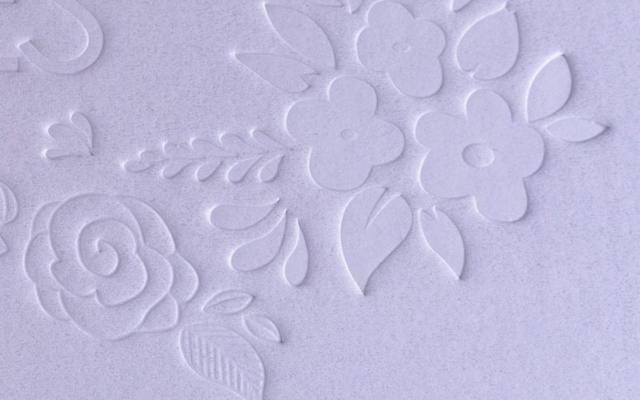
Blind embossing is a technique that creates a raised, three-dimensional design on a material, most commonly paper or cardstock, but without using any ink or foil. Think of it as sculpting a design into the surface.
Here’s the process in simple terms:
- Two custom-made dies, one raised (male) and one recessed (female), are created with the desired design.
- The material (paper, cardstock, etc.) is placed between these dies.
- High pressure is applied, squeezing the material between the dies.
- This process permanently alters the material, creating a raised design that you can see and feel and add a touch of elegance!
Simple, subtle, and sophisticated.
Why Brands Like Blind Embossing:
- Subtle Elegance:Â Adds a touch of class and sophistication without being flashy.
- Tactile Experience:Â Creates a unique feel that engages the sense of touch.
- High-End Appeal:Â Elevates the perceived quality of the product and packaging.
Blind embossing is often used on:
- Business cards
- Wedding invitations
- High-end packaging
Best Used With

- Details
- Examples
Overview
Blind Embossing creates subtle, sophisticated dimensional effects by pressing design elements into the substrate without ink or foil, relying entirely on light, shadow, and texture to communicate refinement. This minimalist finishing technique has become synonymous with understated luxury, favored by brands seeking to convey confidence, heritage, and quality through restraint rather than overt decoration.
The process uses matched male and female dies to sculpt the paperboard surface, creating raised or recessed areas that catch light at different angles. The “blind” designation indicates the absence of color or metallic enhancement—the effect derives purely from dimensional manipulation of the substrate itself. This approach creates elegant, tactile branding that reveals itself gradually as consumers handle the package.
Blind embossing’s power lies in its subtlety and permanence. Unlike printed elements that can wear or fade, embossed details maintain their dimensional integrity throughout the product lifecycle. The technique communicates brand confidence—suggesting the product quality speaks for itself without requiring flashy decoration. This restraint resonates particularly well with luxury, professional, and heritage brands where sophistication trumps spectacle.
I am a heading
I am a heading
| Column |
|---|


